
A nature-positive approach to blue development: the role of infrastructure



By
-
Alanna Waldman Carrow,
-
Tremie Gregory,
-
Amy Breckon,
-
and Shay Burnett

© Sjo/iStockphoto/Getty Images
We are entering the largest infrastructure investment cycle in history—with $151.1 trillion in investment required by 2050 to update infrastructure to meet the needs of the clean energy transition and increase transportation resilience. This growth promises to bring new sources of energy, shipping routes, ports, and tourism facilities—facilitating economic development. However, if this expansion proceeds on a business-as-usual trajectory, new infrastructure development can significantly damage critical coastal and marine ecosystems, contribute to climate change, introduce pollution and invasive species, and displace cultural heritage. On the other hand, development that is well-planned, proactive, and aligned with a nature-positive approach has the potential to contribute not only to societal and economic resilience but also to nature itself.
Companies, enabled by financial institutions, governments, science, and civil society are beginning to recognize the imperative of deploying nature-positive approaches that reduce risks to their supply chains and operations. What’s more, guidance and tools to support this transition are increasingly available—and some actions are already being deployed. For example:
- Offshore wind companies are prioritizing biodiversity, including restoration, bird habitat creation, co-location with the seaweed aquaculture industry, and nature-inclusive design
- Tourism companies know that a healthy environment ensures their businesses’ sustainability and are investing in corals and dunes to provide coastal resilience and nature-based guest experiences
- Financiers are seeking infrastructure development that does less harm and contributes to nature
To help support the transition to a nature-positive blue economy, our team has released two complementary reports that provide specific, sector-based guidance on “nature-positive action pathways.” The first report (featured here) provides a foundation for the concept of “nature positive” in the ocean, and offers guidance for key sectors that affect marine and coastal ecosystems—offshore wind, tourism, and shipping.[1] And, our latest report, supported under the Global Environment Facility-funded Greening Transportation Infrastructure Development (GRID) Integrated Program, focuses on ports, which have the potential to serve as regional hubs to drive positive change at scale—but only if sited, designed, and operated with nature in mind.
Across all of these sectors, the selection of a site’s development is the most critical decision. At this moment in the development process, the most amount of damage to nature and people can be avoided—ensuring important areas are preserved and that communities can benefit. For instance, infrastructure should not be sited in planned or existing protected areas, Key Biodiversity Areas, and other important sites for nature; rather, development should be targeted to already-degraded sites that are chosen through early planning to avoid irreversible impacts.
Then, measures can be taken to reduce unavoidable impacts, as well as restore and regenerate ecosystems nearby and benefits for people. Throughout the process, actions should be taken to transform broader systems, including policy, financing, and governance. Financiers and policymakers can play a significant role in ensuring siting decisions support a nature positive future, including through the encouragement or requirement of strong and sustained consultation and engagement with communities, NGOs, and scientists.
Here we offer a snapshot of some examples of credible actions that companies can take—aligned with the AR3T framework[2]—toward a nature-positive pathway for coastal and marine systems.
Offshore wind
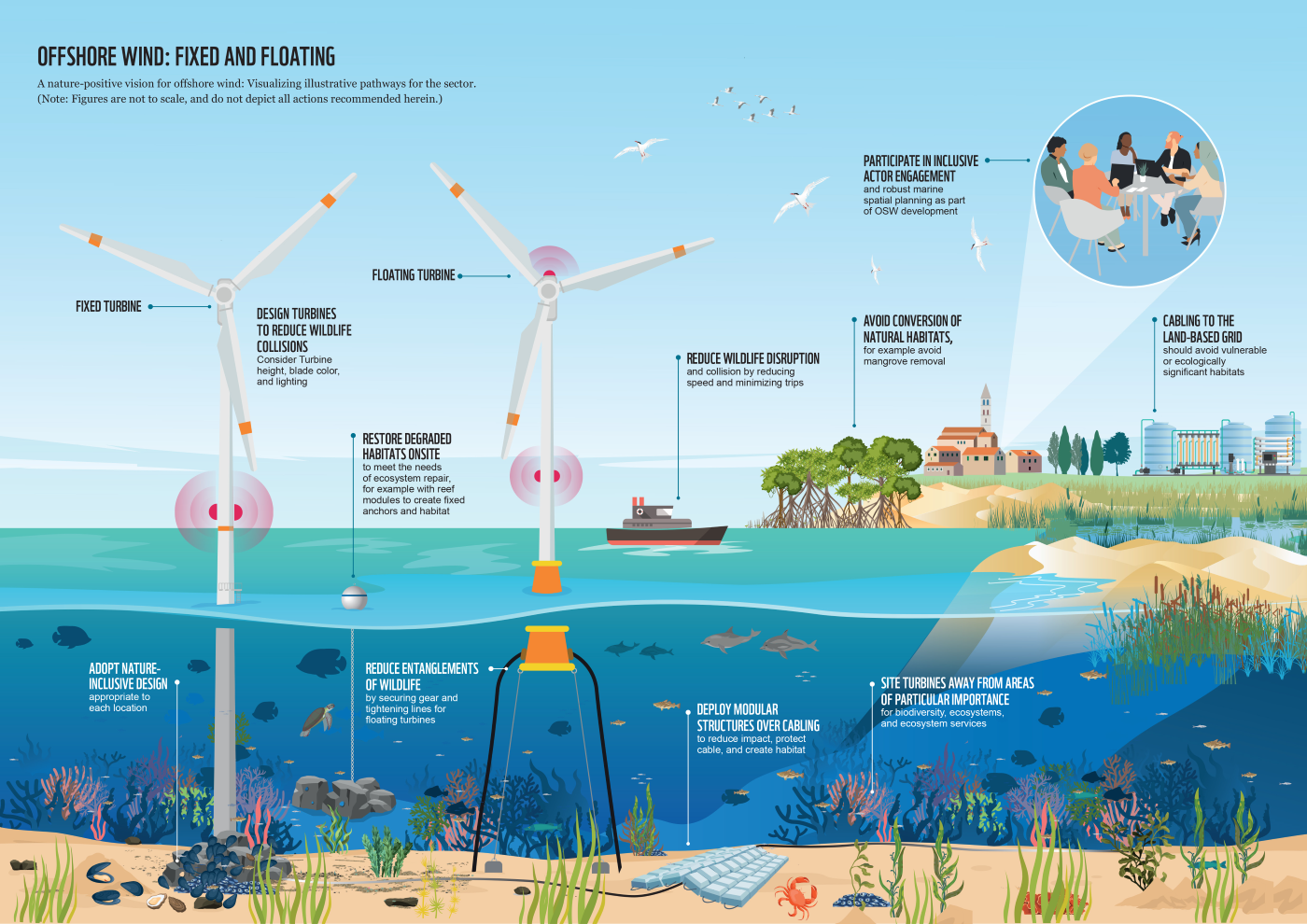
- Avoid conversion of natural habitats by siting turbines away from areas of particular importance for biodiversity and ecosystem services
- Reduce the chance of collisions with fauna by designing turbines that consider blade color and height, as well as lighting frequency and intensity, to reduce wildlife impacts
- Restore and Regenerate degraded habitats onsite to ensure ecosystem repair and deploy modular structures over cabling to create microhabitats
- Transform the system by participating in inclusive actor engagement and robust marine spatial planning
Coastal and marine tourism
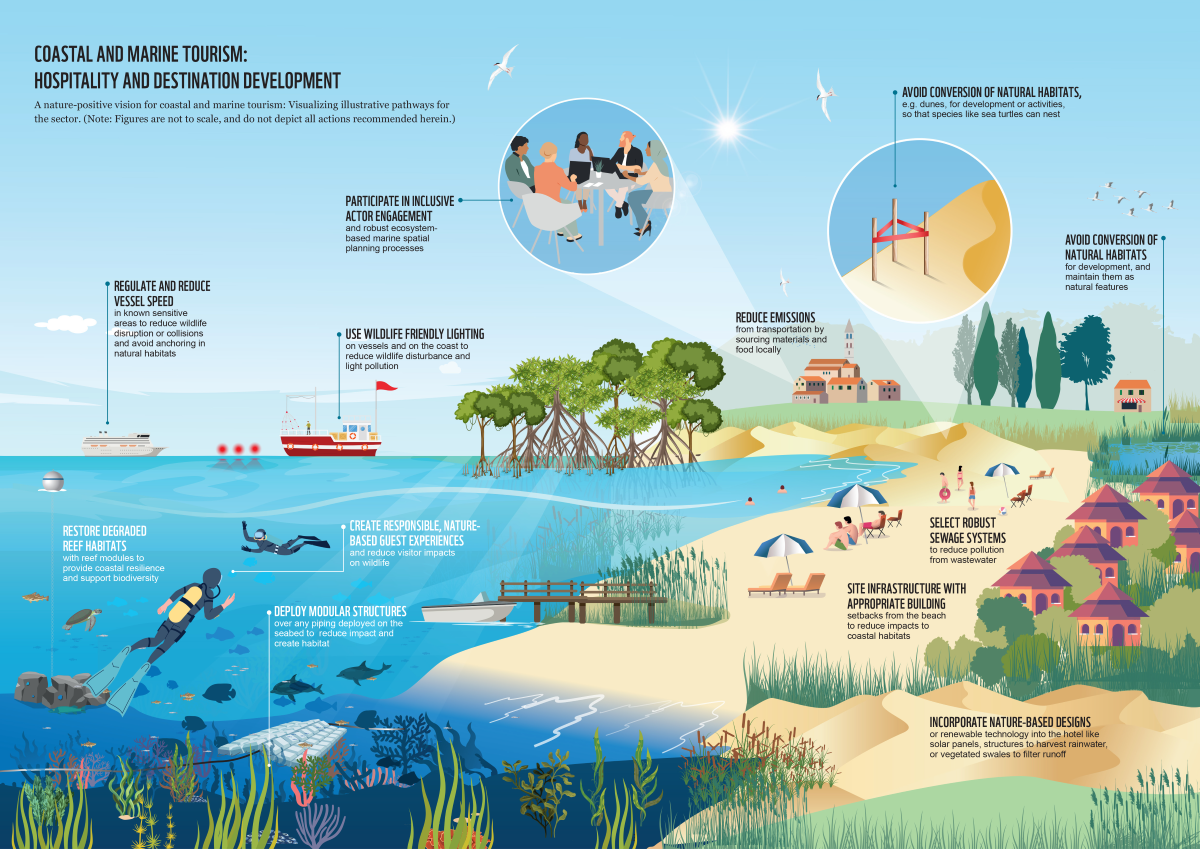
- Avoid habitat destruction and maintain diverse systems such as mangroves, kelp forests, corals, and other ecosystems, including through siting decisions
- Reduce light pollution and wildlife disturbance by restricting operational lighting where possible, limiting bright lighting at night, and using wildlife-friendly lighting
- Restore and Regenerate by incorporating nature-based designs into the hotel plan and restoring degraded habitats, creating responsible nature-based guest experiences
- Transform by supporting livelihoods of local operators and prioritizing local vendors
Shipping
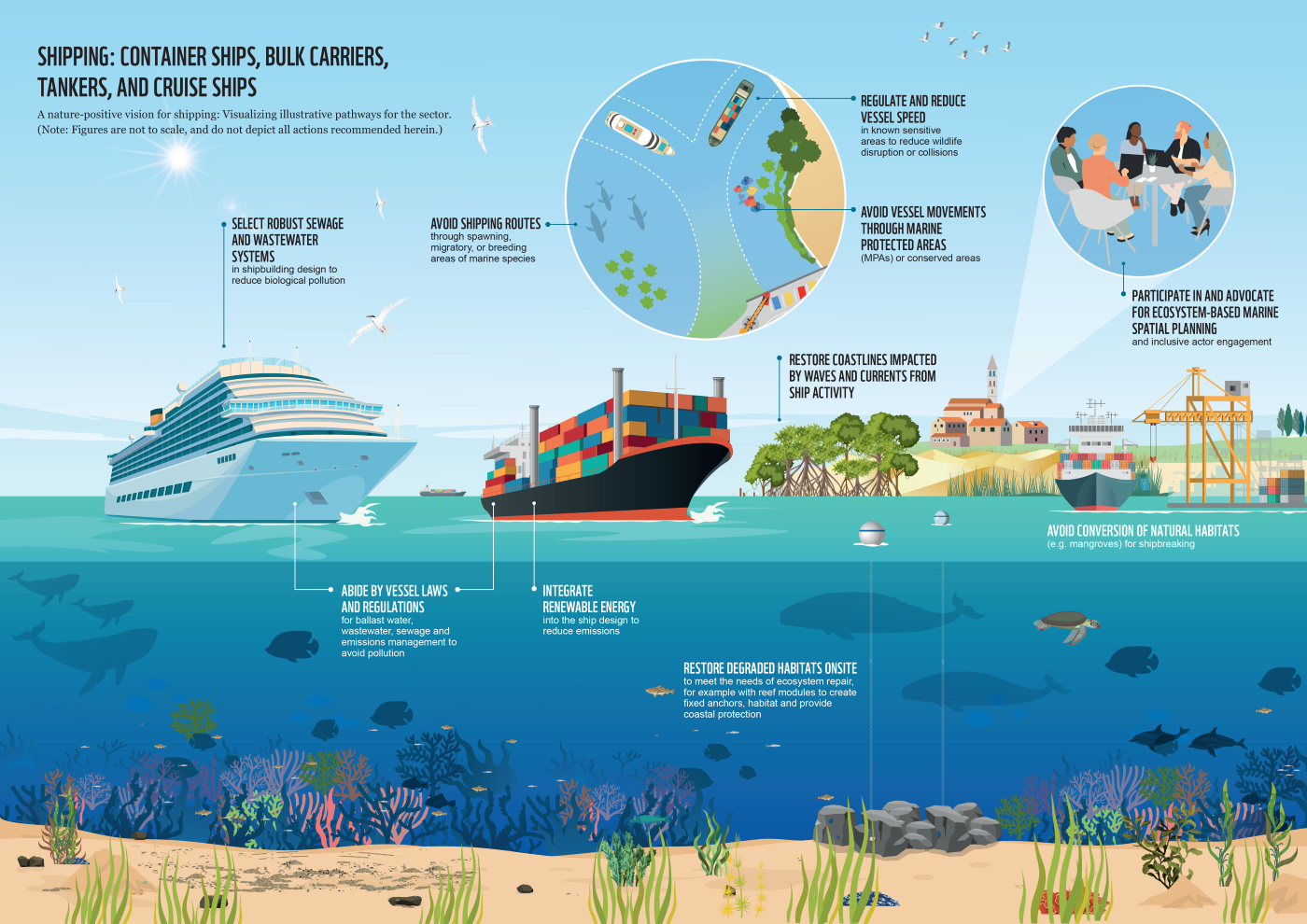
- Avoid placement of shipping routes through migratory pathways or blue corridors to address impacts
- Reduce biosecurity risk from introduction of invasive species through biofouling management requirements and establishment of sufficient infrastructure to support sustainable ballast water management
- Restore and Regenerate coastlines impacted by ship activity, such as mangrove or wetland restoration
- Transform by advocating for vessel construction requirements that limit noise, increase fuel efficiency, and integrate renewable energy sources to reverse industry dependence on fossil fuels
Ports
- Avoid siting ports or ship channels through sensitive and natural habitats such as reefs, seagrass beds, mangroves, salt marshes, or kelp forests
- Reduce the impact of new installations by adopting nature-inclusive and nature-based design approaches into the marine infrastructure
- Restore and Regenerate by designing eco-engineered modular structures, including stabilizing with sand and vegetation, which can protect the coastline and port and provide habitat for marine and coastal organisms
- Transform through constructing sites with the future in mind: build for the environmental and climate conditions of today but also for future scenarios that consider climate change—such as by preparing for sea level rise, stronger and more frequent storms, and changes to the natural environment
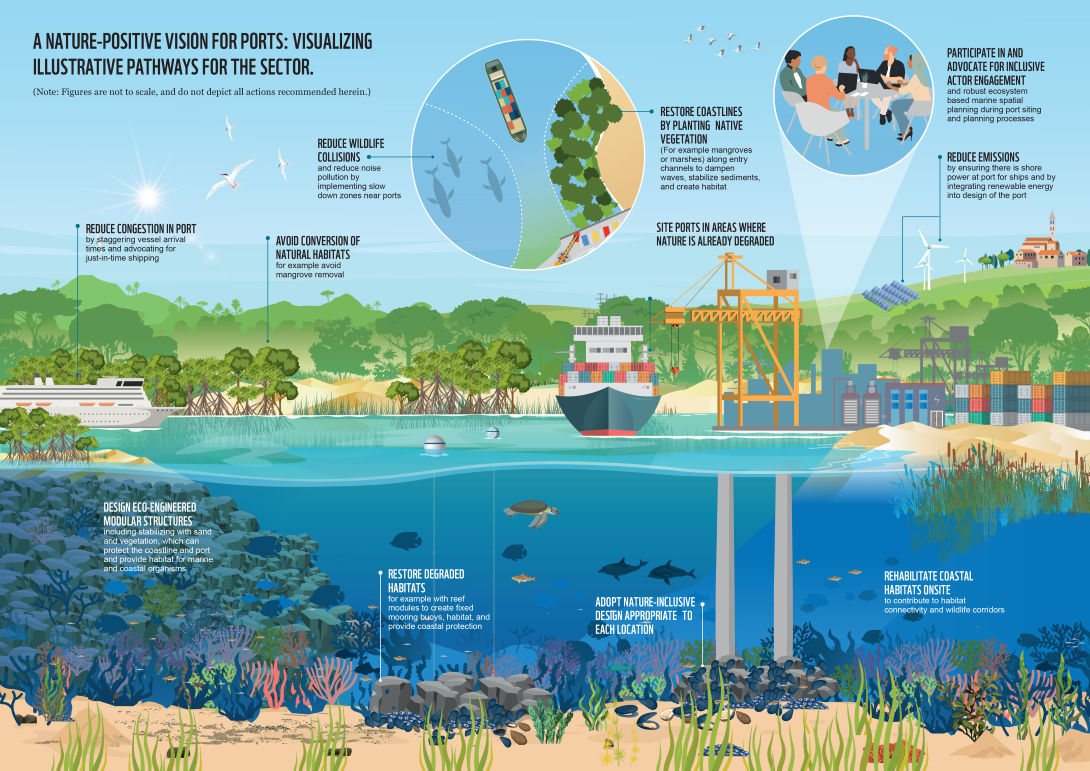
Beyond individual sector actions, collaborative efforts across these sectors—including in a shared location through a seascape approach or globally through engagement in processes like science-based target setting, policy advocacy, and data sharing—can ensure that shared challenges are addressed collectively across all sectors, with informed decision-making and collaborative solutions. As both conservation areas and demand for development expand in the coming years, finding solutions for coexistence—rather than competition—will be key to secure a flourishing, prosperous, and peaceful future for our ocean and all people who depend on it.
[1] The report also covers the seafood sector, but we focused on the infrastructure sectors in this blog given commonalities among them.
[2] AR3T is a general framework for company action:
- Avoid and Reduce pressures on nature loss.
- Regenerate and Restore so that nature can recover.
- Transform underlying systems in which companies are embedded to address the drivers of nature loss.