Climate change and the Eastern Pacific Ocean
Communities and wildlife face increasing pressure on land and sea
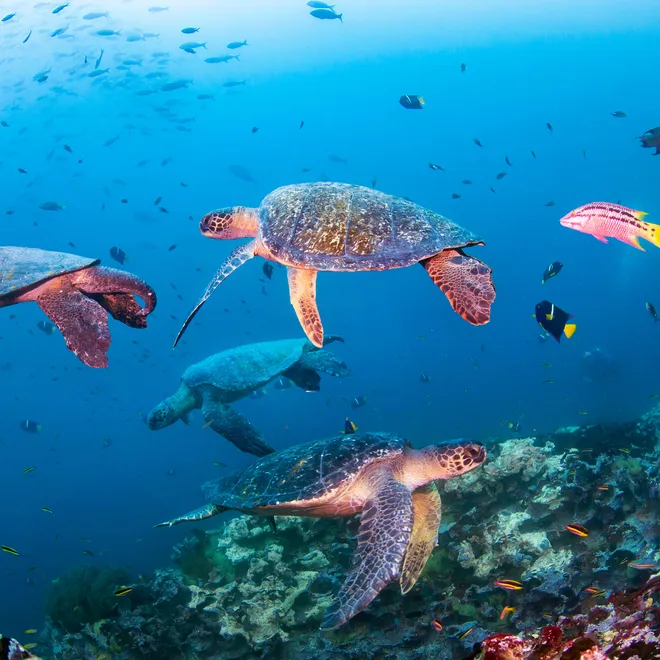
© Antonio Busiello/WWF-US
Stretching from the waters off Canada to the coasts of Chile, the Eastern Pacific Ocean is one of the planet's most productive and ecologically important marine regions. Its vast waters support extraordinary biodiversity, dynamic weather systems, and diverse underwater seascapes that sustain life both above and below the surface.1
A defining feature of the Eastern Pacific is the movement of cold, nutrient-rich water from the deep ocean to the surface through a process known as upwelling. These nutrients fuel plankton growth and support complex marine food webs, making the region a critical habitat for fish, whales, sea turtles, seabirds, and countless other species. The Eastern Pacific also serves as an important migratory corridor and nursery ground for marine wildlife. Beyond its ecological value, the region underpins the livelihoods of millions of people who depend on healthy oceans for food security, employment, and economic prosperity.
The Eastern Pacific is also part of one of Earth's most important natural climate systems. Oceans absorb approximately 90% of the excess heat generated by human-caused greenhouse gas emissions and take up about 30% of global carbon emissions, helping moderate the impacts of climate change.2 Coastal ecosystems such as mangroves and seagrass meadows play an especially important role, storing carbon at rates far greater than many terrestrial ecosystems while helping protect coastal communities from storms and erosion.2 As a result, the health of the Eastern Pacific is closely tied to both global climate stability and human well-being.
A warming ocean

© David Fleetham / naturepl.com / WWF
Climate change is placing increasing pressure on the Eastern Pacific and the communities and wildlife that depend on it. As ocean temperatures rise, seawater expands, and melting glaciers add more water to the oceans, driving sea-level rise and increasing the risk of coastal flooding, erosion, and storm damage.3
Warming oceans are also disrupting marine ecosystems. Higher water temperatures and nutrient pollution can fuel harmful algal blooms that deplete oxygen levels and create dead zones where marine life struggles to survive. At the same time, the ocean's absorption of excess carbon dioxide is causing ocean acidification, a process that lowers the pH of seawater and makes it more difficult for corals, shellfish, and other marine organisms to build and maintain their skeletons and shells.3 These changes threaten biodiversity and weaken ecosystems that support fisheries and coastal economies.
Human impacts and ocean solutions

© Diego M. Garces / WWF
Climate change is not the only threat facing the Eastern Pacific. Unsustainable fishing practices, marine pollution, weak resource management, and persistent social inequalities continue to place significant strain on the region's ecosystems. Without effective conservation and management, these pressures could further undermine the health of marine habitats and the communities that rely on them.
At the same time, efforts to protect and restore the Eastern Pacific are gaining momentum. Working alongside governments, local communities, and industry partners, WWF has helped advance sustainable fisheries management and marine conservation throughout the region.
In 2023, WWF co-launched the Fisheries Improvement Fund to support more sustainable fishing practices and strengthen the long-term health of marine ecosystems. WWF has also partnered with the government of Ecuador to support the protection of the Galápagos Marine Reserve, contributing to global efforts to conserve 30% of the world's oceans by 2030.
A key part of these efforts is supporting Indigenous and community-led conservation. By investing in locally driven solutions and recognizing generations of environmental stewardship and traditional knowledge, WWF and its partners are helping build a more sustainable future for both people and nature. Protecting the Eastern Pacific is not only essential for preserving one of the world's richest marine ecosystems, but also for strengthening climate resilience and safeguarding the communities whose futures are tied to a healthy ocean.
References
1 National Oceanic and Atmospheric Administration. (2009). What is the largest ocean basin on Earth? NOAA.
2 United Nations. (2024). The ocean – the world's greatest ally against climate change. United Nations.
3 NASA. (2023). The ocean and climate change. NASA Science.