Common marmoset
Callithrix jacchus
There is a high risk associated with keeping this species as a pet. This is not a suitable pet.
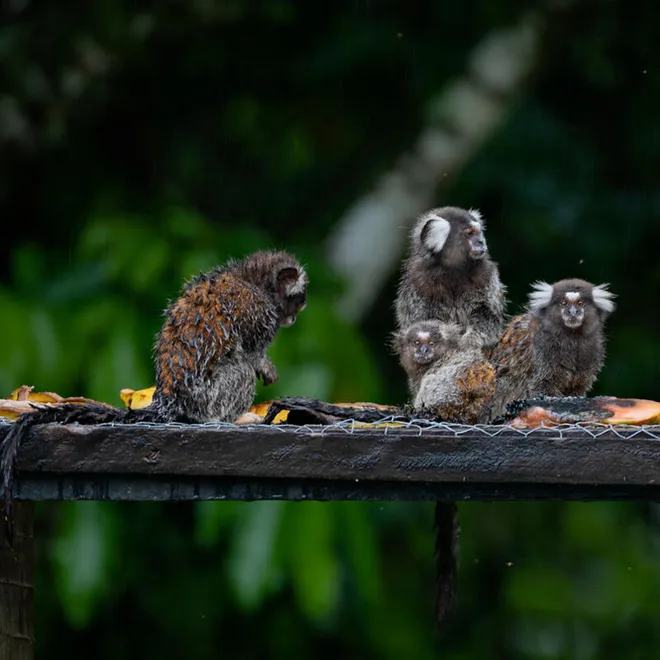
© Adriano Gambarini / WWF-US
Assessment results
High risk

Conservation | Moderate risk
This animal is likely to be threatened by extinction in the wild, and/or it is subject to international trade controls due to demand in the pet trade. Please check that the animal you want comes from a reputable seller or rescue center that follows best practices when they source their animals. Learn more about wildlife conservation and the pet trade.

Legality | High risk
This animal is either protected by national law, is restricted to import into the US, and/or many states do not allow ownership. Keeping these protected or prohibited species can have legal consequences for the owner, including fines or bans on pet ownership or sale. Learn more about relevant exotic pet trade and ownership laws.

Human and public health | High risk
It is likely that this animal is a threat to human or public health due to potential life-threatening zoonotic diseases and physical attributes that can harm humans.Learn more about animal-related illness and injuries.

Invasiveness | Moderate risk
This species could negatively impact native biodiversity or habitats. However, never release a pet into the wild for any reason. Learn more about invasive species.

Animal welfare | High risk
Care, diet, and housing needs of this species are extremely difficult to meet for its lifetime, and potential owners are unlikely to be able to provide a good quality of life. Learn more about the challenges with exotic pet welfare.
⚠️ Important considerations
- Check your local laws on marmoset ownership. In the majority of US states, primate ownership is illegal or restricted. It is also illegal to import any non-human primate to the US for the pet trade.
- Marmosets, especially those that come from the wild, are known to carry zoonotic diseases that can be life threatening to humans. They possess sharp canine teeth that may cause bite wounds to people as well.
- In order to ‘tame’ primates as pets, babies are often taken from their moms when they are a few days old. They are very social animals that need to be reared by their mother and live among a large family group of primates of their own kind. They do very poorly and are stressed by the isolated lifestyle in a person’s home.
- Their housing, diet, and social needs are very hard to meet in captivity, and are financially expensive and time consuming. Bone disease is a common health issue in marmosets and a specialized diet and UV light through outdoor access are required to prevent this.
Basic information
Taxonomy:
Primates, Callitrichidae
Lifespan:
About 12 years in the wild and 16 years in captivity
Weight:
0.6-0.8 lbs (300-360 g)
Size:
4.7-5.9 in (12-15 cm) body with 11.6-13.8 in (29.5- 35 cm) tail
Native range and habitat:
Inhabit a variety of forests from extreme coastal to dry inland to rainforests in Brazil.
Diet:
Their staple diet is insects, fruits, and plants. They also eat lizards and bird eggs.
Activity and behavior:
- Highly social and have parental care systems within their social groups of 3 to 15 individuals
- Active during the day and live in the trees
- Mark their territory by rubbing their scent glands (located under their armpits and at the base of their legs) against trees and other objects
© WWF-Japan