The vaquita: 5 facts about the most endangered marine mammal
The vaquita is the world's rarest marine mammal—and is in dire need of our help.
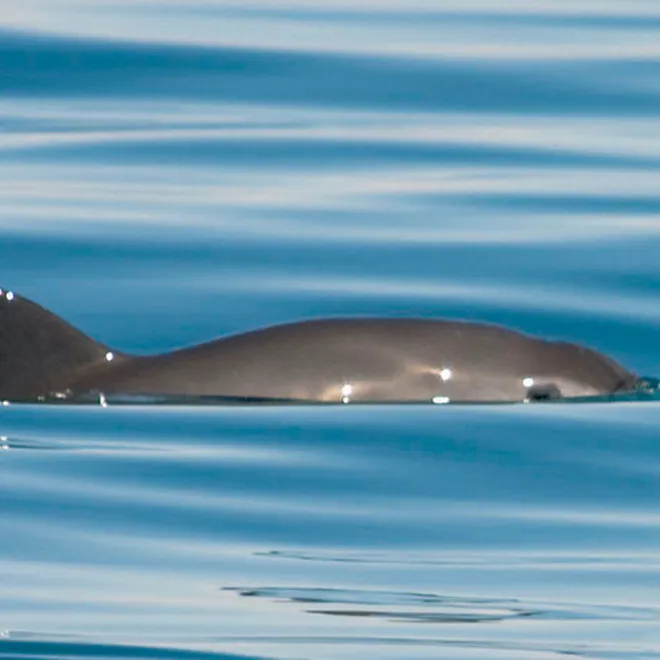
© Thomas A. Jefferson
Vaquita are caught and drowned in gillnets used by illegal fishing operations in Mexico's Gulf of California, including within marine protected areas. This little porpoise was only discovered in 1958, yet it's already on the brink of extinction.
Learn more about the vaquita and what you can do to save them.
1. How many vaquita are left?
A 2025 survey released earlier this year estimated the vaquita population could be as low as 7 to 10 individuals. While this number is incredibly low, vaquita numbers have held steady in recent years , with juveniles continuing to be observed.
2. What do vaquitas look like?

© Thomas A. Jefferson / VIVA Vaquita
The world’s smallest porpoise, vaquitas measure up to 5 feet long and weighs up to 120 lbs. The vaquita’s unique facial markings of a black ring around each eye and black curved lips have been compared to a smiling panda. They are dark gray on their dorsal (top) surface with pale gray sides and a white underside with light gray markings. Newborns generally have darker coloration.
3. Where do vaquitas live?
Vaquitas only live in the northern end of Mexico’s Gulf of California. Besides the vaquita, the Gulf of California has tremendous biological and economic importance. It supports an extraordinary diversity of marine life, including sharks, whales, sea turtles, and many species of reef fish. The Upper Gulf of California is considered globally unique because of its ecological characteristics, enormous biodiversity, and the number of species that live in this area. Captain Jacques-Yves Cousteau once coined it the Aquarium of the World.
4. Why are vaquitas so endangered?
Unsustainable and illegal fishing practices are the main drivers pushing vaquitas to extinction, particularly due to bycatch from illegal fishing. Vaquitas share waters with the much sought-after totoaba fish, and fishing nets inadvertently catch and drown the porpoise. Demand for totoaba swim bladders, called “maws”—believed to cure a variety of illnesses and diseases in traditional Asian medicine—is driving the vaquita to extinction. The swim bladders are often smuggled over the US border and then shipped to China, where dried bladders generate enormous profit. Organized crime controls much of this supply chain, and the high value trade provides continued incentive to fish, which means nets remain in the waters where vaquita swim.
5. Does this affect other marine species?
Yes—demand for the swim bladders of croaker species is fueling gillnet fisheries around the globe, endanger at least eight other threatened small cetaceans, along with many shark, ray and sea turtle species. In Bangladesh, blackspotted croakers overlap with the range of three cetacean species—including the endangered Irrawaddy dolphin—as well as the critically endangered scalloped hammerhead shark among others. In Papua New Guinea, maw fisheries have fatally entangled vulnerable snubfin and humpback dolphins, as well as other endangered marine species like sawfish, guitarfish, and wedgefish.
6. What can be done?
Though the international trade in totoaba has been prohibited under CITES Appendix I since 1976, illegal gillnet fishing remains high, and online sales are growing, with new markets continuing to emerge. As such, the Mexican government has committed to protecting the vaquita. On June 30, 2017, the government of Mexico announced a gillnet ban in parts of the Upper Gulf of California.
To protect other cetacean species from the same plight as the vaquita, researchers are urging policy makers to list six threatened or near-threatened croaker species under CITES Appendix II to curb the international trade of fish maws. At the 2026 International Whaling Commission (IWC) meeting, governments adopted a resolution to address maw fisheries and their impacts marking the first step towards combatting the bycatch of small cetaceans.
WWF continues to advocate at local, national and global levels for the protection of vaquitas and other marine mammals from fisheries bycatch Failure to act will result in the imminent extinction of the vaquita and the decline of other vulnerable small cetaceans.
© WWF-US / WWFGifts
Ocean-themed gifts
Support WWF's global conservation efforts and choose from symbolic adoptions, apparel, and more!