
Freshwater dolphins
Learn about freshwater dolphins as you explore their unique adaptations and behaviors and the importance of protecting their fragile habitats. In this lesson plan, students can create mobiles that represent the Amazon ecosystem, conduct research, create flipbooks, and play a game to mimic dolphin echolocation.
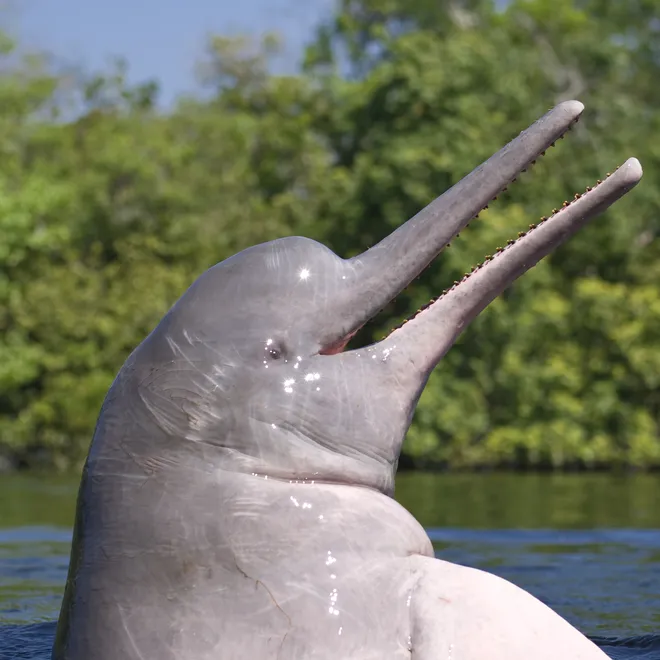
© naturepl.com / Mark Carwardine / WWF
💡 Warm up
Freshwater Dolphin Classroom Presentation
Start class with the presentation to introduce students to freshwater dolphins, threats to their survival, and why they matter. Once students are familiar with freshwater dolphins, ask student volunteers to share what facts they found the most interesting and lead a brief discussion comparing what students already knew about marine dolphins to what they just learned about freshwater dolphins.

© WWF
💻 Tech time
Video: River dolphin populations have plummeted by 73% since the 1980s
Show the video on the dramatic decline in freshwater dolphin populations over the past several decades to provide students with insight into the critical challenges faced by these animals. After watching the video, ask students in pairs to recall two or three human actions that are threatening freshwater dolphin populations and brainstorm an action that people can take to protect these unique animals.
▶️ Activities

© WWF
Craft
The Umbrella Effect
Guide students in creating hanging mobiles showcasing an Amazon River ecosystem, emphasizing the important role of dolphins as indicators of overall river health.
© WWF
Social Studies
Dolphin geography flipbooks
Lead students in conducting research and creating flipbooks that distinguish between different freshwater dolphin species, identify their geographical habitats and their threats, and explore other living things that rely on freshwater.
© WWF
Active Group Game
Food or Foe?
Play a dolphin-themed twist on Marco Polo to model how freshwater dolphins rely on echolocation.