Finding a wildlife paradise in Brazil’s expansive Pantanal
By
-
Karl Egloff

© WWF-US/AARON CLAUSEN
THE PANTANAL :: BRAZIL
Most people visit the Pantanal, the world’s largest tropical wetland, excited to see big cats—especially the elusive jaguar. I would have been thrilled to see just one. But while traveling with Natural Habitat Adventures, I was lucky to see several, each sighting an exhilarating experience in one of the most beautiful places I’ve ever been. But more than the cats, it’s the variety and abundance of the Pantanal’s wildlife that still fill my imagination. With an average camera and below-average photography skills, I am still amazed at what I was able to capture.

© WWF-US/AARON CLAUSEN
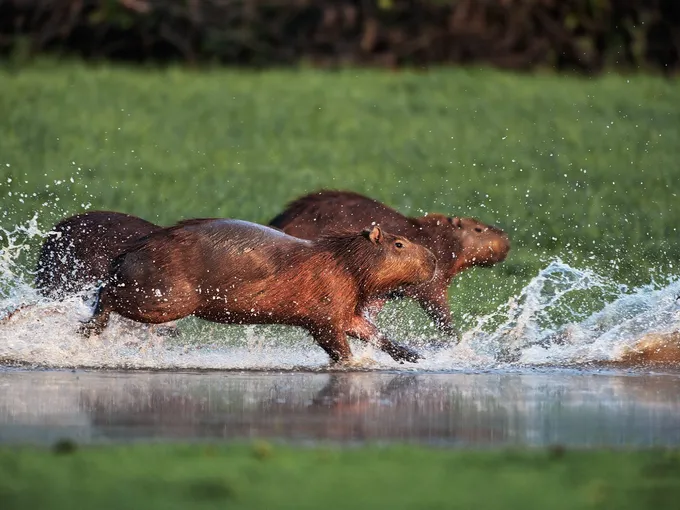
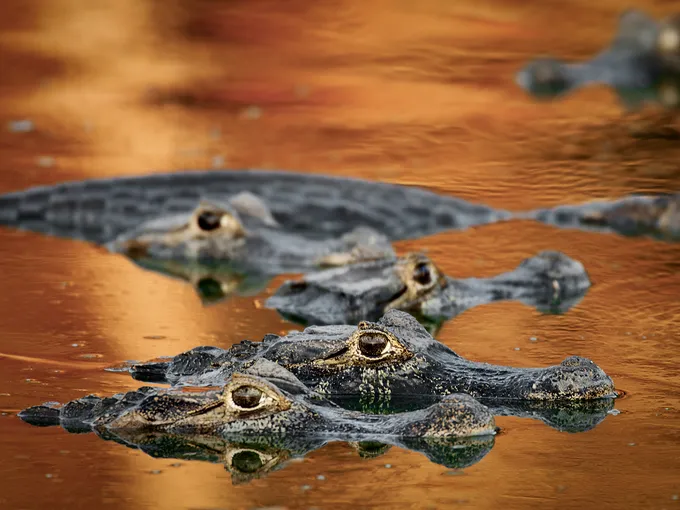
Capybaras, the biggest rodents on Earth, are plentiful in the Pantanal, and Brazilians seemed amused by our fascination with them. But their gentle playfulness—the adults just as unassuming and adorable as the pups—made them a favorite. Where there’s water, caimans too are ubiquitous. Well-camouflaged and usually sedentary during the day, many more lurk in the brush and shallow waters than are seen at first glance. Only in the dark, with their eyes reflecting light, can one appreciate their numbers, their twinkling eyes resembling the stars in the southern night sky above.
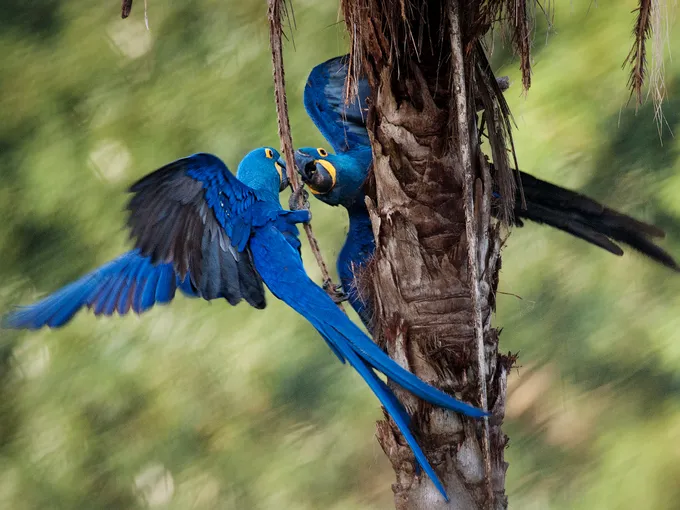
Birds captured our attention as well. Of the maybe hundreds of bird species we encountered, I committed only a dozen names to memory, but I’ll never forget the hyacinth macaws. The world’s largest flying parrot and a brilliant cobalt blue, the birds were almost always soaring together in seemingly identical pairs.
Yet it is the people of the Pantanal, from lodge owners to cattle ranchers, I most remember—because of their extraordinary devotion to and enthusiasm about protecting and sharing these unique natural treasures.
Explore the Pantanal with WWF.
© LUCIANO CANDISANI
© LUCIANO CANDISANI
© WWF-US/AARON CLAUSEN
© LUCIANO CANDISANI
© Antonio Busiello / WWF-US
Explore more
Keep reading this issue of World Wildlife magazine