Ze Frank on the Science and Voice Behind True Facts
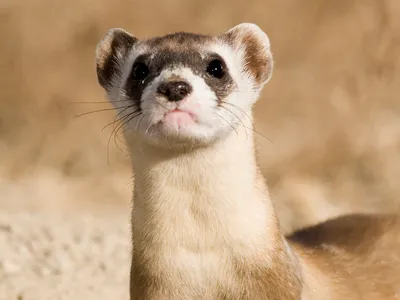
What do black-footed ferrets, cockatoos, and geckos have in common? They've all starred in True Facts, the wildly popular YouTube series from Ze Frank that's taught millions of people about the weird and wonderful side of wildlife.
Find Nature Breaking on Apple Podcasts, Spotify, YouTube, and more.
In this episode of Nature Breaking, host Seth Larson sits down with Ze to talk about his nearly two-decade journey as a creator. Together, they explore:
- How True Facts evolved from comedy sketches into rigorous science storytelling
- Why creative limitations often lead to better work
- The origin of Ze's iconic narrator voice and his invented character, "Jerry"
- How Ze builds trust with the scientific community
- Why doing something matters more than just watching, especially for conservation
Finally, Seth and Ze trade some of their favorite “true facts” from the animal kingdom.
Links for More Info:
True Facts: The Ferret and the Plague
TRANSCRIPT:
Seth Larson: What do black-footed ferrets, cockatoos, and geckos have in common? Each of them have been featured on True Facts, the YouTube show by Ze Frank that uses science blended with a heavy dose of humor to educate millions of people about wildlife. I recently had the chance to interview Ze about his career, his approach to content creation, and some of his favorite true facts. I hope you'll stay tuned for our full conversation.
Seth Larson: Welcome to Nature Breaking, a podcast produced by World Wildlife Fund. I'm Seth Larson.
For most of modern history, if you wanted to learn about animals, you had to pick up a field guide, visit a zoo, or maybe watch a nature documentary on TV. Well, today, a lot of people discover the natural world somewhere else: YouTube. In fact, there's a pretty good chance you're watching this video on YouTube right now.
Now, few creators have done more to introduce audiences to the weird, wonderful, and often hilarious side of wildlife than Ze Frank. Ze's True Facts series blends science with humor to teach millions of viewers about everything from dung beetles and sea cucumbers to birds and bats. His videos are funny, a little raunchy, but always educational. And they have a way of making even the strangest creatures feel worthy of our attention.
Recently, WWF partnered with Ze on an episode of True Facts about one of North America's most endangered mammals, the black-footed ferret.
That video was part of a series of fundraisers benefiting nonprofits in the conservation space. And today, Ze agreed to come on our show to chat more about his approach to wildlife education, community building, and what keeps him going after roughly two decades as a YouTube creator.
Before we get started, don't forget to subscribe to Nature Breaking via WWF's YouTube channel, which is @WorldWildlifeFund, or find us on your favorite podcast app. And if you have ideas for future episodes, shoot us an email. We're at [email protected]. Now, here's my conversation with Ze Frank.
Okay. Ze Frank, welcome to Nature Breaking. I'm so excited to be talking to you today.
Ze Frank: Thank you. Excited to be here.
Seth Larson: So you have been a YouTube creator since way before that was even a term that people knew what it meant, and your content has varied pretty widely over the years from, like, stream-of-consciousness stuff that you were doing back in 2006. I went back and watched some of your earliest videos, and they are way different than the really deeply researched nature content that you're creating now. I'd love for you to talk a little bit about that evolution and what led you eventually to focus on animals.
Ze Frank: So yeah, so I mean, it's actually even before then, right? I mean, the first work that I was doing was pre-video on the internet. Um, and then it kind of graduated to these platforms like Revver and Blip and things like that. I was a little bit of almost a late adopter on YouTube.
The, the original show was not on YouTube. And then it was uploaded there after.
But, you know, it's, um, it's been sort of a long, um, journey of trying to connect with people in different ways and, you know, figure stuff out about myself too. The, the underlying principle has always been trying to find things that sort of surprise people and connect with people in different ways.
Seth Larson: Yeah.
Ze Frank: Um, so entertainment and kind of the stream of consciousness stuff in the beginning was really just playing with the form of what was possible with, uh, online video versus, you know, what we thought of as traditional film and...
Seth Larson: Yup.
Ze Frank: ...things like that. And so, you know, it started off definitely within the realm of entertainment, and I moved towards kind of the, you know, these principles of, of how do, how do you connect with people? How do you get people to, to want to show somebody else something? And, you know, that led me in all sorts of directions because the... You know, if you're, if that's your sort of grounding principle, the content or the, you know, the focus of it can shift as long as the underlying intention is there.
Seth Larson: Yeah.
Ze Frank: So I did a lot, and then I became really interested in virality, and this is, you know, this is not... The, the term is a bit meaningless now, but in the truest sense, prior to algorithms kind of, um, I'm not gonna be pejorative, but force-feeding us with content, you know, based on our preferences and things, people would have to send physically, like make the decision to...
Seth Larson: Yeah.
Ze Frank: ...send something to someone.
Seth Larson: Much more of a traditional word of mouth sort of style.
Ze Frank: Yeah, yeah, exactly. And, and the question, you know, was what creates that behavior? Is it the content? Is it when the content appears? Is it how many of your people get it at the same time so it feels bigger? Um, that kind of, uh, led me to a of deeper exploration of that. Um, and it's, you know, that kind of came into focus when I started the BuzzFeed video project.
Seth Larson: Yeah. Talk a little bit about that.
Ze Frank: Well, the question was how do you take a bunch of people who just went to film school who have an idea of what's important and how to make things...
Seth Larson: Mm-hmm
Ze Frank: ... based off of the history of television and film, and how do you get them to translate into the opportunities of this sort of new era? So True Facts was actually born during that time. Um, and it was just a way of trying to explore how you could use things like stock footage and voice instead of having to do an elaborate production setup.
So the first ones were completely BS because you know, that's, that's what I kind of knew how to do was, was just, uh, have fun and make silly jokes. Um, so the, the first, you know, the moniker True Facts was a joke because they were... they weren't facts. They...
Seth Larson: Yeah.
Ze Frank: It was all, it was all made up. Uh, and it, was very successful, early on, so I started to do more of it, and that was always my rule. You know, if you have something that pops, you follow it up, and you try to understand why. Um, but by the third video or so, I was like, "I can't write absurdist jokes all, you know, over and over again, I'm gonna just sort of run out of absurdist space. Uh, I started to research the animals a little bit. And, um, it turned out that the actual facts, the, the real information provided a sort of foil for the whole thing.
Seth Larson: Yeah.
Ze Frank: It provided a straight man for me to kind of bounce off of. Um, and so that, that quickly kind of, you know, became the format. In terms of science, I went to, um, school for neuroscience, and I grew up in a science, uh, household. My father's a physicist. Um, and so, you know, moving into a space where I could learn more about animals and things like that, uh, felt like coming home. So, uh, yeah. And then just over the years, you can sort of see a progression where I get kind of, like, more and more fascinated by it, and I'm like, "Wow, I get a chance to learn everything about this one particular topic." Not everything, but I can drill down much more deeply. And then that, you know, that's sort of what led us here.
Seth Larson: Yeah. I can't claim to have been along for the whole ride of, of this evolution, but, in the course of, uh, getting ready for this interview with you today, I went back and watched a bunch of those early True Facts videos and then watched a, a lot of the more recent ones, and it really is a, a very interesting evolution to observe.
Uh, and, um, there's the, uh, uh, you put so much thought and effort and research into these videos, and you can really see that what started as sort of like a, just a kind of a fun time has evolved into this really thoughtful educational thing that's still a fun time also, which I really love.
I'm curious how you choose which creatures to showcase on your show because, uh, you could ... The, the, the animal kingdom is so big and so vast, y- it's almost hard to decide where to start from. So I'd love for you to talk just about where your inspiration comes from for these individual videos and how you decide which animals to showcase.
Ze Frank: I mean, in, in my case, the, the limitations, uh, that I face are, are the ones that guide me. So, you know, I'm not, uh, like the BBC or...
Seth Larson: Yeah.
Ze Frank: ... an organization like that where I can literally just start writing a script and then say, tell a photographer to go out in the wild and find a moment where that happens.
Seth Larson: Yeah.
Ze Frank: You know, these are... You know, so one is, is budgetary. Um, then there's the amount of time that I have as well. So instead of writing scripts, um, what I do is I gather media, and I look at research, right? And the goal is to find moments of media that, if you know what's going on are kind of amazing.
And the best ones are when you see something that you've seen a million times...
Seth Larson: Yeah.
Ze Frank: ...but there's something hidden in it, like when a pigeon walks, right? The, how their head stays perfectly still as their body catches up.
Seth Larson: Yeah.
Ze Frank: So then, then the, you know, the episodes are really kind of crafted around, all right, what media do I have, and what do I need to explain in order for people to come on the journey to seeing these pieces of, these moments in that special way? So the, you know, it's, it's kind of different to how a lot of sorts of traditional programming would work. Um, but that's, yeah, that's, that's the root of it. You know, like I, I just did one on pollinating flies and, there were two clips. There was the, um, the pig's butt arum, which, you know, the flies will go down into, and they get trapped for 24 hours before, uh, the plant releases them. So...
Seth Larson: Yep.
Ze Frank: ...If you cut open the bell, you just, this pouring of flies comes out. And then the second was this wonderful, um, hinge that some orchids have that are seesawed, so cantilevered in a way. Uh, so if the fly walks up it to a certain point, the whole thing, bop, flips over and then presses the fly into the, uh, pollinia. Um, you know that, that right there, once I have those two pieces of footage, you know, I'm sort of like, how... I need to like walk people up to what is happening here. It's amazing. Then that guides the research.
Seth Larson: Yeah. I, uh, scarcity is so often the, a great source of inspiration because, um, if you don't have those vast resources, it really forces you to whittle down to what is most interesting and what you can build out of what you have. And, um, I, I think some of...
Ze Frank: And I, I just want to add to that point. I mean, I think that's, that is, such a good point, and I think that one of the big things that I think about is what friction... what frictions do you have in any project, in any creative idea? It's one of the big things that I worry about with AI, is that you- when you don't have friction, you're, you're actually not forced to bring yourself into the equation in... which is the gift of, of the creative process. Um, uh, so yeah, I mean, I, you know, I... even if I did have unlimited resources, I would still be looking for some sort of limitation.
Seth Larson: Is there, uh, a species you've tackled that, um, you really struggled with to find the right entry point?
Ze Frank: Oh, yeah. I mean, there's, there's a lot on the cutting room floor. You know, there's species that, that are remarkably difficult for different reasons. Sometimes, uh, you know, it's availability of footage. You know, to do the hyena justice, for example, uh, requires footage that is hard to get to and expensive.
Seth Larson: Yeah.
Ze Frank: The raccoon, it weirdly is sort of awash with stuff, but, um, it's you know, I, I try not to put animals within the, uh, context of urban landscapes. So that's really, really difficult with, with, the raccoon. Um, so yeah, there's, there's a lot of things that I've tried to tackle that I, you know, can't, can't really get through and, and looking for a moment where something presents itself.
Seth Larson: You know, I also really love how you find opportunities to get your audience involved in participating in the work you're doing. I loved recently you did a species naming competition where fans had a week to suggest names for a newly discovered species that was, like, at the bottom of the ocean. It was some sort of deep-sea chiton, which I'm sure you can tell us more about.
Ze Frank: Yeah.
Seth Larson: I, I'm curious though what inspired that campaign, and what, if anything, did it teach you about building communities in a digital space?
Ze Frank: Um, so, so that project was done with, uh, the Ocean Species Alliance, so...
Seth Larson: mm-hmm.
Ze Frank: ...which is part of the Sankenberg, uh, thing. So I'm on the board of, of the Ocean Species Alliance. Uh, we had been, kind of talking about different ways of engaging, uh, folks in taxonomy, uh, so understanding what taxonomy is. Um, uh, an opportunity came up to work with Pensoft, which agreed to kind of hold the publication until we gave it this name.
Seth Larson: Ha.
Ze Frank: And so that, that worked out really, really well. I, I really, really enjoyed that. We're actually gonna do another one, uh, in the coming months. Um, think that, you know, I'm... don't know about the word community because I, I did a lot of things with community, uh, you know, from 2001 to 2009 or so. And it's, it's changed so much. Like I mentioned before, this is... it's very algorithm-dominated right now. You have very little… or you have a lot less behavior of people seeing something they like and then going to the source of it.
Seth Larson: Yeah.
Ze Frank: They, they interact with the thing that they like, trying to essentially tell the algorithm to give them more of that. So because of those dynamics, uh, true community is a little harder to, to achieve. So in Patreon, for example, um, we do a lot of really fun things in a much smaller context, um, things like, you know, they help me write Creepy Dave episodes. Um, we write jokes together. Uh, I'll sort of make things based on their, their responses. Um, but, uh, yeah, I, I mean, I value it a lot. I, I really think that getting people to do something, versus just watching, in the context of conservation, is crucial. Uh, I don't... You know, I think that the world is awash with the idea that just by getting someone's attention, uh, just viewing something, is enough. This is sort of leftover from the top-level marketing idea of funnels and all that kind of stuff.
Seth Larson: Yep.
Ze Frank: But I think that the value of that, it has precipitously declined. Um, so I think that, you know, getting, finding opportunities to get people to actually do something is, uh, is great. And, you know, I... that's sort of why I do these, uh, fundraisers like we, we did together.
Seth Larson: I have a fun question for you. Um, I love your voice in the True Facts videos, and I, I noted that it has evolved a bit over the years. It was kind of just something closer to a regular modern American accent in the earliest videos you were doing, and it's now something that I've come to describe as David Attenborough meets Ron Burgundy. And I'm dying to know what the inspiration was for this character you've created to narrate your videos.
Ze Frank: Yeah. You know, I mean, it’s just like an element of the video that I play with. And, and I think that, you know, in the beginning, uh, it was... In the beginning because it was a little bit of a, making fun of traditional documentaries, I tried to assume the sort of somber tone, uh, of narrators that, you know, anthropomorphize everything.
Seth Larson: Yeah.
Ze Frank: And even take that to the next level, right? So that was the fun of it. And, and Morgan Freeman had recently done the penguins, and so I even did an episode where I, you know, used... made his voice.
Seth Larson: I watched this video, yeah.
Ze Frank: Yeah.
Seth Larson: A good one.
Ze Frank: Um, but then, you know, over time, the character kind of evolved and it evolved kind of unintentionally. I think that there, there was an armadillos episode where, uh, that was really the first time where I kind of imagined the character to, to actually not really even have control over the script and invented this character called Jerry.
Seth Larson: Love Jerry.
Ze Frank: Maybe he's real. Maybe he's real.
Seth Larson: He seems like a real troublemaker.
Ze Frank: Yeah. So, so, you know, as that kind of came on, right, in order to hit that kind of flow, he had to be a little bit arrogant and a little bummed, pissed off, right? And so that kind of moved down that, that path. And then I took a break from making them, and when I came back, I had, uh, done a lot of these sort of fairy tale voices, like, uh, the Teddy Has an Operation sort of vibe things. And I really started to like the blend of this kind of like aristocratic voice with, with this.
Seth Larson: Yeah, yeah.
Ze Frank: And yeah, so it transformed. I don't... You know, some people think that I'm trying to sound British, but I'm certainly not. Uh, the, the, the voice often that I'm going after in those moments is from what I heard of an early American voice.
Seth Larson: Yeah.
Ze Frank: Heard a recording of this kind of like, you know, early American, which I guess was, was sort of more British than the British is today.
Seth Larson: Oh, sure. Interesting.
Ze Frank: But, um, but it's... yeah. But it's always just an opportunity to like play and have fun with, with words. I mean, that's become one of the jokes itself is how to pronounce things and, uh, things like that.
Seth Larson: No, absolutely. I think it's part of the secret sauce of what you've put together, that... One of the things that makes it so fun to absorb all these, uh, dense pieces of information about these animals is the way you're conveying it, and the voice is a huge part of that.
And that, that voice carries over to, uh, a, a spinoff YouTube channel that you've created that's kind of the kid-friendly version of True Facts called True Facts Educational. I wanted to ask you about this because, um, I think it's a brilliant idea to create a version of these videos that is more tailored towards kids. That's such a natural audience. My son is about to turn seven. He is just a sponge for any type of facts and figures about wildlife. And so, uh, that seems like a really natural audience, but obviously, the videos that you're creating for your primary channel, some of them can be a little raunchy, some of them can be a little bit inappropriate for a seven-year-old, let's say.
So I love that there's, like, this version of, it's like the cable edit of what I used to, when I used to watch Die Hard on cable when I was a kid or these R-rated movies that I never would've been allowed to see when I was eight years old, but I was able to watch them because the swears were edited out and maybe some of the most violent parts were edited out.
Um, uh, I'm curious what led you, if there was, like, a specific instance or a specific ask you received to create something like that? Or did you just have an instinct that this would be valuable?
Ze Frank: Yeah. Well, I mean, first of all, they're... it's not created for kids, it's created for the adults that manage kids.
Seth Larson: Of course.
Ze Frank: So I, you know, my hunch is that most kids would far prefer, uh, the originals because, it is, you know, slightly grown up and, you know, you don't get all the jokes. "Oh, what does, what does that mean?"
And, um, but, you know, families have different values, and, uh, certainly classrooms have different values.
Seth Larson: Mm-hmm
Ze Frank: And I was getting a lot of inbound, uh, you know, as I started to take the science more seriously, especially, um, where teachers were saying, "Hey, I'd love to show this in classrooms, but I just can't."
Seth Larson: Yeah, yeah.
Ze Frank: And that, you know, went on for a while, and then I, I was just like, "Okay, let's, let's give it a shot." Um, and it, it's not easy work because in some cases you really have to rewrite quite a bit or, or trim out lots of things. But, you know, they are used in classrooms, and that was, to me, that was really the focus.
It wasn't about, like, you get to share it with your, you know, seven-year-old son as much as a school setting, is there an opportunity to, to, to use this to teach people about certain things?
Seth Larson: Yeah. Um, I want to talk a little bit more about your process just for a minute, and then I've got a quick sort of lightning round thing for us at the end here. So you mentioned earlier you recently worked with our team here at WWF to create a video about black-footed ferrets, and I know from talking to my colleagues here how hard you worked and all the great pains you took to make sure that the facts in that video were all accurate. And I'm curious what your process is typically like for researching these videos and just making sure that you're giving your audience true facts that are really, truly grounded in science.
Ze Frank: Right. Um, so, I mean, overall I have two audiences. I have the general audience, and I have the scientific community.
Seth Larson: Mm-hmm.
Ze Frank: The scientific community because, um, I need access to the scientific community, and I need trust. Um, so when I started, I would reach out to scientists and say, " Hey, I, you know, I've got this I'm doing this thing." I would often get the response of, "What is your angle?" So, a lot of the ways that they had been contacted by the Nat Geos and things was in the spirit of, "Hey, we have a script. We want your name on it." Or to okay this, this, you know, approximation that we're making.
Seth Larson: Yeah.
Ze Frank: And so, you know, they were sort of wary about that. So, the first thing is that, uh, I try and find a scientist very early in the process before I even know what I'm talking about, so that I can ask them, "Hey, what, what's interesting and important about this species? What do people not know?" And then, "Are there any, um, things that need to be dispelled?"
Seth Larson: Mm-hmm.
Ze Frank: Where you, where you feel like your, your field is being misrepresented because, um, there was some approximation that really, you know, doesn't help understanding...
Seth Larson: Yeah.
Ze Frank: ...this. Um, then, you're sort of anchored in a couple researchers that are, are willing to chat with you, and then they become the reviewers, uh, at the end. But the other thing is that, um, you know, you, you really need to go and read the papers. I don't think there's any way... like you know, you've, you've probably seen a lot of science communication where, where it's obviously sort of scraped from another aggregation. Some, you know, it's, it's sort of secondary condensing of things.
Seth Larson: Yeah.
Ze Frank: Um, but, you know, if you, if you sort of work that way, you wind up perpetuating a lot of things that aren't quite true, that don't totally help. Um, yeah. I mean, I feel like they kind of have to be really, uh, well-researched. I, I really shudder, you know, if, if somebody... I mean, there's, you know, small things.
Even if I get a joke wrong where I like... there's a moment where I think, I forget what, what episode it is. I think it was in a shark episode or something like that, um, where I cut to a fish. It's a dead fish. Well, it turns out it wasn't a fish. It was a dolphin, right?
Seth Larson: Ha. Yeah.
Ze Frank: So, you know, then you have to live with that for the whole rest of your life, you know? Because you can't really re-upload on YouTube. Um, so yeah. Uh, you know, you wanna, you wanna make it, you wanna make it right before you start playing with it.
Seth Larson: It's not easy to get these things right. I think what you said about actually reading reports is a really good note, because I've had this exact experience where I go to prepare for an episode, and I read, like, a news article that has summarized a report that I'm gonna be talking about, and I think I've got a grasp on it, but then I go to read the actual report, or at least the executive summary of the actual report, and I find that, like, the way the news article phrased it is technically correct, but, like, vastly oversimplifies it. And if I then simplify even more so based on the news article, I'm completely missing the real meaning that was actually in the report. So I appreciate that level of attention to detail. I think it's something that, um, all of us need to be, like, all the more vigilant about all the time now.
Um, so Ze, I don't wanna keep you for too long, but I do want to end on a fun note, and I figured I'd be remiss if I let the creator of True Facts leave this podcast without trading some true facts with each other.
So I was hoping we could do a quick lightning round, and maybe I'd share three of my favorite animal facts that I've learned since I started working at WWF, and you could share three of your favorite facts that you've learned from making your videos, and we could just have a little fun and go back and forth.
I'll go first, and then you can go after me.
Ze Frank: Sure.
Seth Larson: So my first favorite animal fact that I've learned since working at WWF is that baby pandas are roughly the size of a stick of butter when they're first born, which is pretty incredible when you think of how big they ultimately grow to become.
Ze Frank: See that. Um, I think a, a great one is that freshwater mussels, so ones that live in rivers and streams, I'd never really thought about, but why don't they all just get washed down to the source, right? You would think they're broadcast spawners. They ... So, so they use, um, the gills of fish to transport their babies upstream again, uh, where they can grow, and that's the...
Seth Larson: Huh.
Ze Frank: ...only reason you can have freshwater mussels all, all the way up, these rivers.
Seth Larson: Oh, that's so interesting. How do they get... And, and if, apologies if you don't know offhand.
Ze Frank: Yeah. I got a whole episode. You can watch it. You can watch it.
Seth Larson: I'll put that in the show notes then, 'cause I want to learn more about that. My next, uh, favorite animal fact that I've got is that there are quite a few differences between African elephants and Asian elephants. Uh, Asian elephants tend to be a little smaller. There's a few different features that really stand out, but among them, and the, perhaps the most important to help you keep the two separate in your mind, are that African elephants have ears that are larger, and they're actually shaped roughly like the continent of Africa, and the ears of Asian elephants are a little smaller, and they're shaped roughly like the subcontinent of India. So that's just a great way to tell those two apart.
Ze Frank: That's pretty neat. Um, so pigeons, it looks like, have magnetically sensitive material in their eyes, and it's possible that one of the ways, uh, that they navigate is that they, uh, see the magnetic field, um, of the Earth.
Seth Larson: Come on. Really?
Ze Frank: That's a... I, I don't know if that's completely proven, but there's been, uh, there's an excellent article on that.
Seth Larson: Amazing.
Ze Frank: Yeah
Seth Larson: All right. I've got one more for you, and then I'll let you get your last one off as well. So my final one is that rhino horns, which are so sought after and cause a lot of poaching that is really, really sad that, uh, WWF works to stop... rhino horns are made of keratin, which is basically the same material that human fingernails are made out of.
Ze Frank: It's a, it's a classic, that.
Seth Larson: Yeah.
Ze Frank: Um, I guess I'm gonna go with, um, if a deer tick is infected with the bacteria that causes Lyme's disease...
Seth Larson: Mm-hmm.
Ze Frank: ...and it bites and feeds from a deer...
Seth Larson: Mm-hmm.
Ze Frank: ...it will be cured of its Lyme. The deer will not get it.
Seth Larson: Wow. Amazing.
Ze Frank: Yeah.
Seth Larson: Uh, okay. Ze Frank, thank you so much for being here today. This has been a super fun conversation. I've learned a lot talking to you. Um, thank you for all the content that you're putting out into the world and all the attention that you're bringing to wildlife and animals of all walks. And, uh, we really appreciate the opportunity to work with you and the work that you did with us recently on black-footed ferrets. That was a wonderful experience for World Wildlife Fund, and we really appreciate your partnership
Ze Frank: I appreciate it. Yeah, it's a pleasure
Seth Larson: That's a wrap for today. Thanks again to Ze Frank for joining Nature Breaking. He's doing amazing and really fun work to bring wildlife education to the masses, and we are grateful for the opportunity to partner with him in that effort.
If you're new to Nature Breaking, please take a moment to like this episode and subscribe to our channel on YouTube. We're under the Podcasts tab on the @WorldWildlifeFund channel. You can also find us on your favorite podcast app, whether that's Spotify, Apple Podcasts, or many others. Feel free also to email us at [email protected] if you have questions or ideas for future episodes.
We really appreciate you listening, and together, let's keep building a more sustainable future