
Locust in translation
What black locust reveals about building markets for invasive species


By

© WWF-US/Ashleigh Coleman
We generally assume we know an invasive species when we see it. And, often, the examples we can think of are obvious ones: red lantern flies in the eastern US, pythons in Florida, kudzu vines in the southern US, etc. Or, of course, carp in the Mississippi and its tributaries – the first species WWF tackled in our efforts to explore market uses for invasive species.
That program is intended to minimize harm, using market forces, where a species is otherwise not eradicable. But how do we explore uses for invasives in situations where we cannot easily define the threat?
© Shutterstock
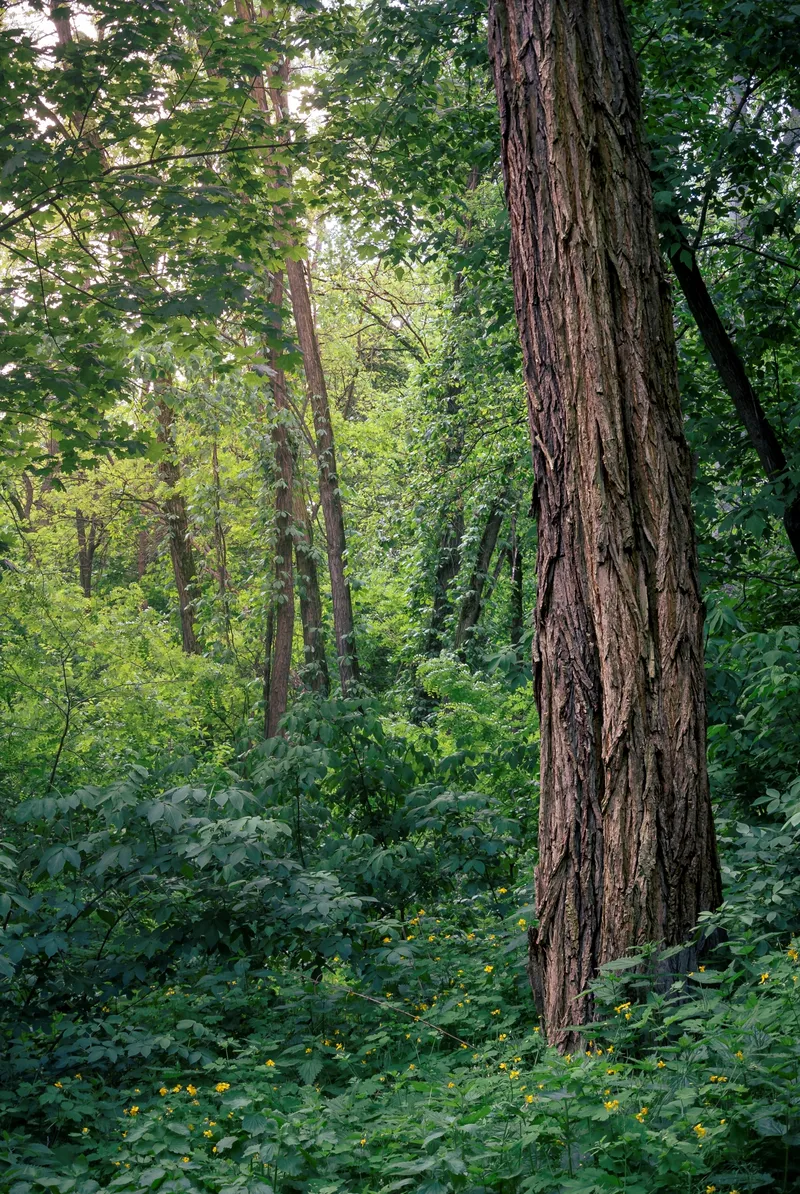
Meet the Black Locust — which is a tree, not an insect. This member of the pea family (!) is a quickly growing flowering hardwood. It’s durable and rot resistant, making it a great alternative to pressure-treated wood (and all the chemicals that treating them entails) or an even more durable option to other naturally rot-resistant woods, like cedar.
It’s highly invasive in some areas, directly outcompeting native trees and then creating shady thickets that block sunlight for native understory plants. Like many invasive species, it’s also a prolific spreader. And while it’s unlikely to be eradicable, it could have a strong market use in outdoor lumber such as fences, decking, and playgrounds. A quick gut-check against our market use for invasives framework suggests that while further research is needed, this species could be a good candidate. Market use could potentially reduce density, improve ecosystem health, and/or prevent further spread – and even replace pressure-treated wood with a more environmentally friendly option.
Of course, this nascent industry faces hurdles as well as opportunities. Some of these, such as current lack of market use, lack of processing, and lack of knowledge, are the same hurdles facing other invasive species. But Black Locust also faces some additional obstacles. Unlike something like carp (or python or red lantern flies), which are invasive across the entire US, this hardwood tree is native in some areas of the country but invasive in others. This means that where you get your wood matters, so sourcing and traceability would be key necessities in any market use. Ideally, we’d need to protect or sustainably manage Black Locust in areas where it is native while eradicating or sourcing down the tree to manageable, steady-state levels in areas where it is not.
Yet this complication leads to inaction and confusion. According to the USDA, we don’t even exactly know WHERE Black Locust is native and where it’s invasive within the country. The tree is most often presumed to be native in Appalachia and the Ozarks, but as the Natural Resource Conservation Service points out, “it is listed as a noxious weed in MA, ME, MN, and WI; a regulated plant in MA and NY; and is a listed invasive plant in CA, CT, MA, MI, NJ, OR, and WI.”
Sometimes Black Locust is even listed as native and non-native within the same state, without clear definitions, generating even more confusion. For example, the USDA explicitly calls out southern OH as the northern part of the tree’s presumed native range centering around Appalachia, but Ohio State University says that Black Locust was intentionally introduced into the southern part of OH and has now spread throughout the entire state.

© Shutterstock / Stefan_Sutka
This challenge of defining where a species is and isn’t invasive, and therefore how it should be managed, isn’t unique to Black Locust – nor to this country. Lake Trout is native to the Great Lakes but invasive in Yellowstone Lake, not all that far away. The Peacock Bass and Golden Dourado are both native to parts of Brazil (the Amazon River Basin and La Plata Basin respectively) but invasive in other parts of the country, such as near Rio de Janeiro. Cootamundra Wattle in Australia is native to New South Wales but widely propagated as an ornamental tree elsewhere and is now invading woodlands and forests, outcompeting natives and even hybridizing, bringing up even more thorny questions.
Invasive species are a serious environmental and economic threat, contributing to more than 60% of global extinctions and costing the world $423 billion annually, with costs increasing fourfold each decade. Market uses can provide a needed and powerful tool to address invasive species where they cannot be eradicated, but only if we can decide on a definition of whether and where something is invasive and put in place the necessary traceability systems.

© Pexels
We need to work together to figure out a way forward, through coalition building and consensus, to both unlock market potential and support our natural ecosystems, and also to set guidelines of how these conversations can move forward. Black Locust provides a powerful test case to tackle these questions and establish a standard.
WWF has successfully led coalitions to bring together stakeholders across the supply chain in the past on invasive control and sees great potential in a similar approach for Black Locust. Help us to tackle this and turn another ecological liability into a climate-smart resource.