Climate change and the Great Plains
A changing climate could alter America's essential grasslands
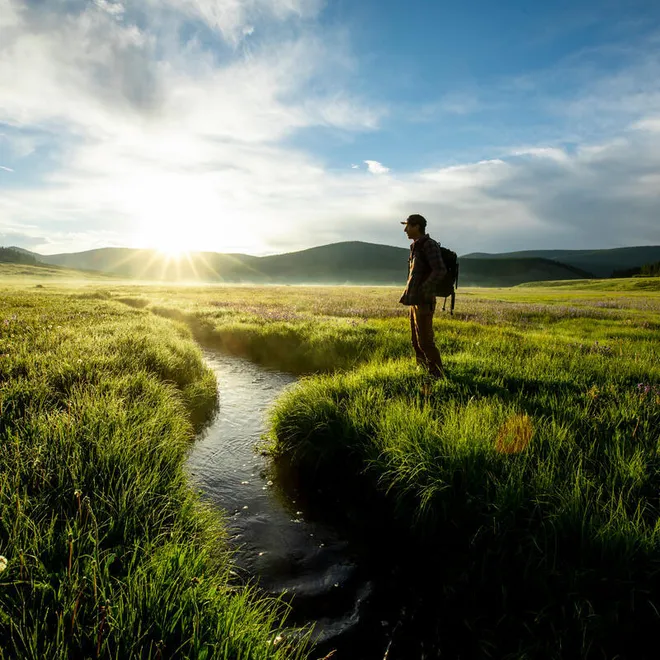
© Jordan Siemens/Digital Vision/Getty Images
Deep roots, climate resilience
The Great Plains stretch from Canada to northern Mexico across roughly 700 million acres of grassland, making them one of the largest grassland ecosystems in the world. Far from empty open space, the region supports diverse wildlife, sustains rural communities, and plays an outsized role in North America's climate resilience.
Much of the Great Plains' climate value lies beneath the surface. Vast networks of deep-rooted native grasses help stabilize soils, improve water quality, and replenish groundwater supplies by allowing rainwater to penetrate deep into the ground.1 These root systems also reduce erosion and help landscapes withstand drought and extreme weather.
Grasslands are among North America's most overlooked natural climate solutions. Unlike forests, which store much of their carbon above ground, the Great Plains store enormous amounts of carbon deep within their soils, where it can remain locked away for decades or even centuries.1 Because much of this carbon is stored underground, grasslands are generally more resilient to drought and wildfire and release less carbon when disturbed than many other ecosystems.2
Climate change on the plains

© WWF-US/Clay Bolt
The Great Plains are already experiencing the impacts of a warming climate. Rising temperatures, shifting precipitation patterns, prolonged droughts, and more frequent extreme weather events are placing increasing stress on ecosystems, communities, and agricultural systems across the region. Researchers warn that changing climate conditions could alter soil biology, reducing the soil's ability to retain water and maintain fertility.3
Longer and more severe droughts are also increasing wildfire risk across the Plains. As temperatures rise and landscapes dry out, grasslands become more susceptible to large, fast-moving fires that can threaten wildlife habitat, infrastructure, and livelihoods. Meanwhile, prairie potholes, shallow wetlands that provide critical habitat for millions of migratory birds and other wildlife, are shrinking as warmer temperatures and changing precipitation patterns alter water availability across the region.3 The loss of these wetlands could have cascading effects across North America's migratory bird populations.
Building a resilient future

© Staffan Widstrand / WWF
Protecting the Great Plains is about more than conserving grasslands. It is about safeguarding one of North America's most important natural defenses against climate change while supporting the people, wildlife, and industries that depend on the region.
Indigenous Peoples have stewarded the Plains for generations, yet today only a small share of the landscape remains under Indigenous management. Areas managed by Native Nations often support higher levels of biodiversity while continuing to provide essential ecosystem services. By supporting Indigenous-led conservation and sustainable land management, WWF is helping strengthen both ecological and community resilience.
Through initiatives such as the Sustainable Ranching Initiative, the Ranch Systems and Viability Planning Network (RSVP), and the Great Plains Wildlife Recovery Team, WWF works with Tribal Nations, ranchers, and local communities to protect native grasslands, strengthen climate resilience, and build a more sustainable future for the Great Plains. As climate pressures intensify, conserving the Great Plains will be critical not only for the region itself, but for the broader health, food security, and climate stability of North America.
References
1 Grasslands, Rangelands, Savannahs and Shrublands (GRaSS) Alliance. (2024, February). Valuing grasslands: Critical ecosystems for nature, climate, and people [Discussion paper].
2 U.S. Fish and Wildlife Service. (2025). Central grasslands conservation. FWS.gov.
3 National Park Service. (n.d.). Climate change: Impacts of warming on the Great Plains — Wind Cave National Park. Retrieved July 22, 2026
Environmental Protection Agency. (2016). Climate impacts in the Great Plains. US EPA (archived January 19, 2017 snapshot).
Sy, S., & Fecteau, M. (2024). Depletion of major groundwater source threatens Great Plains farming. PBS News.