Publications
-
In Nepal, civil engineers have traditionally focused on construction without considering the environmental impacts, but the rapid growth of infrastructure projects is forcing a shift. ALIGN is bridging the divide between conservation and development by partnering with academic intuitions to introduce new courses.
-
Within the infrastructure sector, there is a shortage of skilled professionals capable of integrating natural resource safeguards into infrastructure development. ALIGN collaborated with Shushant University in India to establish an infrastructure planning course aimed at equipping future generations with a deep understanding of sustainable infrastructure development.
-
WWF GEF Resilient Bold Belize BGI IP CEO Endorsement Request
-
-
Despite conservation emerging as a priority for the government of Nepal, infrastructure development has taken precedence, and each year, investments in linear infrastructure continue to rise. ALIGN collaborated with the Nepal Forum of Environmental Journalists to organize a workshop that raised awareness in the media on the importance and urgency of integrating biodiversity and ecosystem consideration into linear infrastructure development.
-
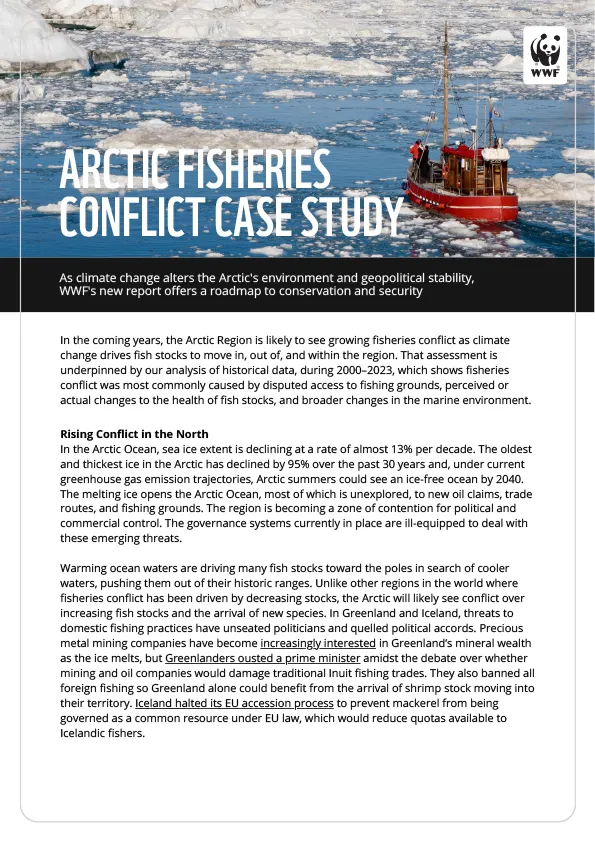
As climate change alters the Arctic's environment and geopolitical stability, WWF's new report offers a roadmap to conservation and security.
In the coming years, the Arctic Region is likely to see growing fisheries conflict as climate change drives fish stocks to move in, out of, and within the region. That assessment is underpinned by our analysis of historical data, from 2000–2023, which shows fisheries conflict was most commonly caused by disputed access to fishing grounds, perceived or actual changes to the health of fish stocks, and broader changes in the marine environment.
The analysis is part of a global initiative – Oceans Futures – aimed at identifying, understanding, and preventing future conflicts over fisheries resulting from climate change-driven fish migration, which will have profound impacts on nature, people, and global stability.
Link to full report: https://www.oceansfutures.org/arctic
-
-
-
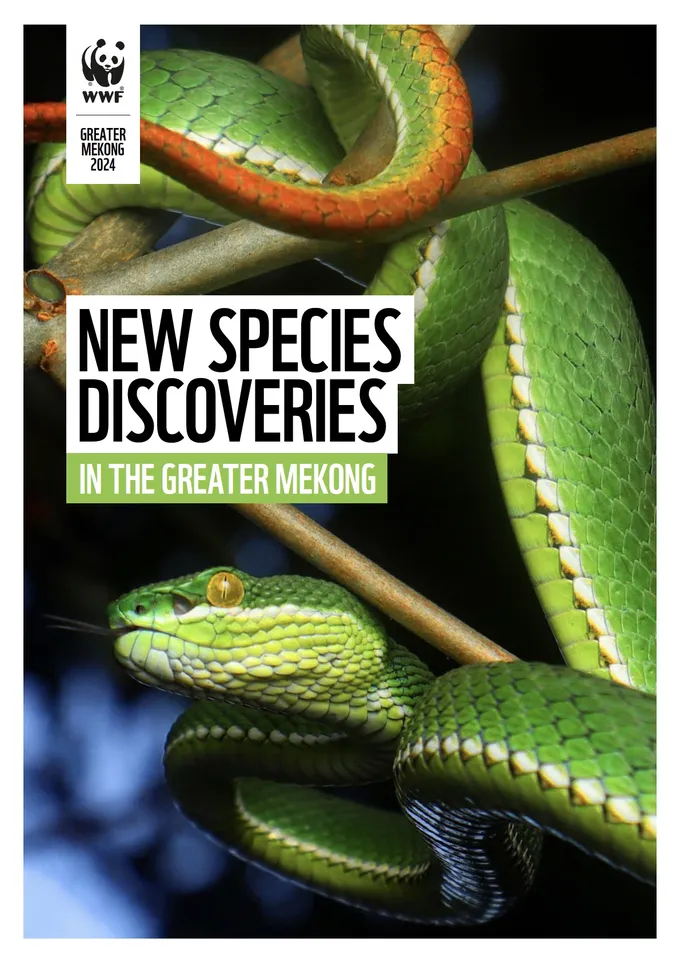
The report documents the work of hundreds of scientists from universities, conservation organizations and research institutes around the world who discovered 173 species of vascular plants, 26 reptiles, 17 amphibians, 15 fishes and three mammals in Cambodia, Laos, Myanmar, Thailand and Viet Nam. This brings the total number of vascular plants and vertebrate animals described in the Greater Mekong region since 1997 to 3,623.
-