What animals live in the Himalayan mountains?
The region is home to species ranging from snow leopards in high-altitude alpine ecosystems to river dolphins in low-lying waterways.
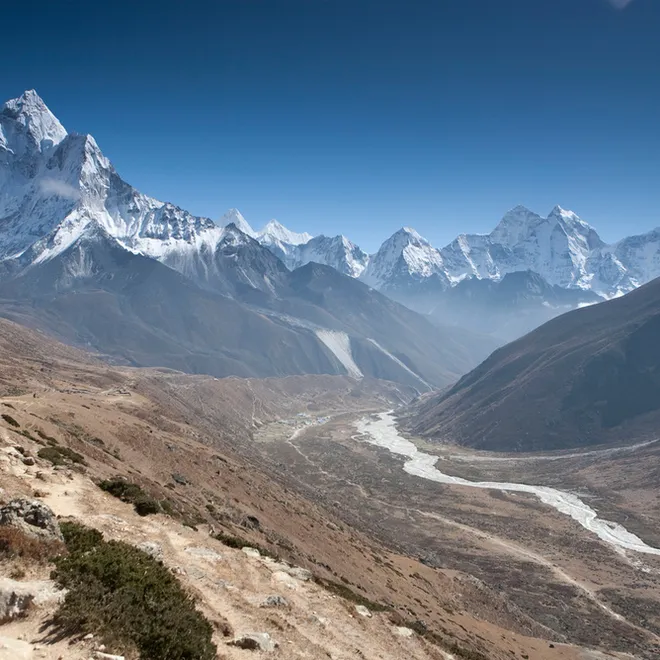
© WWF / Steve Morgan
Key takeaways
- The Eastern Himalayas are one of the world's most biodiverse regions. They're home to iconic wildlife along with thousands of unique plant species.
- The region's biodiversity faces serious threats. These include habitat loss and fragmentation, climate change, flooding, poaching, and increasing human-wildlife conflict.
- The success of conservation depends on collaboration. WWF, governments, and local communities are working together to protect habitats, create wildlife corridors, and support sustainable livelihoods.
The Eastern Himalayas include more than the world’s highest mountains. Throughout the region, a wide range of ecosystems from high-altitude forests and tropical jungles to critical freshwater systems like the Ganges and Brahmaputra make this region as biodiverse as it is iconic.
Sadly, this incredible region is under threat from deforestation, human-wildlife conflict, and flooding worsened by climate change. Since WWF’s founding in 1961, we’ve been working in the Eastern Himalayas, collaborating with local communities, governments, and other partners, to build a sustainable future for its people and these crucial ecosystems.
What animals live in the Himalayan mountains?
The Himalayas harbor an amazing diversity of wildlife. High in the rugged mountains, the elusive snow leopard reigns as one of the ecoregion’s apex predators, with its presence indicative of a healthy alpine habitat. Far below, Asian elephants roam the lush forests and grasslands of the Terai Arc landscape and the Brahmaputra floodplains, alongside tigers and greater one-horned rhinos.
The region’s rivers are just as remarkable. The endangered Ganges river dolphin navigates the waters using echolocation, while the powerful golden mahseer, often called the “tiger of the river,” can grow huge and is prized for its strength. Forests shelter charismatic species like Himalayan black bears, takin, red pandas and critically endangered golden langurs. In total, there are over 300 mammal species, nearly 1,000 bird species, and over 160 globally threatened species found in this crucial region!
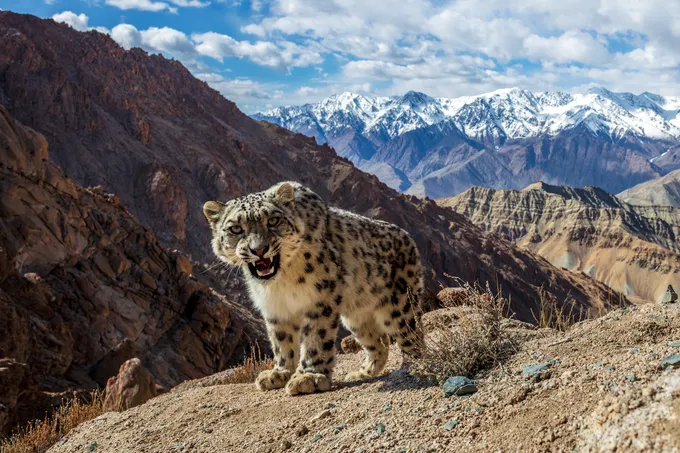
© Sascha Fonseca / WWF-UK
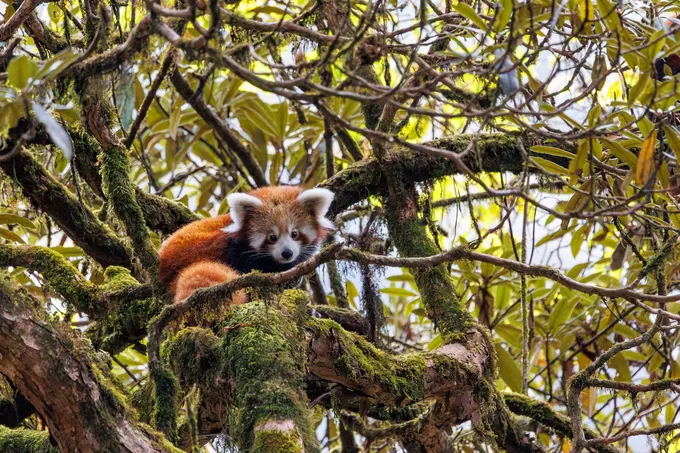
© Sylvain Cordier / naturepl.com / WWF
How were the Himalayas formed?
Millions of years ago, the Indian sub continent was a large island separate from Asia. Its tectonic plate gradually moved north, eventually crashing into Asia. The landmasses crumpled up against each other, erecting the mighty Himalayan mountain range, including Mount Everest.1 The Indian plate continues to move north, which means that the Himalayas are rising each year!
What kinds of plants live in the region?
The Eastern Himalayas are home to more than 10,000 types of vascular plants—in other words, plants with leaves and a stem, such as trees and ferns. One third of that number are endemic, making it one of the most botanically diverse regions on Earth. This extraordinary diversity comes from the region's dramatic shifts in elevation and climate across relatively short distances. Spanning from the tropical Terai lowlands—situated at roughly the same latitude as Orlando, Florida—up to alpine meadows, glaciers, and the world's tallest mountain peaks, the region sustains a remarkable range of ecosystems. Along the way you'll find broadleaf forests dominated by sal, oak, maple, and birch trees along with bamboo forests, a remarkable number of orchids, spectacular rhododendrons, and numerous medicinal and edible plants.

© WWF-US/Danielle Brigida
Do local communities in the area support conservation?
Local communities are integral to protecting the Himalayas’ biodiversity. Buddhists, Hindus, Christians and animists have lived closely with nature for centuries and are part of the region’s tradition and culture of conservation. The ancient traditions and livelihoods of many locals remain woven into the balanced use and respect for natural resources.
Ecosystems provide freshwater, erosion control, food, and drive the local economy. In turn, locals are integral to their protection. For example, Nepal has been a leader in community-based approaches to forest management and conservation for decades. The country’s first Community Forest User Groups were created in the late 1980s, and a major milestone took place in 2006, when Nepal’s Kangchenjunga Conservation Area became the country’s first community-managed conservation area. Local communities continue to lead in protecting the area, establishing it as one of the largest models for community-led conservation.

© NYAL MUEENUDDIN/WWF-PAKISTAN
Why are the Himalayas under threat?
Under planned infrastructure development like roads and railways is one of the greatest threats to the region. Along with deforestation for timber and unsustainable land use, development is fragmenting habitats and reducing biodiversity. This is driving human-wildlife conflict as people and species like tigers, elephants, and snow leopards are increasingly forced to share space. Lack of investment and support for long-term human-wildlife conflict management, along with limited livelihood options among communities in conflict-prone areas, exacerbates the challenge. Climate change, which is melting the Himalayan mountain glaciers, intensifies pressures on habitats and increases the risk of disastrous flooding.
Poaching is also threatening some of the Himalaya’s most iconic species. This is being driven by demand for rhino horn and the furs, bones, and other body parts of snow leopards and tigers, helping fuel the illegal wildlife trade.
How can we protect these ecosystems?
Our goal is to make sure plant and animal species can thrive, and at the same time, local communities can maintain and improve their livelihoods. We work with these communities as well as the governments to protect forests, animal habitats and freshwater sources in the Greater Himalayan Transboundary Conservation Landscape, a 38,000 square mile region spanning across Bhutan, India and Nepal.
This includes re-establishing connectivity and creating biological corridors that link priority conservation areas both within each country and across borders. Establishing protected areas will bolster the effectiveness of efforts to conserve these corridors and protect threatened wildlife populations.
One of the greatest threats to connectivity in this region is under planned infrastructure development like roads and railways. We’re working with governments and partners to develop more wildlife-friendly infrastructure that enables safe passage for species like elephants, tigers, and snow leopards. By considering wildlife and their movements in new infrastructure development, these species are better protected while still meeting the needs of people and minimizing conflict.

© Meeri Koutaniemi / WWF Finland