Reducing Impacts
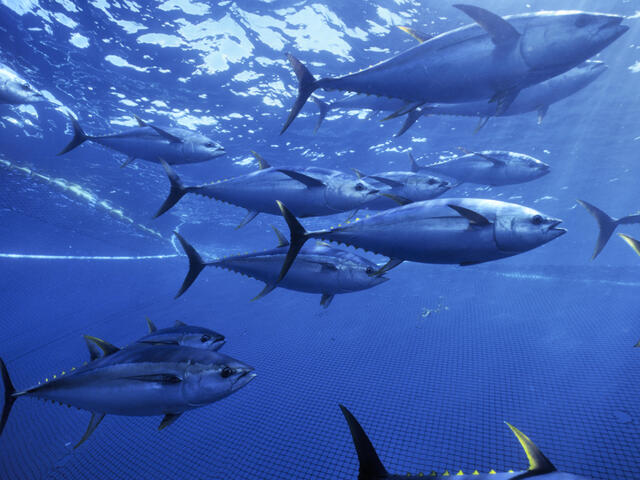
WWF has identified four priority commodities—tuna, whitefish, fishmeal/oil, and tropical shrimp–that play a crucial role in the global seafood chain. These species also happen to live in important ecoregions we seek to protect. They represent the largest categories of wild caught seafood by commercial value and traded volume, offering strong potential to transform fisheries markets into sustainable businesses. We work at all levels and across all channels – from expanding marine protected areas to reducing overfishing to attain better fishery management and increasing the supply of sustainably caught seafood through fishery improvement projects– to make these species healthy again.
Creating and Expanding Marine Protected Areas
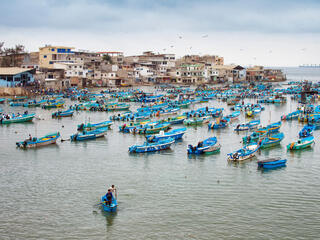
Coastal communities rely on fishing for their sustenance and livelihoods. Without protected areas for marine life and critical habitats, many marine species will not survive. WWF collaborates with communities, scientists and governments to create flexible zones that designate different types of protected areas. These protected areas include the world's largest and most intact tropical rain forests, diverse freshwater systems, varied coral reefs, and productive fishing grounds. All of these places are also home to many endangered species.
Making Fisheries Sustainable
WWF worked hard to help found the Marine Stewardship Council (MSC) in 1997, and we’re proud that it is the world's leading certification and eco-labeling organization. The MSC rewards sustainable fishing, and harnesses consumer and retailer purchasing power to promote environmentally responsible practices. Fisheries that are already MSC-certified or under full assessment represent over 11 percent of the annual global wild catch harvest.
Nearly 15,000 seafood products with over $3 billion in annual sales bear the MSC eco-label. To increase the supply of MSC-certified seafood, WWF partners with other non-governmental organizations to pre-assess fisheries as to readiness for certification, and to provide fishery improvement projects to help fisheries achieve certification. See a complete list of our fishery improvement projects, including a summary of progress and activities to date.
Advancing Conservation and Sustainable Use
WWF promotes science-based initiatives for long-term conservation and sustainable use of seafood or fish stocks. The International Seafood Sustainability Foundation (ISSF), a global coalition of scientists, the tuna industry, and WWF, promotes science-based initiatives for the long-term conservation and sustainable use of tuna stocks. WWF encourages its retail partners to ask its canned tuna suppliers to join and actively engage in the ISSF in order to move toward exclusively sourcing from sustainable, MSC-certified tuna fisheries.
Improving Fishing Practices
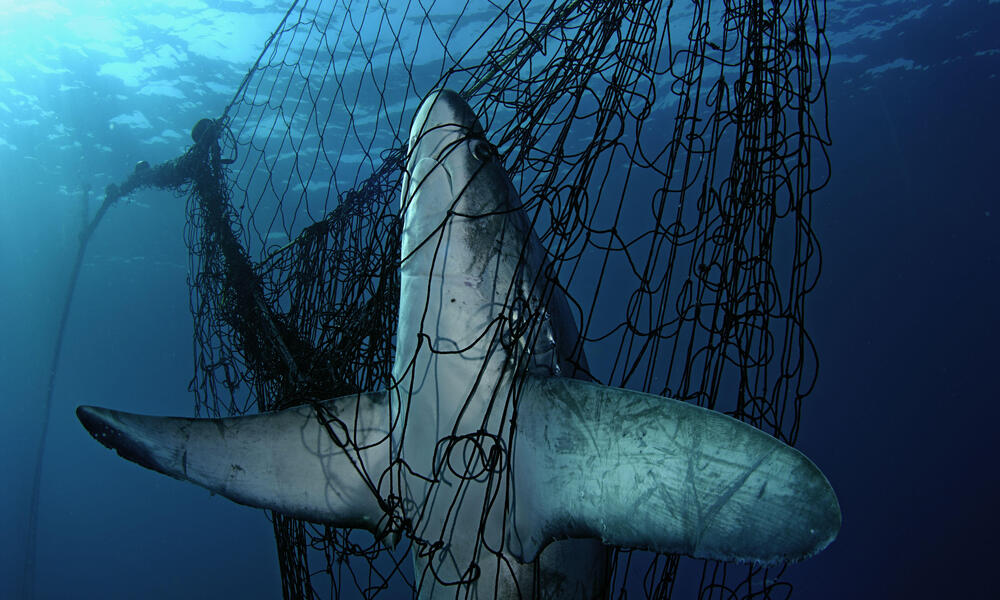
WWF facilitates fishing gear and technique improvements to help fishermen reduce bycatch while still allowing them to sustainably catch enough fish to sustain their livelihoods. These modifications can be simple and inexpensive, with the best innovations often coming from fishers themselves. To inspire and reward practical, innovative fishing gear designs that reduce bycatch, WWF created the International Smart Gear Competition. Applicants submit ideas for modified fishing gears and procedures that increase selectivity for target fish species and reduce bycatch for other species. The top ideas are then rewarded with monetary prizes which are used to further develop the technique and/or commercialize it to other fisheries.
Promoting Responsible Procurement and Trade
WWF helps retailers worldwide to source from fisheries that are MSC-certified through our Major Buyer initiative. WWF recommends that our partner companies work with their suppliers to source from MSC-certified fisheries and obtain MSC chain of custody certification. By achieving certification, these companies can display the MSC ecolabel on products, providing customers with the best environmental choice in seafood. To increase the supply of certified seafood, Major Buyer partners also support the advancement of their source fisheries toward MSC certification, often through Fishery Improvement Projects. By working with retailers with considerable influence, we can transform the global seafood market and ensure the continuity and quality of the fishing industry as a whole.
Advocating for Governmental Fishing Policy
WWF constructively advocates with governments and regional fisheries management organizations (RFMOs) for stricter regulations and best practices for fisheries management. Further, we collaborate with governments worldwide to fill capacity gaps that prevent progress. We also actively engage with governments that want to eliminate harmful fisheries subsidies that lead to overfishing.
Working with the World Bank
WWF works with the World Bank and others in support of the Global Partnership for Oceans, announced in February of 2012. This initiative brings science, advocacy, the private sector, and international public institutions together to address the threats to the health, productivity and resilience of the world’s oceans. This partnership builds off past collaborations with the World Bank on the Sub-Saharan Fisheries Partnership and issues such as rights based management, which provides more economic incentives to participants in a fishery to ensure its long-term sustainability. In October 2013 a unique panel of business, government, conservation and academic leaders, convened by the Global Partnership for Oceans, agreed a global strategy for aligning ocean health and human well-being (PDF). The Blue Ribbon Panel, which includes 21 global experts from 16 countries, identified five guiding principles to ensure effective investment in the world’s oceans to support sustainable livelihoods, social equity and food security.
Fisheries for People and Nature
Mismanagement of fisheries that produce the world’s seafood can have significant impacts on ocean health, and the people it supports. WWF is working towards better solutions for the world’s oceans that are fair to those relying on it for income and food, while also protecting its future. Rights-Based Management (RBM) can transform global fisheries performance and has proven to achieve balance between economic, ecological and social needs around the world.
 Fishmeal and Fish Oil
 Tuna
Tuna
 Alison Cross
Director, Fishery Sustainability
Alison Cross
Director, Fishery Sustainability
 David K. Schorr
Senior Manager, Transparent Seas
David K. Schorr
Senior Manager, Transparent Seas