Safeguarding the benefits of nature

I grew up in the 1960s, a time when snappy environmental slogans were the rage—Save the Whales, Save the Planet, and Respect Your Mother appeared on countless T-shirts and bumper stickers. At the heart of those lines was the conviction that once we lose nature it can never be recovered. And in large part, that’s true.
For many years, humanity has taken for granted the abundance of nature during this explicitly fertile and stable moment in geologic time known as the Holocene. It is a time when fluctuations in sea level have been minimal enough to give rise to rich ecosystems in the sea and on the coast—salt marshes and mangroves that serve as nurseries for the ocean. It is also a moment when weather patterns are predictable enough to allow cultivation of crops, which Jared Diamond’s Pulitzer Prize-winning book Gun, Germs, and Steel famously explains is the bedrock of building more complex societies.

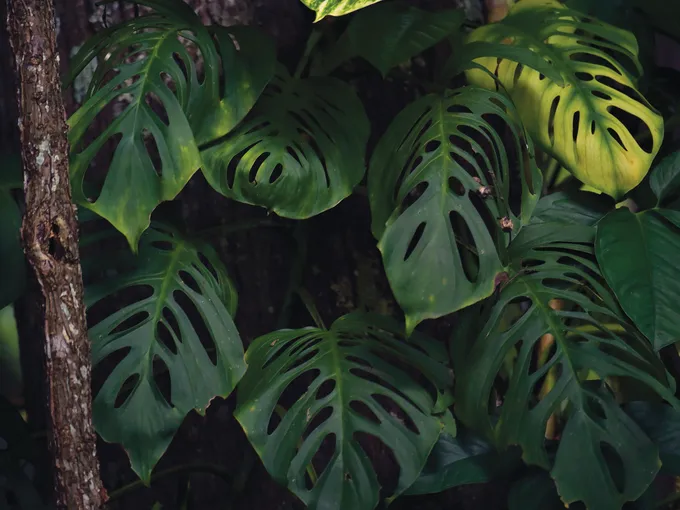
© WWF-US/Deb Lindsey
Of course, we now know that as we mess around with our climate and destroy forests, coral reefs, and ocean chemistry, we run the risk of breaking these systems. Break them beyond a certain point, and they can no longer recover or function normally. Scientists refer to these thresholds as tipping points.
It is estimated that if we go below 80% forest cover in the Amazon, traditional weather patterns will shut off and the forest there will eventually convert to savanna. Scientists are studying how the Gulf Stream, an Atlantic Ocean current that shapes weather patterns on four continents, is changing, and what happens when glaciers and ice sheets break off and melt. There are huge questions around impending shifts in ocean currents that have kept weather stable, channeled global trade, and supported ocean phenomena that have given rise to some of the world’s richest fisheries.
E.O. Wilson’s famous species-area curve relates the abundance of species to the total area of the system where the species live. It posits that once you move past a certain point of decrease in an area’s strength and size, the abundance of species goes into free fall, and many species that a place supports are lost. So understanding tipping points is a fundamental part of our work as conservationists, as is intervening to keep ecosystems resilient enough not to reach those tipping points.
More and more, our science and our work are all about understanding and tackling the complexity of these systems and keeping their most defining characteristics intact and functioning. Our purpose is to safeguard the vast benefits nature provides for humanity and for the other species with whom we share the planet.
And increasingly, we are learning about the power of restoration—of mangroves, soil fertility, and forests—following ecological principles and with an eye to keeping the whole intact. We know that if we give nature enough space and time—and sometimes assistance in the form of restoring mangroves or seagrass beds—it is a powerful regenerative force that can come back and thrive. Rewilding initiatives are emerging around the world, and now experiments with genetic engineering demand our attention to both the practical and ethical aspects for the power they hold to reverse species declines or even extinction.
“Our purpose is to safeguard the vast benefits nature provides for humanity and for the other species with whom we share the planet.”
Going forward, I imagine that we will devote increasing resources to restoration and regeneration. But let us never forget that we are still in the process of understanding the full genius of nature, of landscapes and seascapes and how they provide a full range of services and functions that are fundamental to life on Earth, including our own. While we must continue to innovate and to use every tool at our disposal to stop and even reverse the loss of nature—to avoid those terrifying tipping points—conserving what we have remains the most powerful and economical approach to saving the richness that’s already here.
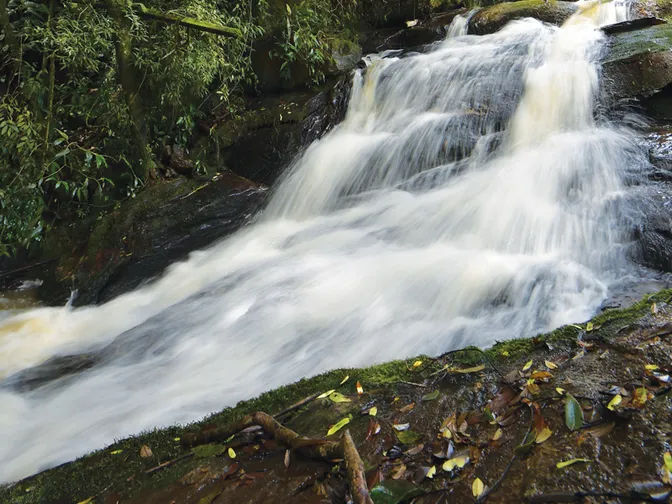
© ADRIANO GAMBARINI/WWF-US
Explore more
Keep reading this issue of World Wildlife magazine