How one Florida School is teaching kids to cook—and fight food waste
By
-
Lee Poston

© WWF-US / Rebecca Drobis
The hottest restaurant in Orlando can’t be found on Yelp and is open only eight nights a year. It doesn’t have a Michelin star, celebrity chefs, or glamorous patrons lined up outside. But what it lacks in star power, it more than makes up for in influence—shaping how generations of Central Florida schoolchildren think about healthy, farm-to-table food that never goes to waste.
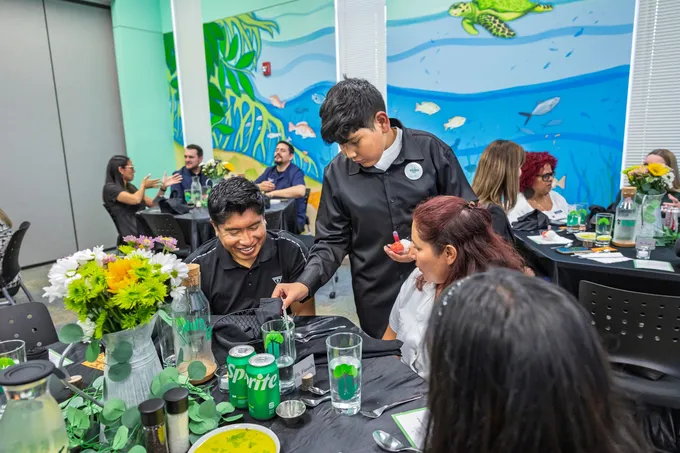
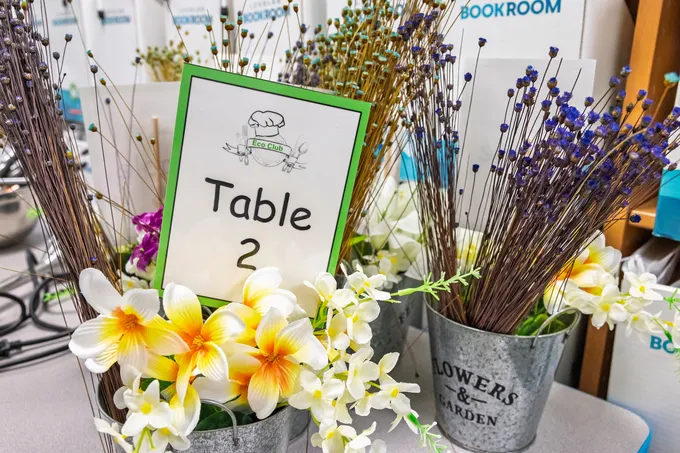
“Welcome to Millennia Gardens, may I have the name on the reservation, please?” asks a smartly dressed student host, before ushering two beaming parents into a vibrantly painted “dining room” with fresh flower centerpieces, black tablecloths, and wildlife images adorning the walls.
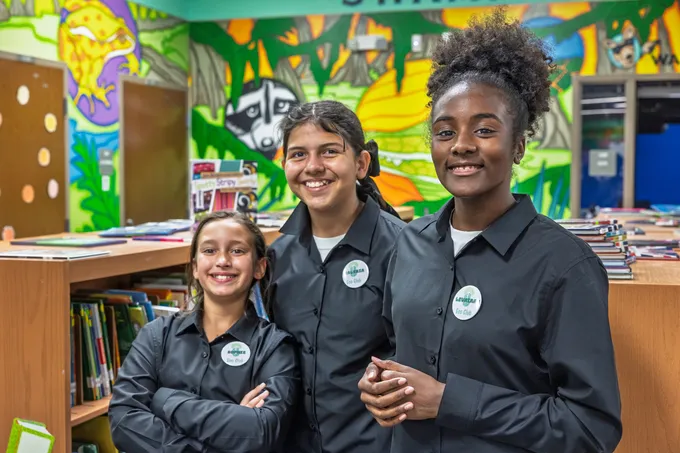
The evening is the crowning achievement for the school’s fifth graders, who are heading to middle school after three years in Eco Club—part of an ambitious sustainability initiative from Orange County Public Schools (OCPS) promoting waste reduction, composting, organic gardening, and renewable energy.

© WWF-US / Rebecca Drobis
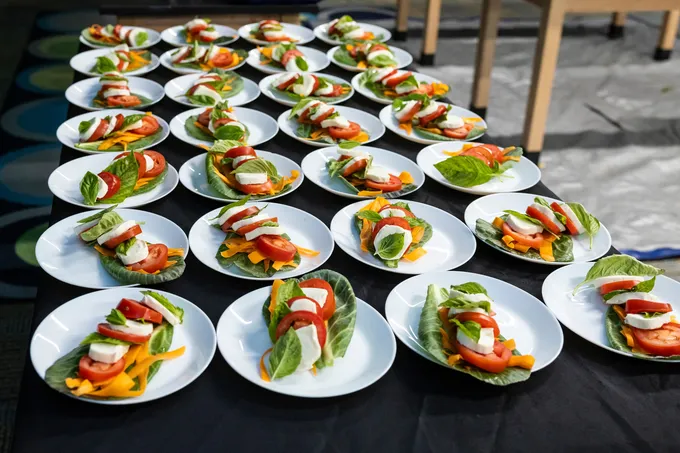
After a year digging in the dirt, tasting freshly grown produce, and tracing food from seed to plate and back to the soil, the Millennia Gardens Farm2Table Dinner “celebrates the care and curiosity these students bring to learning about their food system,” says Mary Jane Chandler, program officer for WWF’s Food Waste Warrior program, which provides educational resources and programming to OCPS and Eco Club.
“They harvest, prepare, and serve this meal themselves, then follow the story after the tables are cleared by taking leftovers to the compost—showing that what’s left can matter just as much as what’s served.”
© WWF-US / Rebecca Drobis
© WWF-US / Rebecca Drobis
From farm to table
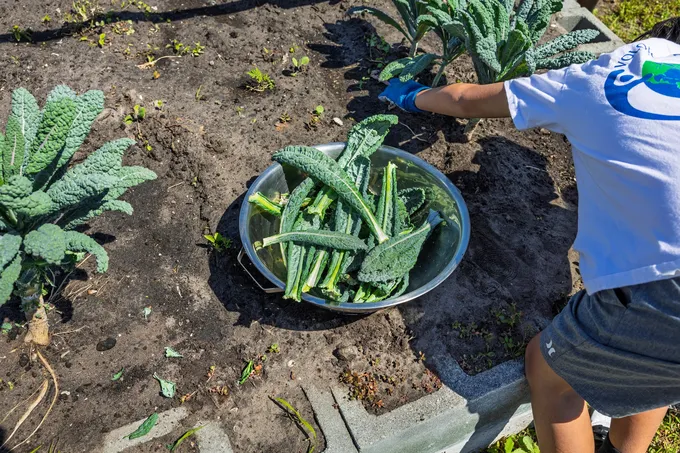
A day earlier, under the Central Florida sun, fourth grader Dariana C. reaches into a planter box and pulls out a carrot so comically large it seems straight out of a Bugs Bunny cartoon. Her classmates gasp, then erupt in giggles. Within seconds, they’re harvesting their own carrots, though none match the newly christened Lil’ Jim—the ironic name Dariana gives her prize.
In 24 hours, the garden’s carrots, along with freshly harvested kale and other vegetables, will appear on the dinner menu. “When we first started Eco Club, we had kids who thought vegetables came from Publix and Walmart—they didn’t know they came from the ground,” says Alisa Webb an Eco Club educator and proud parent of one of the program’s graduates. The farm-to-table connection, she adds, is critical. “They plant the seed. They watch it grow. And when they see the vegetable coming up, it amazes them—like, ‘I did that!’”

© WWF-US / Rebecca Drobis
The true cost of food waste
About 40 percent of food produced globally is wasted. In the US, schools are among the largest institutional consumers of food, and much of it ends up in landfills. A 2019 WWF survey of 46 schools found that each student on average wastes 40 pounds of food a year. Nationwide, that adds up to more than half a million tons of school food waste sent to landfills annually.
Beyond the economic cost, the environmental consequences are enormous. If left unchanged, by 2050 food production is projected to account for 70 percent of terrestrial species loss and 10 percent of greenhouse gas emissions, while using 70 percent of the world’s freshwater supplies.
To help address the problem, WWF launched Food Waste Warriors in 2017, providing lesson plans and activities for multiple grade levels, guidance on conducting food waste audits, and advocacy tools that help students and teachers raise awareness with decision makers. The program is now in 1,000 schools across 31 states, with a goal of reaching every school in the country.
© WWF-US / Rebecca Drobis
© WWF-US / Rebecca Drobis
So far, Food Waste Warriors has helped reduce food waste by 14.5 percent in participating schools, Chandler says. “If every school were to do that in the US, it would result in around 1.7 billion US dollars in savings. It would also reduce climate impact, save on water use, and ease pressure on natural resources.”
Dariana eagerly explains what she’s learned about food waste and her proposed solution.
“Food waste is when you only wanted a little bit of rice, but you got a full plate, and instead of saving it for later, you throw it in the trash,” she says. “But you can also use it to make a snack—like rice krispies.”
Growing minds and influence
Seeing the growth in Eco Club is a “full circle” moment for Dawn Chehab, who founded the program in 2015 by having her students analyze and weigh the food they were throwing away.
“It was literally just supposed to be a little club, and it was going to be fun,” she says.
Club members initially built a compost mound, and the program has since grown in popularity and impact at the 680-student school, where most students come from economically disadvantaged backgrounds. Now, the school diverts 13,000 pounds of food waste per year from landfills—about 600 pounds per week.
© WWF-US / Rebecca Dobris
© WWF-US / Rebecca Dobris
“It's been game changing,” says fifth grade teacher and Eco Club leader John Martinez “Now every single kid in our school—not just those in Eco Club—participates in sending food to be composted versus the landfill. We're raising a generation of kids that looks at the food they eat and how that food is disposed of in a whole new way. It’s pretty exciting to think about all the ways that will have an impact in the future.”
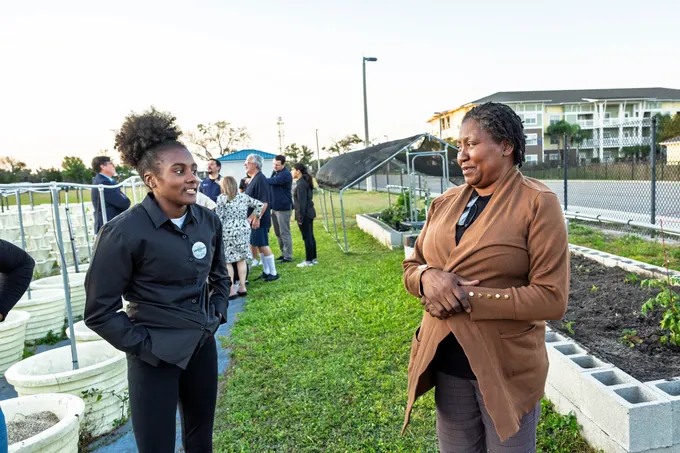
The compost then becomes nutrient-rich soil for local farms, including the school’s own garden.
Across the county’s 228 schools, which serve roughly 40 million meals each year, composting has increased by 40 percent. During the 2024-25 school year alone, more than 263,000 pounds of food waste were composted districtwide.
“The kids, the custodians, and the lunchroom monitors all play a really important role," notes OCPS Food and Nutrition Services Sustainability Manager Karena Bozarth. "The idea is that, by the time they get to high school, composting is second nature. If we impact even a small percentage of our 207,000 students and get them to go home and tell their parents about composting, that’s how you change a generation’s behavior.”
© WWF-US / Rebecca Drobis
© WWF-US / Rebecca Drobis
Thinking beyond food waste
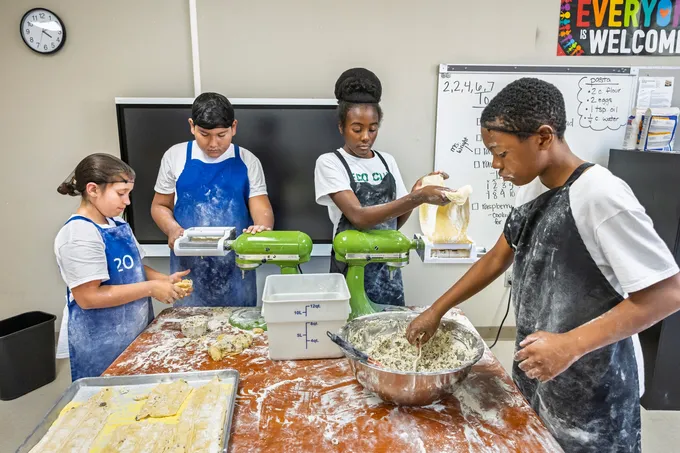
The Food Waste Warriors curriculum and Eco Club activities also translate into the classroom, contributing to measurable gains in academic performance and science literacy. Studying vegetable decomposition, calculating recipe measurements, and following detailed recipes reinforce science, math and reading skills while boosting student confidence.
“It's like when you were a kid and mom slid the vegetables into dinner and you didn't know they were there,” says Chehab. “I'm sliding in all of these subjects, and you don't realize it’s happening, because you're just having a good time.”

© WWF-US / Rebecca Drobis
Chef's kiss
Dinner is now in full swing, and the main course arrives: mushroom and cheese ravioli with rosemary-garlic butter sauce. Around the room, parents talk excitedly about the impact of the program on their children--describing growing confidence, new skills, and a more positive outlook on life.
As dessert — strawberry and lemon sorbet with raspberry sauce—is served. Eco club educators share a highlight reel from the year and reflect on the impact of this class. There are few dry eyes in the room as students present framed photo collages of their Eco Club experiences.
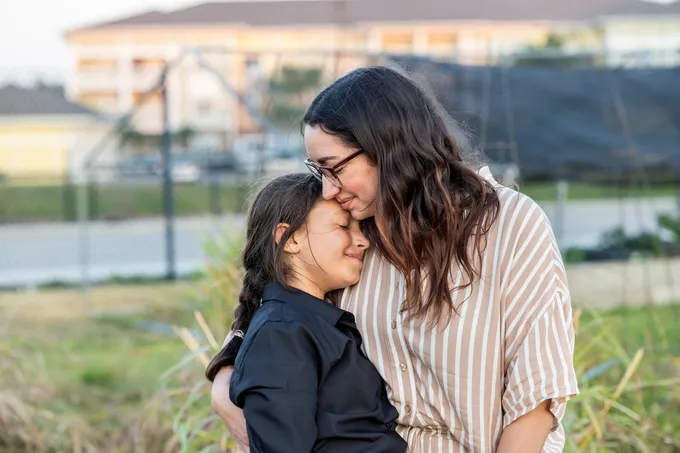
Afterward, student Shlavens D.’s mother Stephania says her increasingly confident son is constantly teaching her what he’s learned. She recalls preparing dinner one night when her son stopped her from throwing vegetable peels into the trash. “No mommy, you cannot throw away the peels,” he told her. “Those peels can become soil. And the same plants you are peeling now, you can have back again.”

© WWF-US / Rebecca Drobis
How you can help
© Shutterstock
Help stop food waste
Every year, we throw away over 30% of our food—wasting the water, soil, and energy used to produce it while driving up grocery bills. Tell your representatives to support two common-sense bills in Congress.