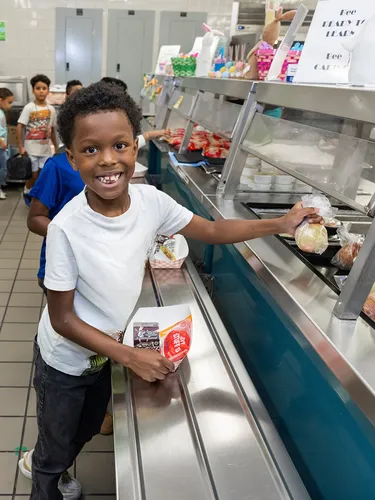
© WWF-US/Rebecca Drobis
Food Waste Warriors
Inspiring schools to lead the charge against food waste
WWF’s Food Waste Warriors program turns cafeterias into classrooms by providing K-12 schools with free educational resources, helping them to develop safe, fun, creative, and research-backed strategies to reduce food waste.
What is the Food Waste Warriors program?
Food waste in schools has massive environmental, economic, and educational costs. The Food Waste Warriors program, founded in 2018, partners with schools, researchers, and community groups to reduce these impacts while helping to build a greener world. To do so, we provide schools with:
- Free, open-source food waste curriculum for K-12 students. This includes age-specific lessons and activity plans, posters, slideshows, and games.
- Implementation guides for food waste audits with weight and count logs.
- Case studies and scientific research on food waste reduction strategies.
In addition, the Food Waste Warriors program advocates for evidence-based food waste reduction solutions, such as share tables and school composting; engages communities and government at local, state, and national levels to enact positive change; and empowers schools to improve the sustainability of their food system.
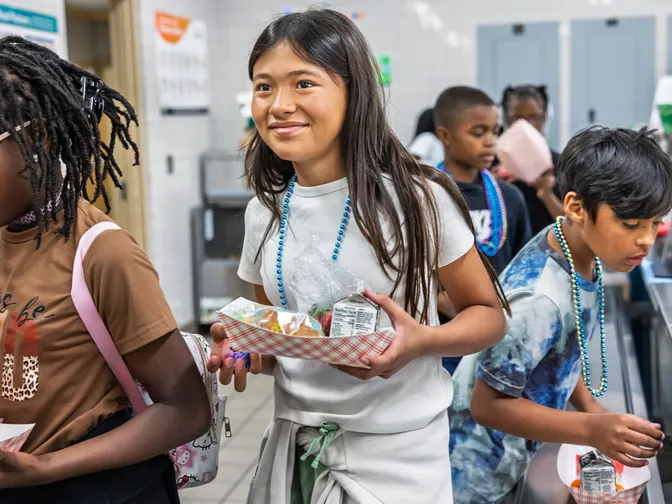
Turn the cafeteria into a classroom
A concise introduction to the Food Waste Warriors program, including benefits, impact, and ways to get started.
© WWF-US/Rebecca Drobis
Why Food Waste Warriors?
Schools serve 4.9 billion lunches each year—more than any American fast-food chain. However, nearly 40% of this food is thrown away. Annually, this amounts to 530,000 tons of food, 20.9 billion tons of water used to grow the food, and $1.7 billion in lost value. For millions of students, waste is normalized and its impact hidden.
Food Waste Warriors works to break this cycle by transforming students into leaders in reducing food waste. Our work provides numerous benefits:
-
Reducing food waste
Collectively, schools save millions of pounds of food from landfills each year.
-
Saving money
By reducing wasted food, schools retain critical funds.
-
Helping the planet
Composting food reduces greenhouse gases while building healthy soils.
-
Empowering student leaders
Food Waste Warriors curriculum is designed to let students shine.
-
Meeting educational standards
Food Waste Warriors curriculum meets national standards, helping schools reach academic goals.
Get started with Food Waste Warriors
Reducing food waste in schools is easier—and cheaper—than you might think. Teachers set the groundwork for food waste reduction by adopting Food Waste Warriors curricula. Next, classes conduct hands-on audits to measure school waste. From there, students, teachers, and school staff work hand in hand to select and implement proven, cost-effective solutions.

© WWF-US/Rebecca Drobis
Step 1: Access the free Food Waste Warriors curriculum
Our lessons last a lifetime—and change the world. Now taught in hundreds of schools across the US, Food Waste Warriors K-12 teaching guides are designed to be adaptable to the individual needs of schools while meeting education standards for teachers and students across the country. Our free toolkits, which can be taught as one- or two-week lessons, are packed with:
- Grade-specific tools and tips
- Slideshows
- Discussion questions
- Engaging, real-world student activities
Get the Food Waste Warriors curriculum and resources
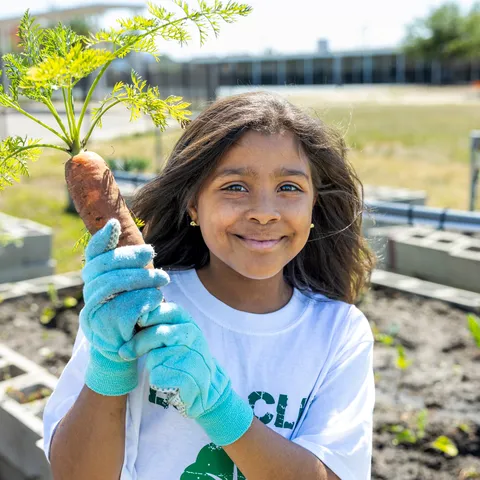
Success Story: Food Waste Warriors in Florida
With Food Waste Warriors’ support, Citrus Elementary and 20 other Orange County Public Schools composted over 263,000 pounds of discarded food in less than two years. This food, which would have previously ended up in landfills, is now helping to grow fresh fruit and vegetables in the school’s garden.
© WWF-US/Rebecca Drobis
Step 2: Conduct a food audit
© WWF-US / Rebecca Drobis
© WWF-US/Rebecca Drobis
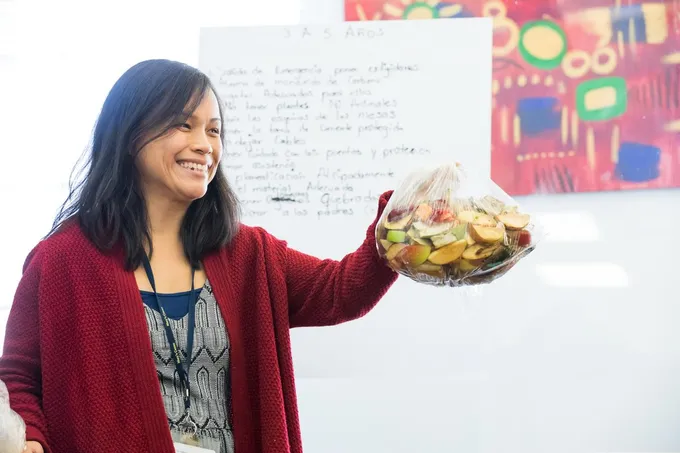
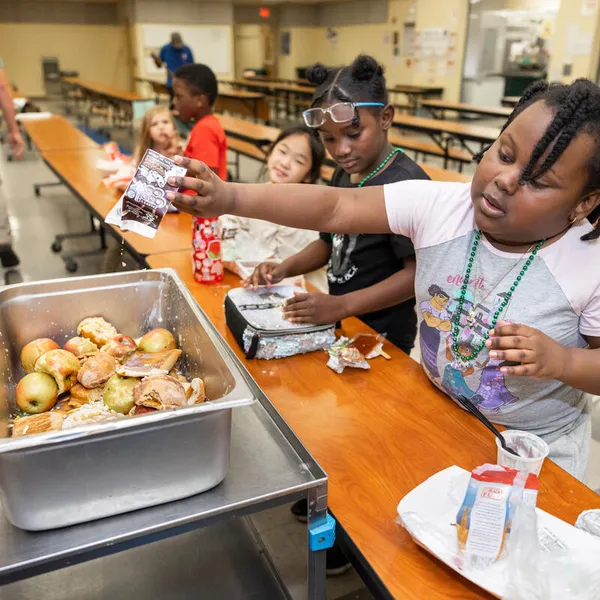
Food audits are an essential step in cutting waste. Using buckets, scales, and data sheets, students and staff sort and measure uneaten foods. The data they produce—for example, gallons of wasted milk—provides a road map for future waste-reducing activities.
Check out our food audit guide
Teacher testimonial
"In the 2022/2023 school year, we diverted over 10,000 pounds of food waste, sent 8,200 pounds to an anaerobic digester, composted 500 pounds, and saved 620 pounds of uneaten food. In 2023/2024, we maintained similar results."
—Tara Happy, Teacher, Hollis Elementary School, Hollis, N.H.

© Courtesy of Tara Happy
Step 3: Choose the right solutions for your school
How schools tackle the problem of food waste depends on their circumstances. However, two of the most popular—and successful—options are share tables and compost programs.
Share tables
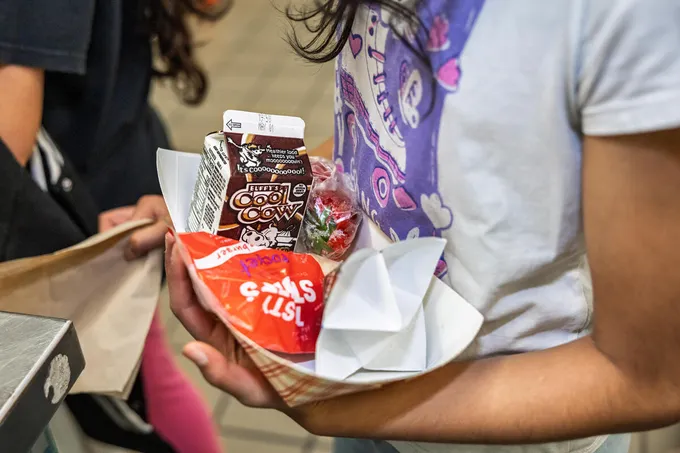
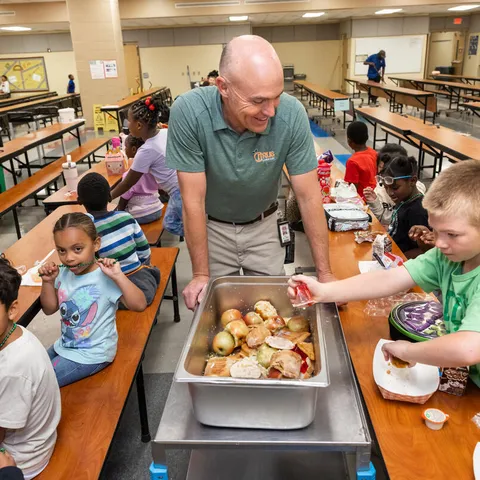
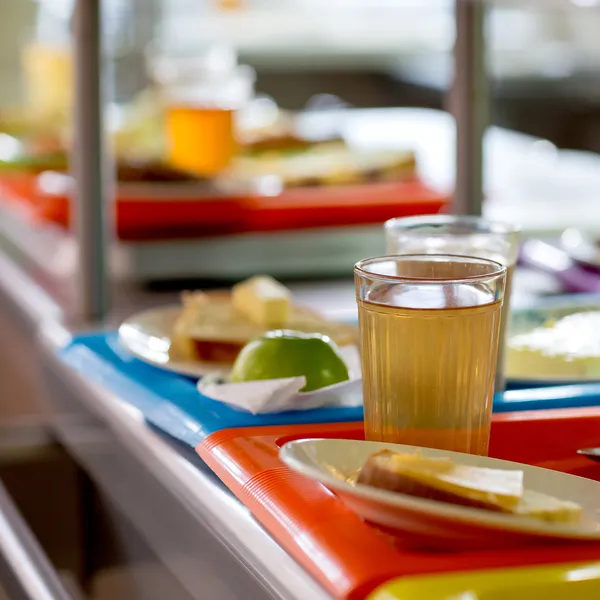
Share tables are the ultimate food recyclers. They provide students with an opportunity to return uneaten or unopened items so they can be consumed by others at school or donated to food banks. These simple solutions are inexpensive, easy to set up, offer great lessons, and, most importantly, save lots of food. Adding a mini fridge is a great way to expand rescue opportunities, helping to save milk and other perishables.

© WWF-US / Rebecca Drobis
Composting
Composting is a powerful tool to make the most of food waste. And it comes with some great benefits, including reduced greenhouse gas emissions, lowered garbage collection fees, and free fertilizer for school gardens. Composting also offers plenty of teaching opportunities. It promotes environmental responsibility, encourages healthier eating habits, and provides an ideal, hands-on setting for students to study science and ecology.

© WWF-US / Rebecca Drobis
Keep up with Food Waste Warriors
Filled with tips, updates, and news, our quarterly newsletter is essential reading for educators, administrators, and parents.
© WWF-US/Rebecca Drobis
Food Waste Warriors reports
News and stories
Additional resources
Teacher testimonial
"With the help of the WWF Food Waste Warriors Toolkit, we conducted mini food audits, and students learned that food doesn’t magically disappear once it’s tossed; it ends up in landfills, creating methane and harming the planet."
—Loretta Lyken, First Grade Teacher, Phoenix, Ariz.

© Courtesy of Loretta Lyken
Get in touch
Have a question, looking for advice, or need encouragement? Reach out!

© WWF-US/Rebecca Drobis