Ending food waste in schools in a generation

© WWF-US/Rebecca Drobis
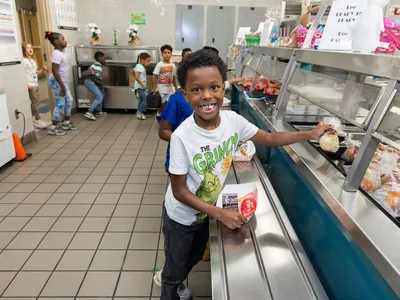
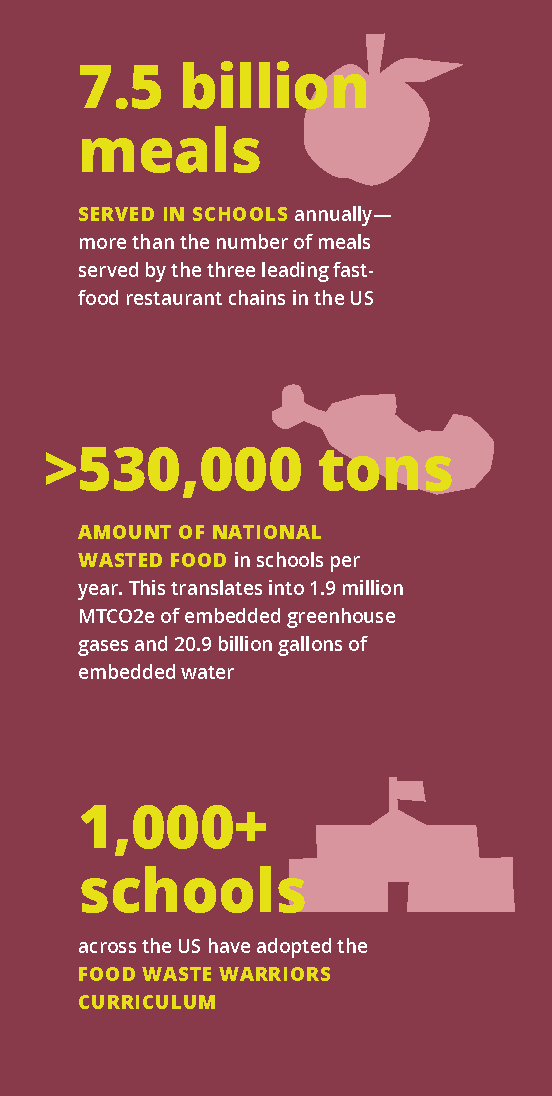
Each day, U.S. schools serve meals to 30 million students — more than the population of Greece, Austria, and Switzerland combined. This means loading up cafeteria trays with a truly monumental amount of food — more than 15,000 tons a day — which in turn requires vast amounts of resources: land, money, water, fuel, labor. Despite these costs, and the obvious fact that food is essential for life, more than half a million tons of food — the approximate weight of 175,000 adult elephants — are wasted each year in U.S. cafeterias.
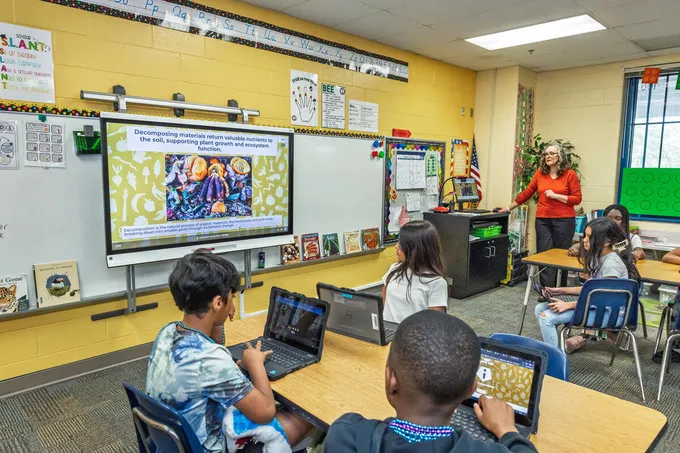
Recognizing the scale of this problem and the urgent need to address it, WWF founded the Food Waste Warrior (FWW) program in 2018. FWW provides K–12 schools with educational tools and online resources to help them develop safe, fun, creative, and research-backed strategies to reduce and prevent wasted food in cafeterias and classrooms. Its free curriculum, which educates and empowers students to make sustainable choices, has now been adopted by more than 1,000 schools across the country.
© WWF-US/Rebecca Drobis
© WWF-US/Rebecca Drobis
The impact of this adoption along with recent findings on school waste are detailed in our new report, Ending Wasted Food in K–12 Schools. While the report underlines the tremendous cost of food waste in American schools — approximately $1.7 billion annually — it also provides plenty of reason for hope that savings could be reinvested back into better nutrition for students.
Among other things, we found that up to 90% of wasted food in schools can be recovered, recycled, or composted. On an annual basis, that means 450,000 tons of food and milk not going to landfills. This kind of reduction is a win-win-win situation. Cutting food waste protects the environment by reducing methane emissions from landfills, it helps schools and communities replenish and rebuild soil with compost, and it provides food for those in need. This last benefit is especially pertinent given that millions in the U.S. face hunger or food insecurity.
The great news is that schools implementing FWW curriculum have already made incredible strides toward reaching this potential, with some experiencing up to a 70% reduction in wasted food.
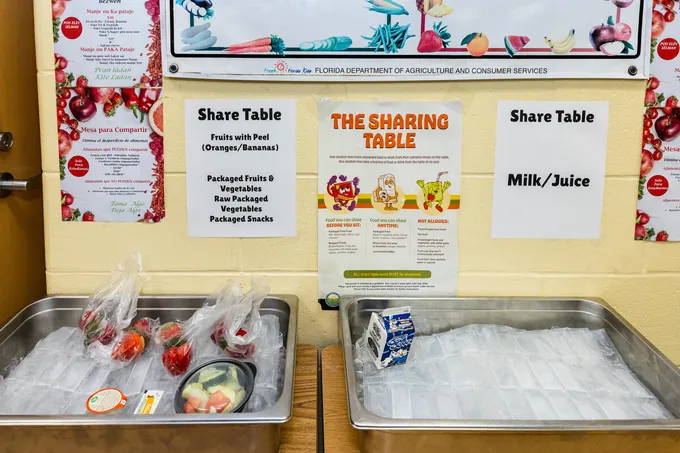
This success — and many, many others — have inspired us to think big: In our report we announce a new national ambition to end wasted food in K-12 schools within a generation. Accomplishing this will require three principal activities: engaging students through annual cafeteria education, expanding edible food recovery strategies in schools — like share tables and refrigerators — and ensuring that unavoidable food scraps never go to landfills.
To meet this goal, we need to expand our reach, helping schools across the country take their first steps to reduce food waste. In addition to the many resources we offer online, we believe it’s valuable for schools to learn from others as they get started. And in our report, we include a number of success stories written by FWW heroes — both students and teachers — that offer first-person accounts of their implementation journey along with useful tips, making the path easier for those who follow.
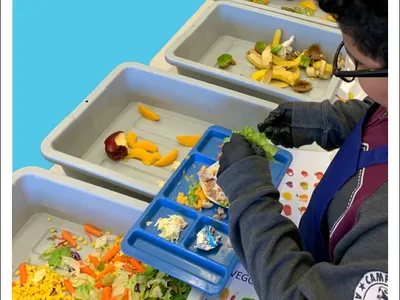
There is no single route to food waste reduction, as every school is different. But, in general, we find that after learning about food waste in the classroom, students and teachers are motivated to act. FWW offers online tools to help schools conduct simple food audits — measuring how much food is wasted — which provide eye-opening results. From there, schools have several proven options to reduce waste. Two of the most common are share tables and refrigerators, which allow students to return unopened food items, and composting programs.
Reducing food waste in schools will require a collective effort, and we invite all K-12 schools to get involved. If your school or district is hoping to reduce waste, please check out our online resources. Interested teachers, administrators, and community members are also encouraged to contact [email protected] with questions about our developing recognition program or its implementation.
© WWF-US/Rebecca Drobis