The science of hope
How conservation progress illuminates the path forward
By
Art by
-
Petra Péterffy

© Petra Péterffy
I’m WWF’s Chief Scientist and I want to talk about hope.
We are living through a defining moment in conservation. Scientists understand more than ever about how the natural world works, and we now have better tools to protect it. Yet, WWF’s 2026 Living Planet Report, our latest scientific assessment of the health of the planet, paints an alarming picture of nature under mounting pressure.
Since 1970, the average size of monitored wildlife populations has declined by approximately 73%, while freshwater populations have fallen by an even steeper 85%. Habitat loss and degradation remains the leading driver, compounded by unsustainable use of natural resources, climate change, pollution, and invasive species. Together, these pressures are reshaping ecosystems across the globe.
Faced with challenges on that scale, it is easy for anyone to feel like Sisyphus, endlessly pushing a boulder uphill only to watch it roll back down again. Conservation work can sometimes feel that way, too. A species rebounds in one place while a critical habitat disappears somewhere else. One hard-won policy advances while shifting political priorities, economic pressures, and competing global crises threaten to slow or reverse progress.
I recognize that the word hope can sound naïve, especially coming from a scientist. Scientists are trained to be skeptical, to follow evidence wherever it leads. But I urge people to think of hope in a different way, not as wishful thinking or unfounded confidence that everything will somehow work out, but as something far more practical.

© Shutterstock/Willyam Bradberry/WWF-Sweden
Psychologists describe hope as a cognitive process that helps people tackle difficult challenges. It begins with a meaningful goal, but it also requires a realistic path to achieve that goal, a sense of agency to pursue it and adapt when necessary, and the resilience to keep going when progress is slow or setbacks occur.
That idea may sound abstract, but conservation has been testing it in the real world for decades. Globally, people have united around ambitious goals, found practical pathways to achieve them, adapted when circumstances changed, and stayed the course long enough to produce extraordinary results. Those successes are a blueprint for how to drive lasting change.
© WWF-US
The pattern behind progress
Conservation victories almost never result from a single breakthrough or a lone heroic effort. More often, they emerge gradually through persistence, collaboration, and a willingness to adapt as new challenges arise—in other words, real-world demonstrations of the very process psychologists describe.
The global campaign to save wild tigers provides one of the clearest examples. In a little more than a century, a confluence of habitat degradation and fragmentation, poaching, and conflict with people drove the global wild tiger population from roughly 100,000 down to a mere 3,200. Many experts feared this iconic species was on a runaway train headed for extinction.
Then came the plot twist: In 2010, 13 tiger-range countries committed to an ambitious shared goal to double the number of wild tigers in 12 years, an initiative known as TX2.
Across the 13 tiger-range countries, governments and conservation partners worked with Indigenous Peoples and local communities to strengthen law enforcement, expand habitat protection, invest in better monitoring, and help reduce conflict between people and wildlife. Rangers and community patrol teams deployed motion-sensitive camera traps alongside SMART (Spatial Monitoring and Reporting Tool) patrol systems to monitor tiger populations and identify poaching threats. Governments expanded protected areas and wildlife corridors to reconnect fragmented habitat, while communities living near tiger landscapes became partners in conservation through livestock protection programs, rapid response teams, compensation for losses, and support for sustainable livelihoods.

© Andy Rouse/naturepl.com
Nepal became the first tiger-range country to achieve the global TX2 goal in 2022 and has more than tripled its wild tiger population as of this year. India, home to most of the world’s wild tigers, invested heavily in habitat protection, monitoring, and anti-poaching efforts, and doubled its wild tiger numbers by 2025. Even in Southeast Asia, where tigers continue to face intense pressure, there are encouraging signs. In Thailand’s Western Forest Complex, strengthened ranger patrols, improved monitoring, and sustained habitat protection—all in partnership with local communities—have helped tiger numbers rebound after years of decline.
These results did not appear overnight, and challenges remain. Tigers still occupy less than 8% of their historical range. But against all odds, the trajectory changed. Today, the global wild tiger population stands at roughly 5,700—and continues to rise.
Tiger recovery was not the result of a single policy, a single technology, or a single organization. It happened because governments, scientists, Indigenous Peoples and local communities, conservation organizations, and millions of citizens aligned around the common goal of protecting an iconic species. They found practical ways to contribute and sustained those efforts over many years. Different actors followed different pathways, but together they accomplished something none could have achieved alone.
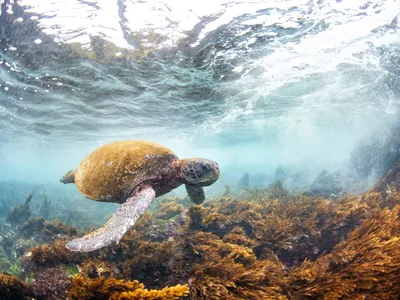
Other species that once teetered on the brink have followed different paths to recovery while reinforcing the same lesson. Green sea turtle nesting has increased by nearly 30% at monitored sites thanks to decades of protecting nesting beaches, reducing accidental capture in fisheries, and strengthening international cooperation. Bluefin tuna populations, pushed toward collapse by overfishing, have begun recovering after catch limits tightened, monitoring improved, and market incentives shifted. In parts of southern Africa, elephant populations have stabilized where local communities share authority over wildlife management and share directly in its benefits.
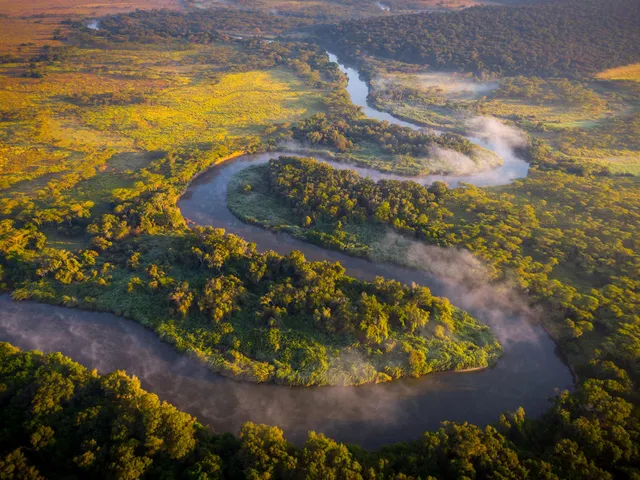
The Amazon rainforest presents a different kind of example—centered not on a single species but on an entire landscape. There, efforts such as the Amazon Soy Moratorium helped demonstrate that agricultural production and forest conservation don’t have to be mutually exclusive. Supported by WWF and many partners, the agreement largely eliminated the conversion of newly deforested Amazon land into soy production. Before the moratorium, nearly one-third of annual soy expansion came at the expense of recently cleared forest. And as of January 2026, that figure had fallen to a tiny fraction, even as soy production continued to grow. (That progress faces new uncertainty after Brazil’s major soy traders withdrew from the voluntary agreement earlier this year.)
Hope begins with a meaningful goal and requires a realistic path to achieve that goal... a sense of agency to pursue that goal, and the resilience to keep going.
The Amazon Region Protected Areas program, known as ARPA, presented us with an opportunity to tackle the challenge from another direction. WWF helped support the creation and long-term financing of what has become one of the largest and most durable tropical conservation initiatives in the world. For almost 25 years, ARPA has safeguarded more than 150 million acres of rainforest across Brazil, protecting extraordinary biodiversity while preventing vast carbon emissions that would otherwise have accelerated climate change.
In 2014, WWF and our partners launched ARPA for Life in support of ARPA. Critically, ARPA for Life made use of a financing model that secures long-term support for protected areas rather than relying on short-term funding cycles that often disappear with changing priorities. Through the Enduring Earth collaboration, WWF and partners have adapted this model across eight initiatives in Brazil, Canada, Colombia, Mexico, Mongolia, and Namibia, with 10 additional projects underway. These efforts have secured the durable conservation of 570 million acres of lands and waters, strengthening livelihoods through inclusive stewardship and sustainable economic development.
While these successes differ in geography and scale, they point to the same conclusion: Lasting conservation gains emerge when people unite around a clear objective, develop practical pathways toward it, exercise agency within their own communities and institutions, and remain resilient when progress proves slower than they hoped.
I look at these successes and see the science of hope in action. They show us what becomes possible when people unite around a shared goal and sustain their efforts over time. They also reveal the scale of the challenge that remains. Despite meaningful gains like these, we continue to see global declines in nature, pointing to a mismatch between the scale of ecological pressures and the scale of our solutions.
Much of that pressure flows through three interconnected systems: energy, food, and finance. Transforming those systems so that they begin to work for nature instead of against it is the central conservation challenge of our time.
The future is not fixed. And that may be the most hopeful finding of all.
Why progress still falls short
While renewable energy is gaining ground, many of the world’s energy systems still rely on fossil fuels, which remain the leading driver of climate change and place mounting pressure on ecosystems around the world. Agriculture accounts for 70%–80% of tropical deforestation and roughly 70% of global freshwater use, and it remains the single greatest driver of habitat loss. Financial systems also continue directing enormous amounts of capital toward activities that degrade and destroy ecosystems, often without accounting for the immense economic value healthy forests, wetlands, oceans, and grasslands provide.
Decisions made in boardrooms, financial institutions, and government ministries can have consequences that ripple through ecosystems far beyond the places where those decisions originate. The decision to finance a new hydroelectric dam, for example, may be made hundreds or even thousands of miles from the river itself, yet it can reshape freshwater ecosystems, alter fish migrations, and affect communities that have depended on those rivers for generations. Likewise, demand for globally traded commodities such as beef, soy, and palm oil continues to devastate landscapes thousands of miles from the consumers who ultimately purchase those products.
© Antonio Busiello / WWF-US
WWF's Living Planet Report 2026
The latest edition shows that wildlife continues to be lost at an alarming rate. But it also finds signs of hope: When we act together, nature can recover, and change can happen quicker than we think.
See the Living Planet ReportThis is where conservation successes collide with much larger forces. A protected landscape becomes harder to sustain when demand for agricultural land or energy intensifies. A species recovering from overhunting in one region face new risks as climate change reshapes their habitats faster than they can adapt.
Conservation can slow or reverse loss in particular places, but those gains remain vulnerable when the larger systems surrounding them continue generating pressure. And in some cases, those pressures can become self-sustaining.
Consider the Amazon rainforest. The world’s largest tropical rainforest helps generate much of its own rainfall by recycling moisture through the atmosphere. But continued deforestation, combined with rising temperatures and more frequent droughts, is weakening that cycle. As forest is lost, less moisture returns to the atmosphere, rainfall declines, and remaining forests become hotter, drier, and more vulnerable to fire and dieback. Those changes, in turn, drive even greater forest loss, creating a self-reinforcing feedback loop. If enough of the Amazon is degraded, large portions of the rainforest could shift toward a much drier state, with profound consequences for biodiversity, regional rainfall, agriculture, and the global climate.
This is more than a gradual decline. Scientists refer to these dangerous thresholds as negative tipping points: moments when gradual change gives way to something faster and far more difficult to reverse.
When progress gains momentum
But tipping points are not always negative. Under the right conditions, positive change can also begin reinforcing itself. This is the story of Norway’s transition to electric vehicles, which shows what a positive tipping point looks like in practice.
Three decades ago, electric cars occupied a tiny niche in Norway’s market. They were expensive, charging infrastructure was sparse, and most consumers saw them as impractical.
The government didn’t try to change that overnight. Instead, it spent years creating the conditions that would make a different future possible—by exempting electric vehicles from purchase taxes and value-added tax, expanding charging infrastructure across the country, and offering buyers practical incentives ranging from reduced tolls to preferential parking and access to bus lanes. Automakers responded by bringing more electric models to market, while continued technological improvements steadily lowered costs and increased driving range. Consumers became more comfortable with the technology after seeing friends and neighbors adopt it. And today, nearly nine out of every 10 new passenger vehicles sold in Norway are fully electric.

© Petra Péterffy
Norway’s experience followed a pattern that should sound familiar by now: a clear goal, practical pathways, and millions of individual decisions reinforcing one another over time. The same ingredients that helped recover tigers and protect large swaths of the Amazon were applied not to a single species or landscape, but to an entire system of policies, markets, and human behavior.
The challenge now is to create similar positive tipping points across the systems that shape humanity’s relationship with nature: accelerating the transition to clean energy, building food systems that produce more while destroying less, and redirecting financial flows toward protecting the natural capital on which every economy ultimately depends. If we can do that, the same forces that have fueled nature loss and climate change can begin rewarding restoration, protection, and sustainable use instead.
The future is not fixed
We are not Sisyphus, doomed to push endlessly against an unchanging world.
That’s not to say the work ahead of us will be easy—it will be difficult, frustrating, and at times feel overwhelming. But unlike Sisyphus, we are not pushing alone.
The conservation successes I have seen, from the recovery of tigers to the protection of the Amazon, demonstrate what determined people can accomplish together. And positive tipping points like the one in Norway show how, under the right conditions, collective efforts can transform systems as vast and entrenched as energy, food, and finance. When that happens, the boulder doesn’t roll back down the hill. It reaches the crest and keeps on going, as the forces that have driven nature’s decline for decades now drive its recovery.
The 2026 Living Planet Report leaves no doubt about the scale of the challenge before us. But it also reminds us that the future is not fixed. And that may be the most hopeful finding of all.
How you can help
© Jasper Doest / WWF
Tell Congress: Invest in Nature Now
WWF's 2026 Living Planet Report found that wildlife populations have declined by 73% on average over the past five decades. Yet the report also shows that environmental degradation and decline can be reversed when governments take action.