Climate change and the Southwest Indian Ocean
Storing carbon and protecting shorelines, the seascape combats a warming world
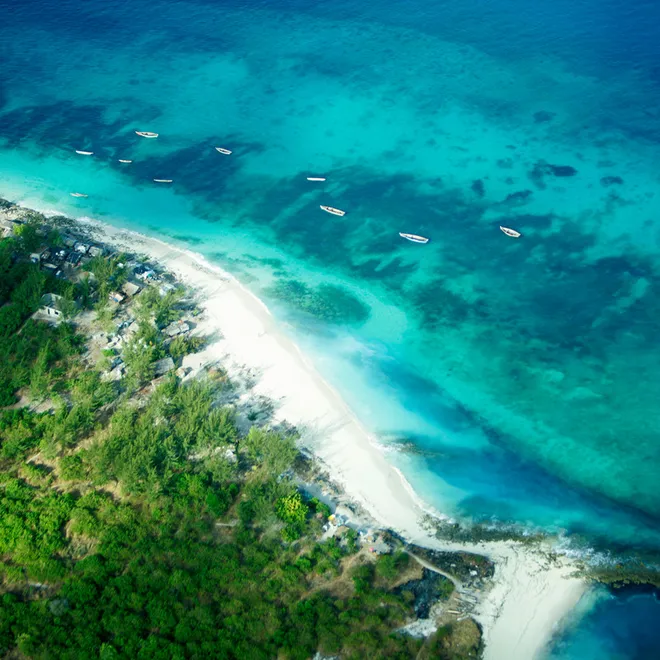
© Brent Stirton / Getty Images / WWF-UK
The Southwest Indian Ocean is one of the world's most biologically rich marine regions. The waters of the Northern Mozambique Channel support more than 400 coral species and serve as a vital migratory corridor for marine wildlife, including at least 27 species of whales and dolphins. These interconnected ecosystems provide critical habitat, nursery grounds, and feeding areas for countless species that depend on healthy oceans to survive.
The region's importance extends far beyond biodiversity. More than 60 million people live along the coastline and rely on the ocean for food security, livelihoods, and economic opportunity. The Southwest Indian Ocean's blue economy generates nearly $21 billion annually in goods and services, making healthy marine ecosystems essential to both local communities and regional economies.1
The region is also an important natural ally in the fight against climate change. Coastal ecosystems such as seagrass meadows and mangrove forests capture and store significant amounts of carbon while helping protect shorelines from storms and erosion. These ecosystems strengthen both climate resilience and community well-being, making their protection increasingly important in a warming world.
Climate change threatens coastal ecosystems

© Martin Harvey / WWF
Climate change is placing growing pressure on the Southwest Indian Ocean and the communities that depend on it. Rising ocean temperatures are contributing to more extreme weather events, including stronger storms, floods, and droughts across the region. Combined with sea-level rise, these changes are accelerating coastal erosion and increasing the vulnerability of communities that rely on fishing, farming, and tourism for their livelihoods.
Coral reefs are among the ecosystems most at risk. Ocean warming is driving widespread coral bleaching, a stress response that causes corals to expel the algae they depend on for survival. At the same time, ocean acidification, caused by the ocean absorbing increasing amounts of atmospheric carbon dioxide, makes it more difficult for corals to build and maintain their skeletons.1 Together, these pressures are weakening reef ecosystems throughout the region.
The impacts are already visible. A 2024 survey by CORDIO East Africa found that 96% of reefs assessed in the Southwest Indian Ocean experienced some level of coral bleaching, with 80% classified as moderate to extreme.2 As bleaching events become more frequent and severe, coral mortality increases, reducing habitat for fish and other marine species and threatening the food security and economic stability of coastal communities.
Building a more resilient future
Protecting the Southwest Indian Ocean requires solutions that support both people and nature.3 Across the region, community-led conservation efforts are helping strengthen marine ecosystems while creating more sustainable economic opportunities for local communities. WWF works alongside local partners to promote sustainable fisheries, improve marine resource management, and reduce dependence on activities that contribute to habitat loss and biodiversity decline.
In Madagascar, WWF-supported initiatives are helping expand the country's network of Marine Protected Areas to conserve critical marine habitats and support the recovery of wildlife populations. These efforts not only protect biodiversity but also strengthen the resilience of coastal communities facing increasing climate risks.
As ocean temperatures continue to rise and climate impacts intensify, conserving coral reefs, mangroves, seagrass meadows, and other coastal ecosystems will be essential for safeguarding biodiversity, protecting livelihoods, and building a more climate-resilient future for the Southwest Indian Ocean.

© SteveAllenPhoto
References
1 Hoegh-Guldberg, O. (2017). The western Indian Ocean's blue economy can thrive. Here's how.
2 CORDIO East Africa. (2024). Regional coral bleaching report.
3 Ooko, S. (2021, December 16). Knowledge - Landscape Alliance. Landscape Alliance.