Protecting Peru's Natural Legacy
So much in Peru is on the rise. Its reputation as a food mecca, employment rates, urban construction, and tourism. They have welcomed increases that began to emerge at the turn of the century, after a decade of political and civil unrest that wreaked havoc for many in Peru and led others to flee.
As the country grows, Pedro Gamboa has his eye on one thing: Peru’s protected areas. Seventy-six of them, all which he oversees for the Peruvian government. Most are referred to as parks, reserves or sanctuaries. The most well-known are in the lush Amazon rain forest. Others, just as magnificent but less-traveled, are in the moonscape-like coastal desert and within eyesight of the snow-capped Andes mountain range. All of them are designated on paper as protected. The challenge now is to ensure they also are protected in reality, so that wildlife and people (from Peru and worldwide) can benefit from them now and for generations to come. Unsustainable gold mining, logging, and agriculture, as well as illegal logging and urban expansion in Peru, drive home the urgency for addressing this challenge.
Gamboa is on it. He is helping to lead an initiative that aims to generate funding to properly manage Peru’s protected areas. Called National Parks: Peru’s Natural Legacy, this initiative begins in the Peruvian Amazon, where 87% of the country’s protected areas are located. In May, $140 million was secured to expand and effectively manage nearly 42 million acres of that region. This funding will be used to buy equipment for park rangers so they can patrol the parks better, create jobs in ecotourism, and more. The Peruvian government invests in its protected areas but, as in most countries, its funding to do so is not as large or reliable as it needs to be.
WWF is one of several partners in this initiative, which is based on an innovative funding approach called Project Finance for Permanence (PFP) that has been used in Brazil, Bhutan, Costa Rica, and Canada.
The rain forests
The Peruvian Amazon is a land of superlatives. First worldwide in its diversity of freshwater fish, first in butterflies, second in birds, and fifth in mammals and reptiles. It is the second largest area within the broader nine-country Amazon rain forest. Its extensive tree coverage—nearly 260,000 square miles—makes it one of the world’s largest store houses of carbon. A new ranking creates alarm, not awe, and drives home the need for the PFP initiative. The Amazon (including the Peruvian Amazon) is one of the world’s top 11 deforestations fronts—one of the regions expected to have more deforestation and forest degradation than anywhere else by 2030, according to a new WWF report.
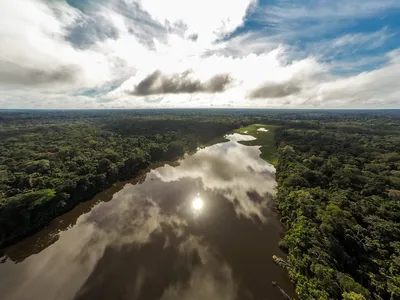
The Tambopata River is one of the longest and most-travelled rivers in Peru. Here, it cuts through Tambopata National Reserve, a protected area of dense mature forests, lakes, swamps and savannahs that can only be accessed by water.
© Day's Edge Productions / WWF-US
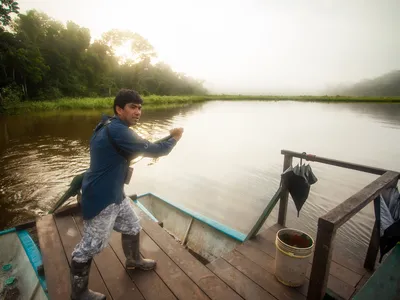
Rainforest Expeditions guide Juan Carlos Gonzales Taipe leads a group through Tres Chimbadas Lake just after sunrise. As the morning mist lifts, they see endangered giant river otters and many bird species. Jobs related to the protected areas’ natural resources, such as eco-tourism, are encouraged, as long as they are sustainable.
© Days Edge Productions / WWF-US
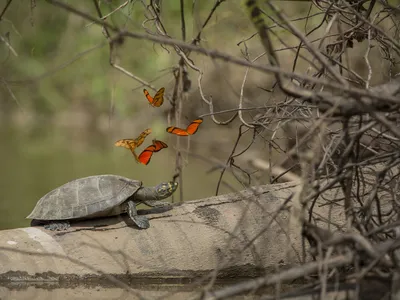
There are more butterflies in the Peruvian Amazon than anywhere else in the world. The salty secretions of turtles, including this one basking in the sun along the Tambopata River, nourish them.
© Days Edge Productions / WWF-US
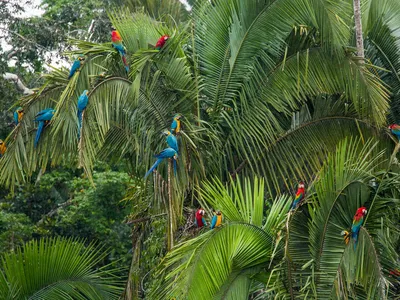
Hundreds of macaws wait in the trees, hoping for an opportunity to safely fly to the river banks that are within eyesight. They come here every morning, with the hope of being able to lick the bank’s clay surface—a delicacy to them. Peru is home to the highest concentrations of avian clay licks in the world, most which are in protected areas.
© Days Edge Productions / WWF-US
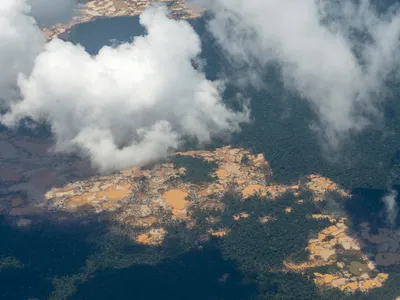
Large-scale mining in the Madre de Dios region of the Peruvian Amazon is one of the biggest threats, when not done responsibly or legally. People are streaming down from impoverished Andean provinces, and other areas in Peru, in search of work. Many end up mining gold, which can pay up to five times as much as farm labor.
© Nicolas Villaume / WWF-US
The mountains
The windy Andes mountain range, the longest in the world, is at the core of what defines Peru. It is what keeps the country’s coast (to its west) so dry and the Amazon forests (to its east) so wet. It is harder to get to and the weather can be harsher than other regions of Peru. But it is rich in cultural and natural resources—especially water. Its glaciers feed Peru’s rivers, which are the main source of water for agriculture and drinking water for people countrywide. The rivers also generate 60 percent of Peru’s electricity. Climate change is the largest threat to this region.
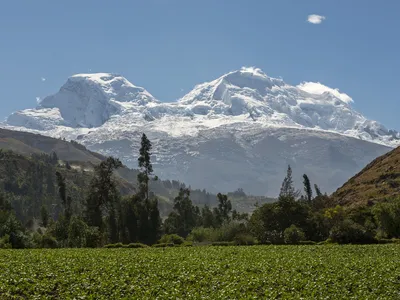
The magnificent Andes mountains are a draw for tourists and central to the lives of the people who call this high-altitude region home. Proud of their natural heritage, many locals help keep the protected areas here clean and healthy, picking up trash left behind by others and helping to plant trees.
© Nicolas Villaume / WWF-US
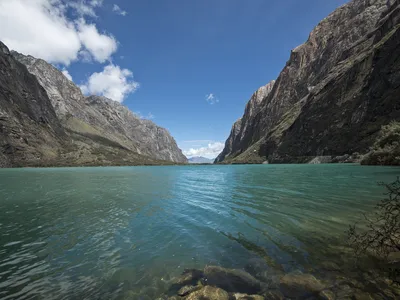
The pristine lakes and lagoons of Huascaran National Park are too frigid for most to swim in but they provide a perfect view of Huascaran, the largest peak in Peru. Pictured here is Chinancocha Lagoon, located nearly 10,000 feet above sea level.
© Nicolas Villaume / WWF-US
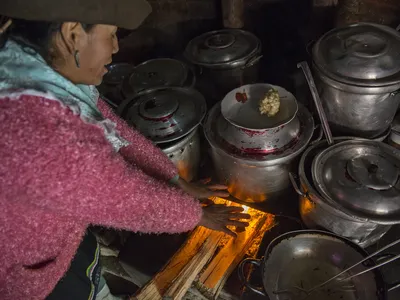
A woman warms her hands in her kitchen as she waits for visitors to Huascaran National Park to come by for lunch. She sells them hearty and well-seasoned meals of corn, cheese, guinea pig and potatoes. The livelihoods of many indigenous cultures – of which there are 54 in Peru—are often linked to the environment.
© Nicolas Villaume / WWF-US
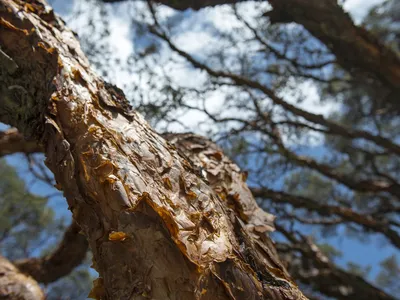
The quenual is a tree found only in the Andes. It grows along small creeks and on rocky slopes. Its twisted trunk is covered by a vibrant reddish-brown bark that acts as a thermal insulator, protecting the tree from frosts.
© Nicolas Villaume / WWF-US
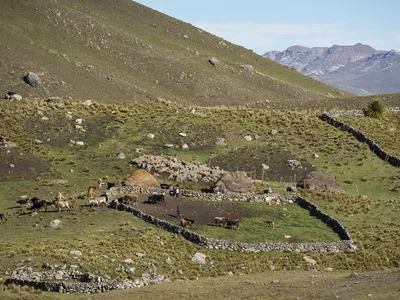
Agriculture is the main livelihood in and near the protected areas of this region, but it is becoming harder to do. Rain is less predictable, largely because of climate change, making it harder for the farmers to know when to plant and whether their livestock will survive.
© Nicolas Villaume / WWF-US
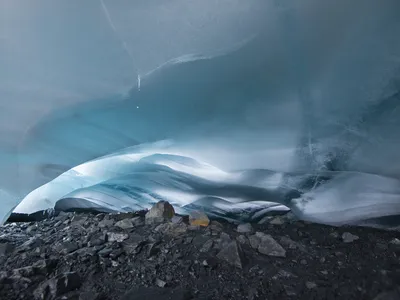
The Pastoruri glacier used to draw throngs of tourists wanting to ski and ice climb. But the glacier has shrunk in half over the past 20 years and some say may be gone in a decade. Now, the glacier is a draw for people who want to see climate change in action.
© Nicolas Villaume / WWF-US
The coastal desert
The western rim of Peru is a world of contrasts. The sprawling city of Lima, where most people in Peru live, merges with an expansive desert that becomes more barren—almost looking devoid of life from afar—the further south one goes from Lima. Its endless sand dunes and rocky surfaces are a stand in for moonscapes when movies are filmed. The desert ends at cliffs that look out to one of the world’s most productive ocean areas. Peru’s oldest protected area—the Paracas National Reserve—is in this region. The reserve is rich in biodiversity and protects prehistoric sites of the Paracas culture and other ancient civilizations. Through the PFP initiative, Peru hopes to generate funding that can be used to protect the fragile habitat of species that thrive here.
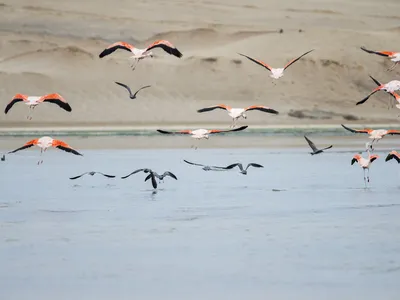
South American flamingos, which IUCN has declared as threatened, are one of approximately 60 species of birds that spend at least part of their lives in the Paracas reserve. They migrate between Peru and the United States.
© Nicolas Villaume / WWF-US
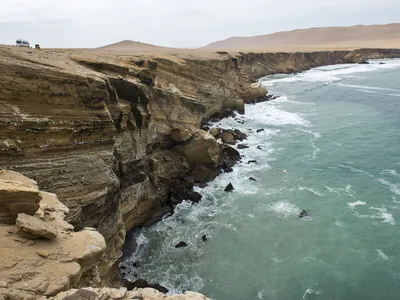
The 830,000 acre Paracas reserve is a UNESCO World Heritage site. It is one of only two protected areas in Peru that includes land and water. The ocean and islands (called the “baby Galapagos”) encompass nearly 65 percent of the reserve, while the remainder is on land.
© Nicolas Villaume / WWF-US
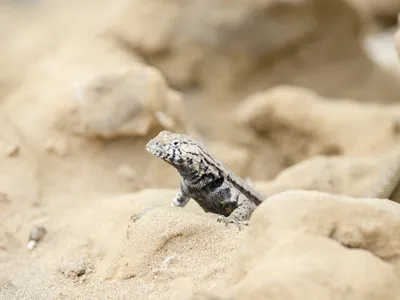
Small animals, such as this lizard, are among the few species that have adapted to the sandy and rocky soil of the arid desert, which lacks sufficient humidity to sustain most plant life.
© Nicolas Villaume / WWF-US
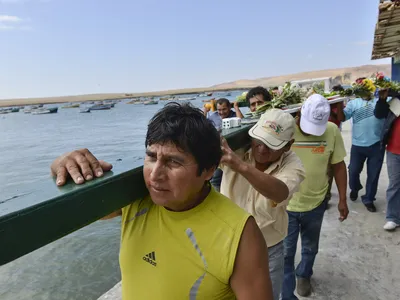
Local fishermen from the Lagunillas area gather once a year for a ceremony to bless the ocean. Seafood, as well as fishing industry jobs, are abundant here. Ten percent of the world’s seafood comes from Peru, including ingredients for the country’s national dish: ceviche.
© Nicolas Villaume / WWF-US
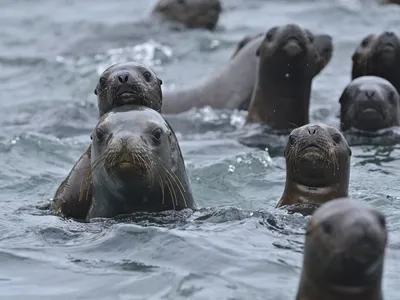
Sea lions are among the 36 species of marine and land mammals found in the Paracas reserve. Birds, fish and marine mammals thrive in the region, particularly its nutrient-rich waters.
© Nicolas Villaume / WWF-US