Publications
-
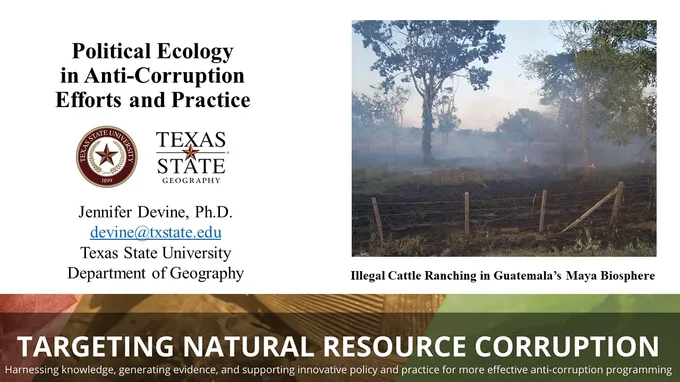
On August 13, 2020 TNRC held a Learning Series webinar on Political Ecology in Anti-Corruption Efforts and Practice. Featured speaker Jennifer Devine presented her research on "narco-deforestation" in Guatemala to discuss how political ecology helps deepen understanding of corruption and conservation crime.
---
This content is made possible by the generous support of the American people through the United States Agency for International Development (USAID). The contents are the responsibility of World Wildlife Fund (WWF) and do not necessarily reflect the views of USAID, the United States Government, or individual TNRC consortium members.
-
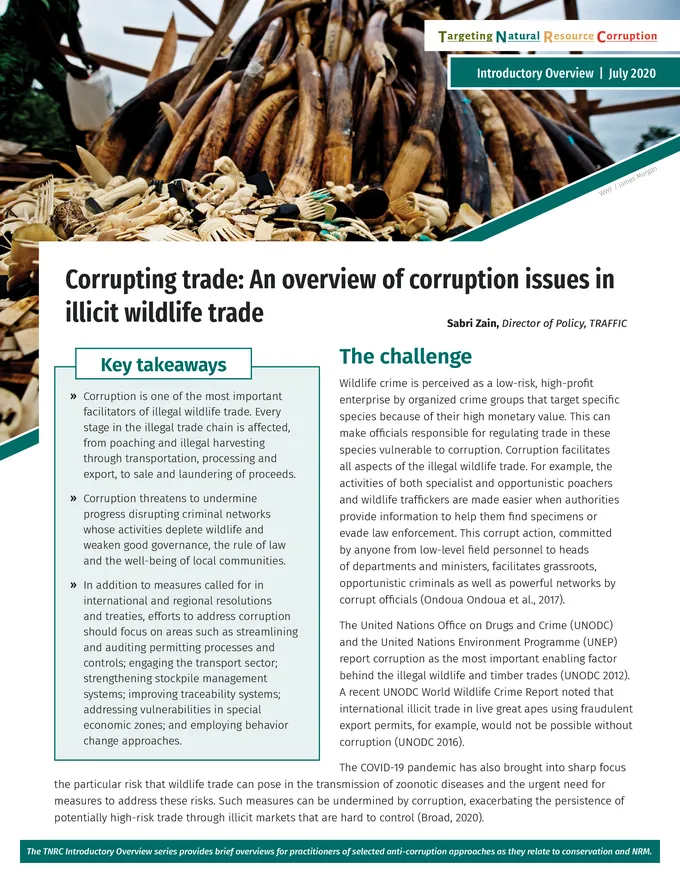
Corruption is a key facilitator of illegal wildlife trade. In addition to measures called for in international and regional resolutions and treaties, efforts to address corruption should focus on areas such as streamlining and auditing permitting processes and controls; engaging the transport sector; strengthening stockpile management systems; improving traceability systems; addressing vulnerabilities in special economic zones; and employing behavior change approaches.
For more resources, go to the Targeting Natural Resource Corruption project Knowledge Hub
---
This content is made possible by the generous support of the American people through the United States Agency for International Development (USAID). The contents are the responsibility of World Wildlife Fund (WWF) and do not necessarily reflect the views of USAID, the United States Government, or individual TNRC consortium members.
-
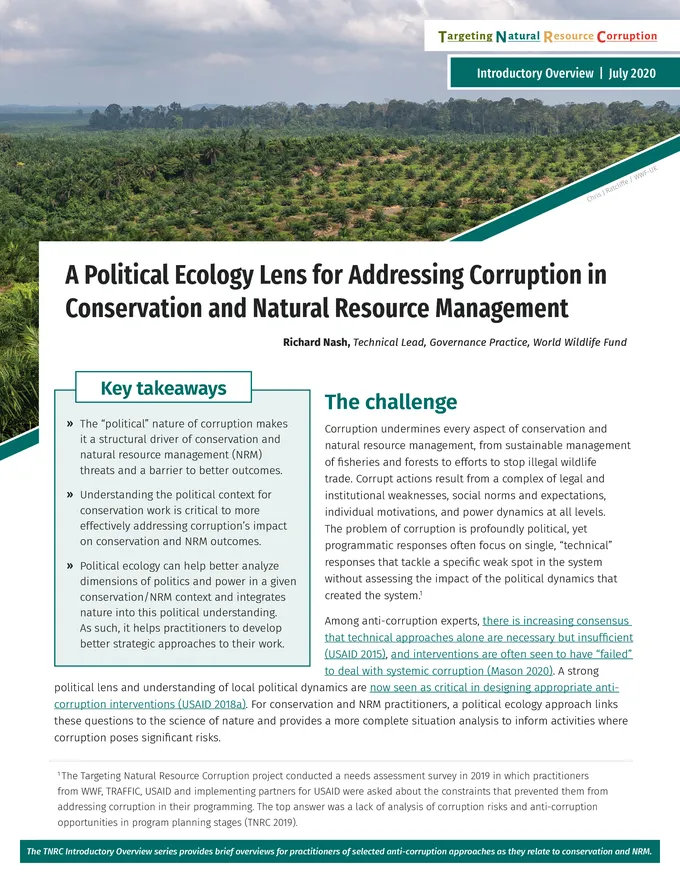
Corruption undermines every aspect of conservation and natural resource management, from sustainable management of fisheries and forests to efforts to stop illegal wildlife trade. Corrupt actions result from a complex of legal and institutional weaknesses, social norms and expectations, individual motivations, and power dynamics at all levels. The problem of corruption is profoundly political, yet programmatic responses often focus on single, "technical" responses that tackle a specific weak spot in the system without assessing the impact of the political dynamics that created the system. For conservation and NRM practitioners, a political ecology approach links these questions to the science of nature and provides a more complete situation analysis to inform activities where corruption poses significant risks.
---
This content is made possible by the generous support of the American people through the United States Agency for International Development (USAID). The contents are the responsibility of World Wildlife Fund (WWF) and do not necessarily reflect the views of USAID, the United States Government, or individual TNRC consortium members.
-
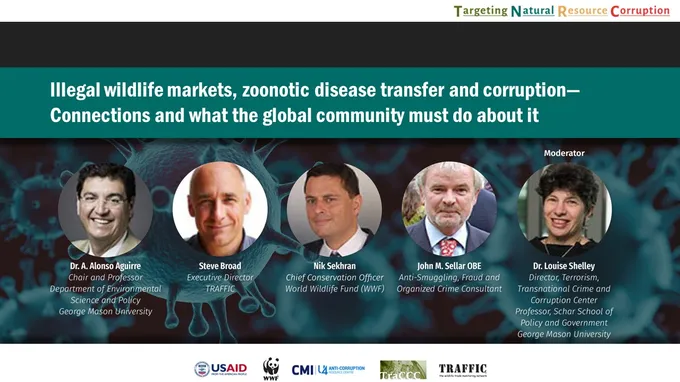
In the midst of the COVID-19 pandemic, there is greater international willingness to address illegal wildlife markets, especially those involving live animals. But to respond to this and future pandemics effectively, systems thinking, and a greater understanding of drivers and inter-sectoral approaches will be vital. This post captures insights on the connections between illegal wildlife markets, zoonotic disease transfer and corruption contributed by experts in the fields of wildlife ecology, public health, environment, development, transnational crime and wildlife trade at a TNRC virtual panel on 23 June 2020. Experts presented learning and approaches that global practitioners should consider to protect natural resources, public health and support good governance.
---
This content is made possible by the generous support of the American people through the United States Agency for International Development (USAID). The contents are the responsibility of World Wildlife Fund (WWF) and do not necessarily reflect the views of USAID, the United States Government, or individual TNRC consortium members.
-
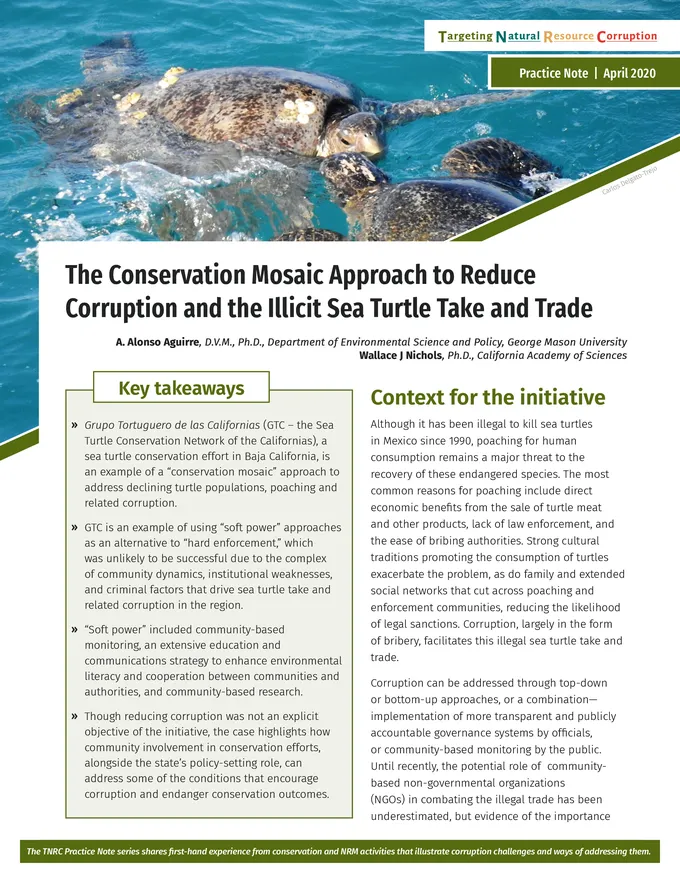
Although it has been illegal to kill sea turtles in Mexico since 1990, poaching for human consumption remains a major threat to the recovery of these endangered species. The most common reasons for poaching include direct economic benefits from the sale of turtle meat and other products, lack of law enforcement, and the ease of bribing authorities. Strong cultural traditions promoting the consumption of turtles exacerbate the problem, as do family and extended social networks that cut across poaching and enforcement communities, reducing the likelihood of legal sanctions. Corruption, largely in the form of bribery, facilitates this illegal sea turtle take and trade.
---
This content is made possible by the generous support of the American people through the United States Agency for International Development (USAID). The contents are the responsibility of World Wildlife Fund (WWF) and do not necessarily reflect the views of USAID, the United States Government, or individual TNRC consortium members.
-
Abuse of Convention on International Trade in Endangered Species of Wild Fauna and Flora (CITES) permits and certificates is a global issue that affects a wide range of species and can take place across the entire trade chain. Commerce in precious timber, caviar and live animals including primates, birds and reptiles, is particularly vulnerable.
Methods of abuse range widely and all can be facilitated by corruption. The involvement of corrupt officials, including high-level individuals, makes this problem more difficult to solve.
---
This content is made possible by the generous support of the American people through the United States Agency for International Development (USAID). The contents are the responsibility of World Wildlife Fund (WWF) and do not necessarily reflect the views of USAID, the United States Government, or individual TNRC consortium members.
-
Following the illicit financial flows from natural resources is key to stemming corrupt and criminal activity. llicit financial flows often enter the United States (U.S.) and other developed economies and can be prosecuted through the U.S. and other judicial systems where rule of law is stronger.
Countries known for long-term corruption, under the right circumstances, can help bring greater accountability to the natural resource sector, with international support.
---
This content is made possible by the generous support of the American people through the United States Agency for International Development (USAID). The contents are the responsibility of World Wildlife Fund (WWF) and do not necessarily reflect the views of USAID, the United States Government, or individual TNRC consortium members.
-
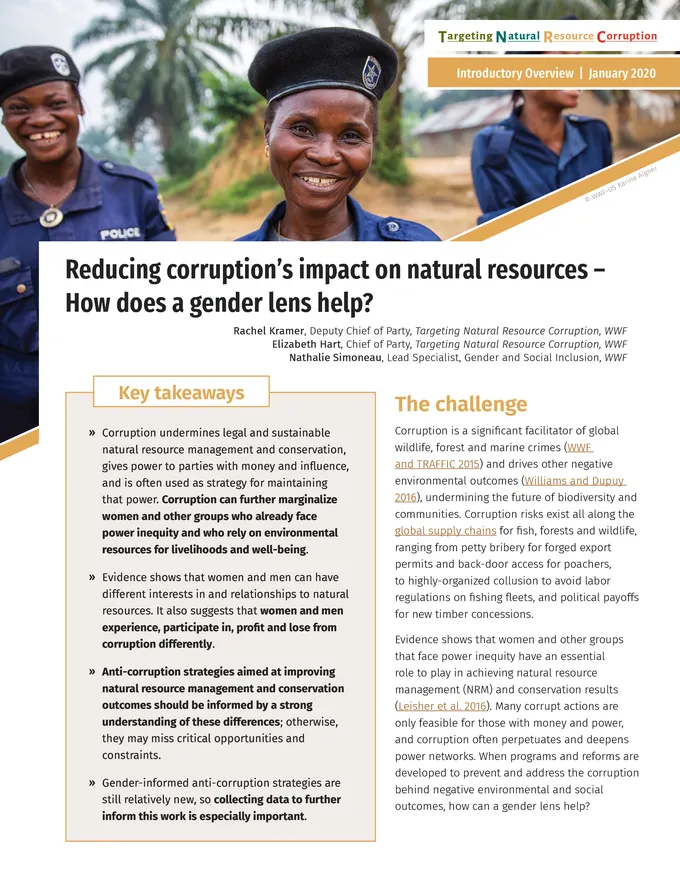
Reducing the threats that corruption poses to natural resources involves reducing opportunities for corrupt actions, increasing the likelihood of detecting them, and strengthening accountability when they are detected. Better understanding the relationships among gender, corruption, NRM and conservation adds important depth and definition to the "who, what, how and why" of reforms and programs to address these threats. Asking the right questions at the program or policy design stage and following the basic principles outlined in this paper can help to achieve these objectives.
---
This content is made possible by the generous support of the American people through the United States Agency for International Development (USAID). The contents are the responsibility of World Wildlife Fund (WWF) and do not necessarily reflect the views of USAID, the United States Government, or individual TNRC consortium members.
-
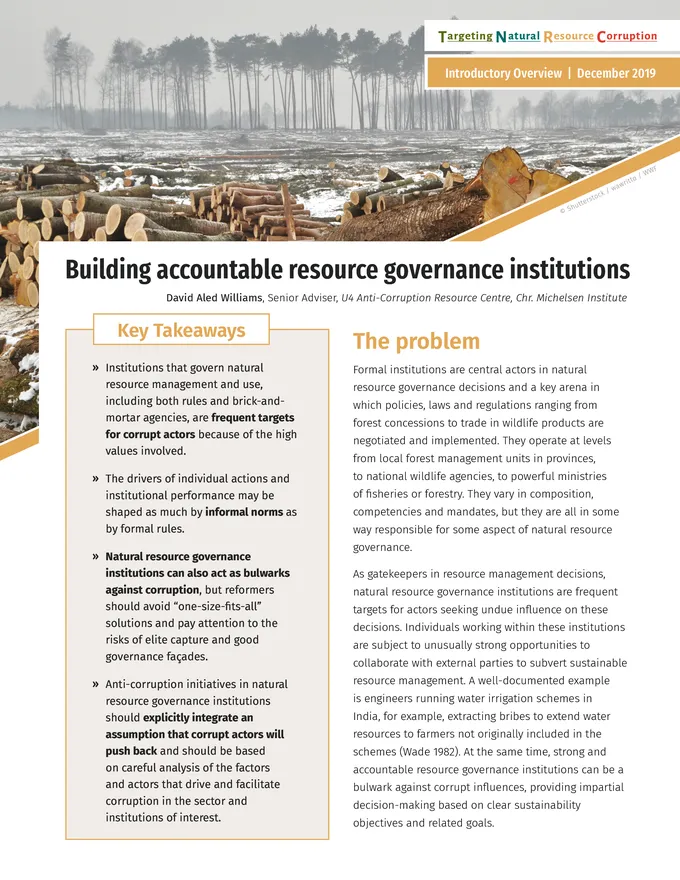
Formal institutions are central actors in natural resource governance decisions and a key arena in which policies, laws and regulations ranging from forest concessions to trade in wildlife products are negotiated and implemented. As gatekeepers in resource management decisions, natural resource governance institutions are frequent targets for actors seeking undue influence on these decisions. Getting to know institutions – how they work, the personalities involved, the pressures they are under, where their revenues come from – is a critical first step towards minimizing corrupt influences and unlocking their anti-corruption potential.
---
This content is made possible by the generous support of the American people through the United States Agency for International Development (USAID). The contents are the responsibility of World Wildlife Fund (WWF) and do not necessarily reflect the views of USAID, the United States Government, or individual TNRC consortium members.
-
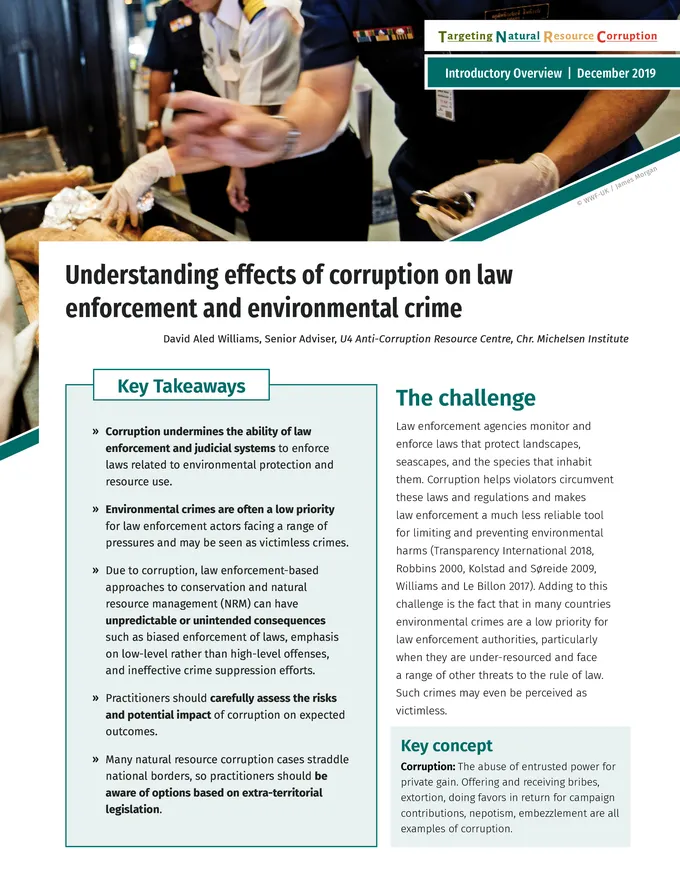
Law enforcement agencies monitor and enforce laws that protect landscapes, seascapes, and the species that inhabit them. In many countries environmental crimes are a low priority for law enforcement authorities, particularly when they are under-resourced and face a range of other threats to the rule of law. Corruption helps violators circumvent these laws and regulations and makes law enforcement a much less reliable tool for limiting and preventing environmental harms.
---
This content is made possible by the generous support of the American people through the United States Agency for International Development (USAID). The contents are the responsibility of World Wildlife Fund (WWF) and do not necessarily reflect the views of USAID, the United States Government, or individual TNRC consortium members.