Publications
-
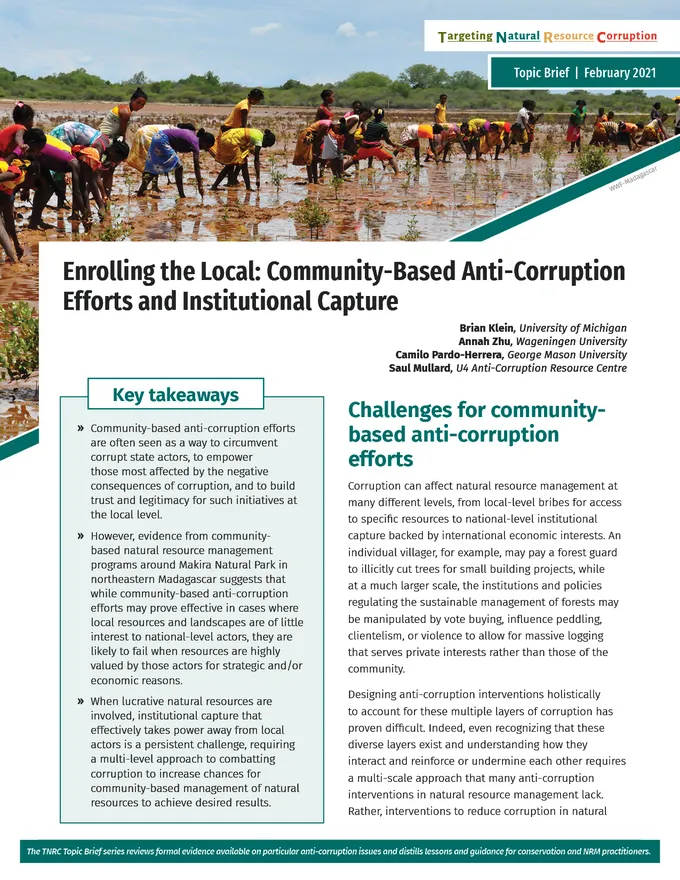
This presentation deck is from a TNRC Learning Series Webinar on 21 May 2021 on Corruption & community-based conservation: Lessons and opportunities.
---
This content is made possible by the generous support of the American people through the United States Agency for International Development (USAID). The contents are the responsibility of World Wildlife Fund (WWF) and do not necessarily reflect the views of USAID, the United States Government, or individual TNRC consortium members.
-
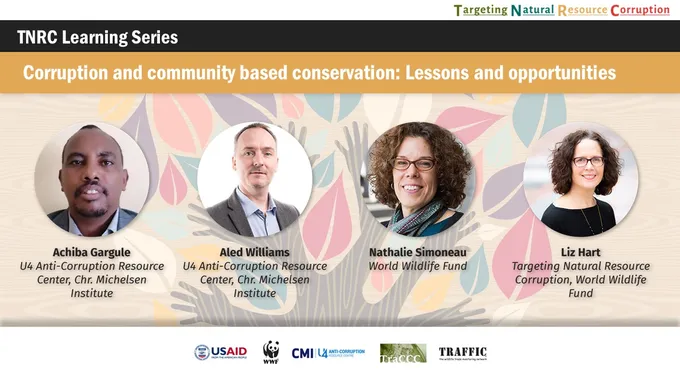
This presentation deck is from a TNRC Virtual Panel on 25 May 2021 on Conservation, Corruption, and Civic Space. This panel brought together experts from Transparency International, Open Government Partnership, World Resources Institute, and WWF-International to discuss the intersection of conservation and open government.
---
This content is made possible by the generous support of the American people through the United States Agency for International Development (USAID). The contents are the responsibility of World Wildlife Fund (WWF) and do not necessarily reflect the views of USAID, the United States Government, or individual TNRC consortium members.
-
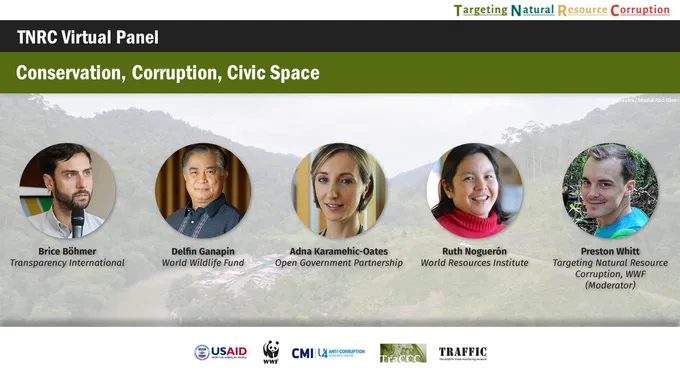
Corruption undermines the realization of human rights and may also constitute a human rights violation in itself. Using two examples, this brief explores how examining corruption through a human rights lens might deepen understanding of the impact of corruption on conservation and natural resource management outcomes, and provide avenues for addressing corruption.
For more from the Targeting Natural Resource Corruption project, visit the TNRC Knowledge Hub
---This content is made possible by the generous support of the American people through the United States Agency for International Development (USAID). The contents are the responsibility of World Wildlife Fund (WWF) and do not necessarily reflect the views of USAID, the United States Government, or individual TNRC consortium members.
-
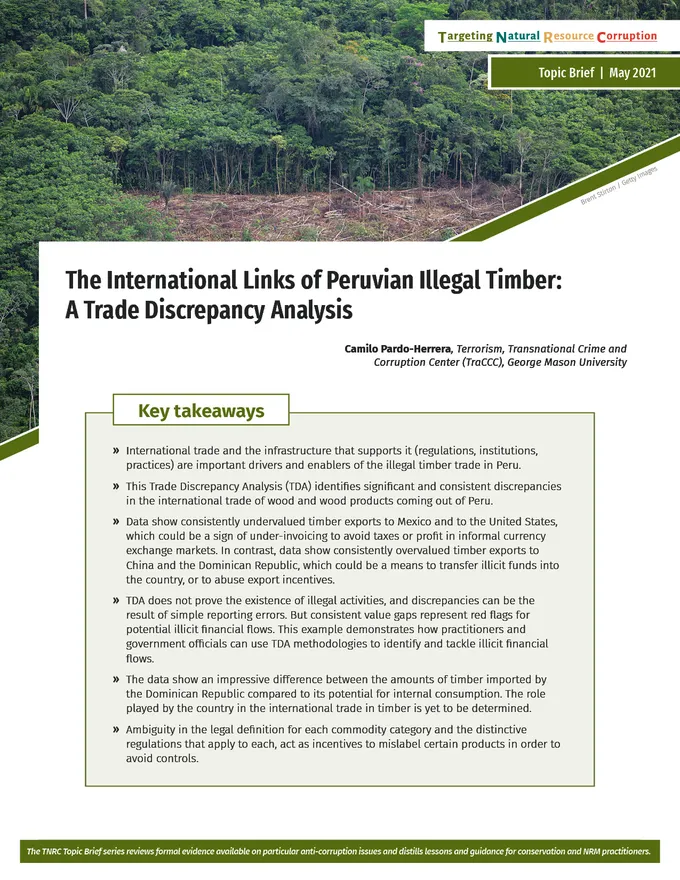
International trade and the infrastructure that supports it (regulations, institutions, practices) are important drivers and enablers of the illegal timber trade in Peru. This paper's Trade Discrepancy Analysis (TDA) identifies significant and consistent discrepancies in the international trade of wood and wood products coming out of Peru. Commerce data between Peru and it‚'s most important trading partners flagged specific issues that could potentially be related to illegal acts such as tax evasion, fraud, or money laundering. The analysis suggests that the ease to perform all these acts though trade mis-invoicing, in a context of increasing global demand for timber products, are factors that drive and facilitate illicit timber in Peru.
For more from the Targeting Natural Resource Corruption project , visit the TNRC Knowledge Hub.
---This content is made possible by the generous support of the American people through the United States Agency for International Development (USAID). The contents are the responsibility of World Wildlife Fund (WWF) and do not necessarily reflect the views of USAID, the United States Government, or individual TNRC consortium members.
-
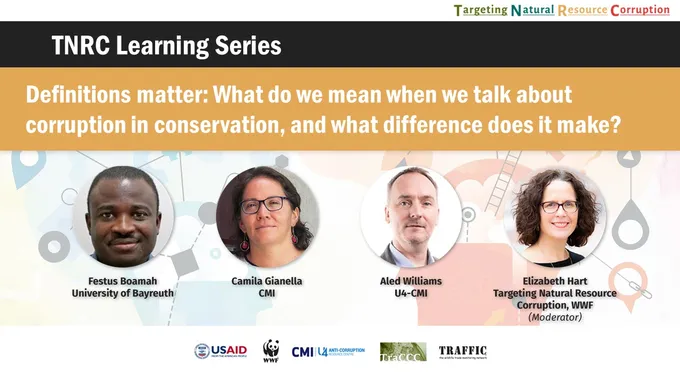
This presentation is from a TNRC Learning Series Webinar on 8 April 2021. The webinar addressed the following learning questions: 1) How has corruption been defined in relation to renewable natural resource sectors? 2) How have understandings, definitions, and indicators of corruption relevant to natural resources changed or evolved over time and space? 3) What are the main implications of the various definitions of corruption in terms of prioritization of policies and approaches for tackling natural resource corruption? and 4) What lessons should natural resource management practitioners take away from discussions on corruption definitions and how might they apply these in their work?
SPEAKERS:
Festus Boamah, University of Bayreuth
Camila Gianella, CMI
Aled Williams, U4-CMI
Liz Hart, Targeting Natural Resource Corruption, WWF
---
This content is made possible by the generous support of the American people through the United States Agency for International Development (USAID). The contents are the responsibility of World Wildlife Fund (WWF) and do not necessarily reflect the views of USAID, the United States Government, or individual TNRC consortium members.
-
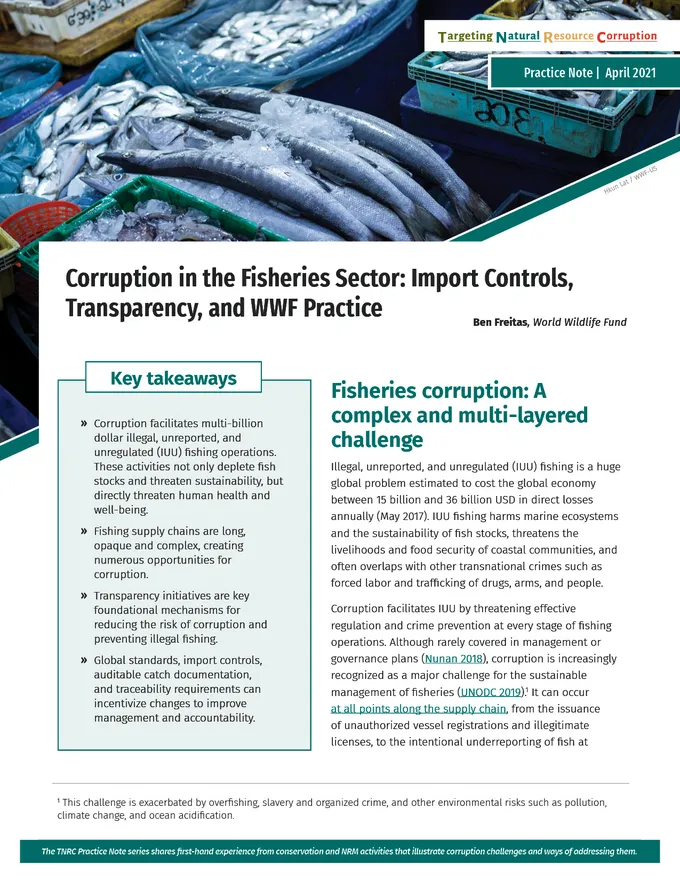
Illegal, unreported, and unregulated (IUU) fishing is a huge global problem estimated to cost the global economy between 15 billion and 36 billion USD in direct losses annually. Corruption facilitates IUU by threatening effective regulation and crime prevention at every stage of fishing operations. The types and extent of corruption in the fisheries sector are vast, requiring different types of interventions at different levels of power. This paper describes three levels of anti-corruption efforts involving transparency and their successes and challenges in reducing opportunities for corruption. These lessons and perspectives can inform foundational efforts to enhance transparency in fisheries, reduce opportunities for fisheries corruption, and safeguard marine ecosystems.
For more information and resources, visit the TNRC Knowledge Hub
---
This content is made possible by the generous support of the American people through the United States Agency for International Development (USAID). The contents are the responsibility of World Wildlife Fund (WWF) and do not necessarily reflect the views of USAID, the United States Government, or individual TNRC consortium members.
-
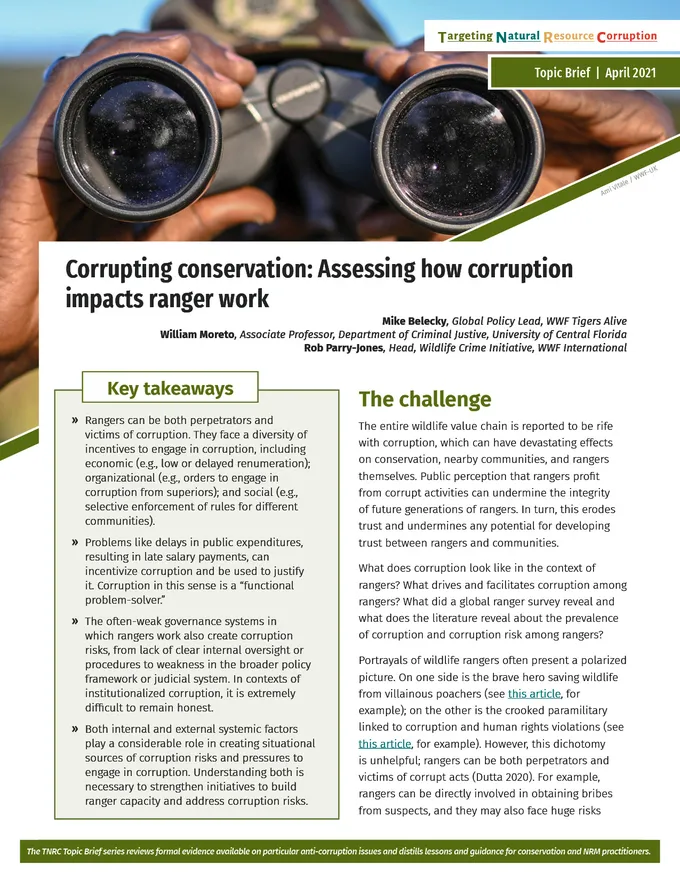
The entire wildlife value chain is reported to be rife with corruption, which can have devastating effects on conservation, nearby communities, and rangers themselves. Public perception that rangers profit from corrupt activities can undermine the integrity of future generations of rangers. In turn, this erodes trust and undermines any potential for developing trust between rangers and communities. This brief examines the issue of ranger corruption, drawing on data from a recent global study led by WWF and the University of Central Florida as well as other available literature.
For more resources, visit the TNRC Knowledge Hub.
---
This content is made possible by the generous support of the American people through the United States Agency for International Development (USAID). The contents are the responsibility of World Wildlife Fund (WWF) and do not necessarily reflect the views of USAID, the United States Government, or individual TNRC consortium members.
-
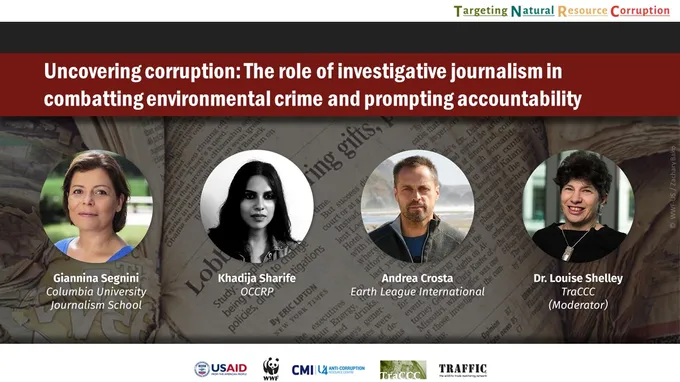
Investigative journalists are often the first to uncover corruption in locations with limited enforcement or low rule of law. This is particularly true in environmental sectors that tend to be low priorities for law enforcement and governments. This presentation deck is from a TNRC Virtual Panel on 11 March 2021 with two journalists and an investigator who specialize in uncovering environmental crime and corruption. Insights were shared on their roles, their techniques, and how they engage with conservation practitioners.
---
This content is made possible by the generous support of the American people through the United States Agency for International Development (USAID). The contents are the responsibility of World Wildlife Fund (WWF) and do not necessarily reflect the views of USAID, the United States Government, or individual TNRC consortium members.
-
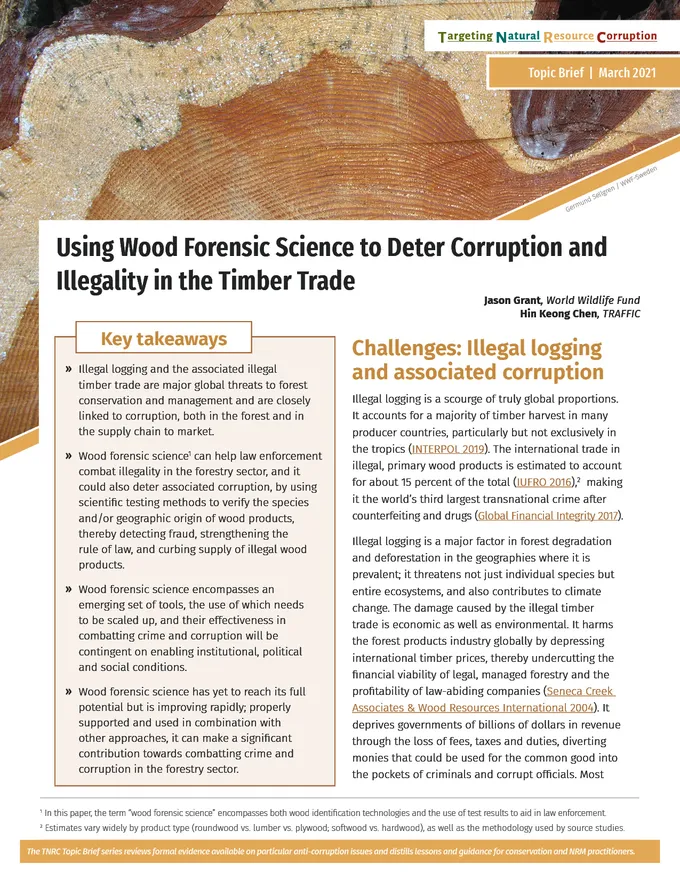
Corruption and crime in the forestry sector are closely interrelated. Much of the world‚'s remaining primary forests containing high-value timber are found in countries with weak governance, where corruption is systemic and forest crime is rampant. One reason that the illegal wood trade and the corruption that facilitates it have flourished is that, by laundering illegal wood in supply chains in ways that make it difficult to distinguish from legal wood, criminals and corrupt actors have generally evaded scrutiny. Wood forensic science has the potential to reveal illicit activities that are otherwise easily disguised, bringing a new level of transparency and accountability to the international timber trade.
For more resources and information, visit the TNRC Knowledge Hub.---
This content is made possible by the generous support of the American people through the United States Agency for International Development (USAID). The contents are the responsibility of World Wildlife Fund (WWF) and do not necessarily reflect the views of USAID, the United States Government, or individual TNRC consortium members.
-
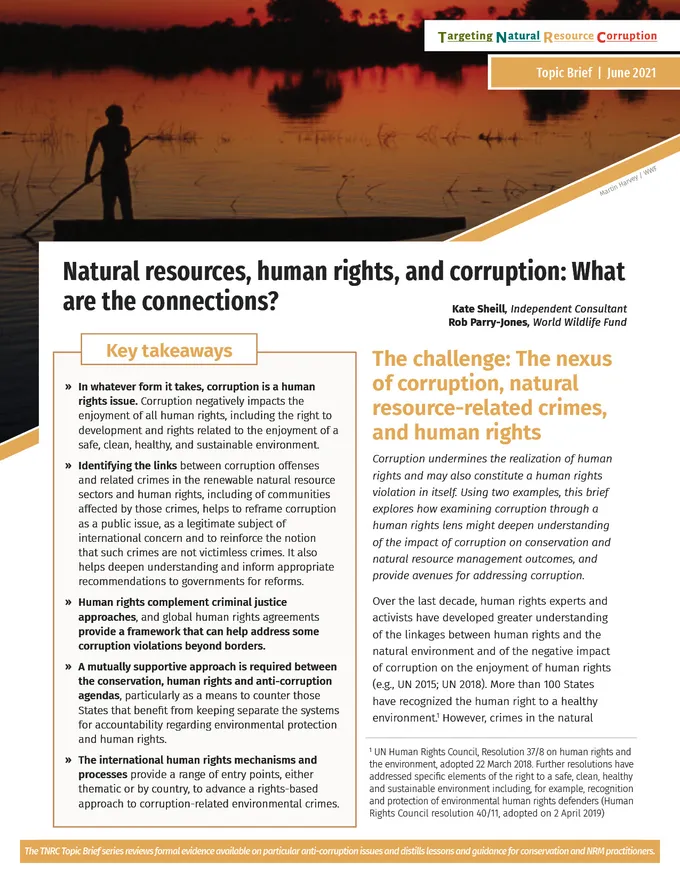
This Brief examines community-based anti-corruption efforts in natural resource management in order to better understand their rationales, potentialities, and challenges‚ – especially complications posed by the intersection of such initiatives with national-level dynamics of institutional capture. The authors present a case study from northeastern Madagascar in order to empirically explore such dynamics, and conclude with a discussion of how multi-level anti-corruption interventions might offer a promising way forward for reducing corruption in natural resource management for certain high-value landscapes or resources that might be subject to challenges connected to institutional capture.
For more information and resources, visit the TNRC Knowledge Hub.---
This content is made possible by the generous support of the American people through the United States Agency for International Development (USAID). The contents are the responsibility of World Wildlife Fund (WWF) and do not necessarily reflect the views of USAID, the United States Government, or individual TNRC consortium members.