Publications
-
In the past few decades, whistleblowers have proven to be a powerful tool for detecting and prosecuting environmental crimes and corruption. Thanks to modern whistleblower protections, such as those incorporated into the U.S. Foreign Corrupt Practices Act, whistleblowers around the world are currently partnering with law enforcement officials to make a meaningful dent in corruption in a host of industry sectors such as oil and banking. To date, whistleblowers have relied heavily on U.S. laws because of the unique protections and rewards they provide. Conservation practitioners and anti-corruption professionals can support the use of these successful whistleblower laws for the benefit of natural resources conservation.
For more information and resources, visit the TNRC Knowledge Hub.---
This content is made possible by the generous support of the American people through the United States Agency for International Development (USAID). The contents are the responsibility of World Wildlife Fund (WWF) and do not necessarily reflect the views of USAID, the United States Government, or individual TNRC consortium members.
-
Corruption poses a significant threat to forests and the communities that depend on them. By addressing corruption in forest products supply chains, companies can reduce reputational risk, ensure compliance with laws and regulations, avoid high penalties and felony charges, and improve their bottom line. This topic brief sets forth recommendations for approaches these stakeholders can take in the fight against corruption.
For more information and resources, visit the TNRC Knowledge Hub.---
This content is made possible by the generous support of the American people through the United States Agency for International Development (USAID). The contents are the responsibility of World Wildlife Fund (WWF) and do not necessarily reflect the views of USAID, the United States Government, or individual TNRC consortium members.
-
The scale and nature of corruption in wild plant supply chains is poorly understood, presenting important risks to livelihoods and the success of conservation efforts. Practitioners in the conservation and natural resource management (NRM) sector can benefit from a stronger understanding of available evidence on NTFP supply chains to assess risk better and assure sustainability and legality of the trade. The aim of this brief is to understand the corruption risks in NTFP supply chains and outline possible ways to address corruption effectively. The authors reviewed both grey and academic literature to identify different types of corruption in NTFP supply chains.
For more information and resources, visit the TNRC Knowledge Hub.
---
This content is made possible by the generous support of the American people through the United States Agency for International Development (USAID). The contents are the responsibility of World Wildlife Fund (WWF) and do not necessarily reflect the views of USAID, the United States Government, or individual TNRC consortium members.
-
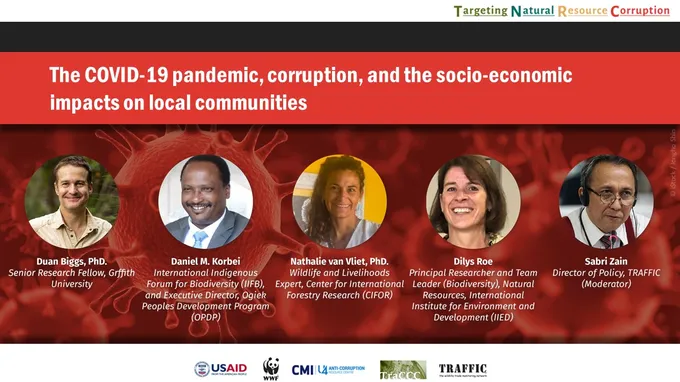
Governments are today faced with an unprecedented public health emergency that has forced them to close borders and lock down cities and communities. But as serious as the health crisis is, the pandemic is also a socio-economic crisis, with impacts that may be longer term. These impacts can include increased corruption risks, and strategies are needed to mitigate the socio-economic impacts of the pandemic in such a way as to help prevent corruption. TNRC convened a Virtual Panel on "The COVID-19 pandemic, corruption, and the socio-economic impacts on local communities" on December 14, 2020 to examine some of these impacts and mitigating strategies.
---
This content is made possible by the generous support of the American people through the United States Agency for International Development (USAID). The contents are the responsibility of World Wildlife Fund (WWF) and do not necessarily reflect the views of USAID, the United States Government, or individual TNRC consortium members.
-
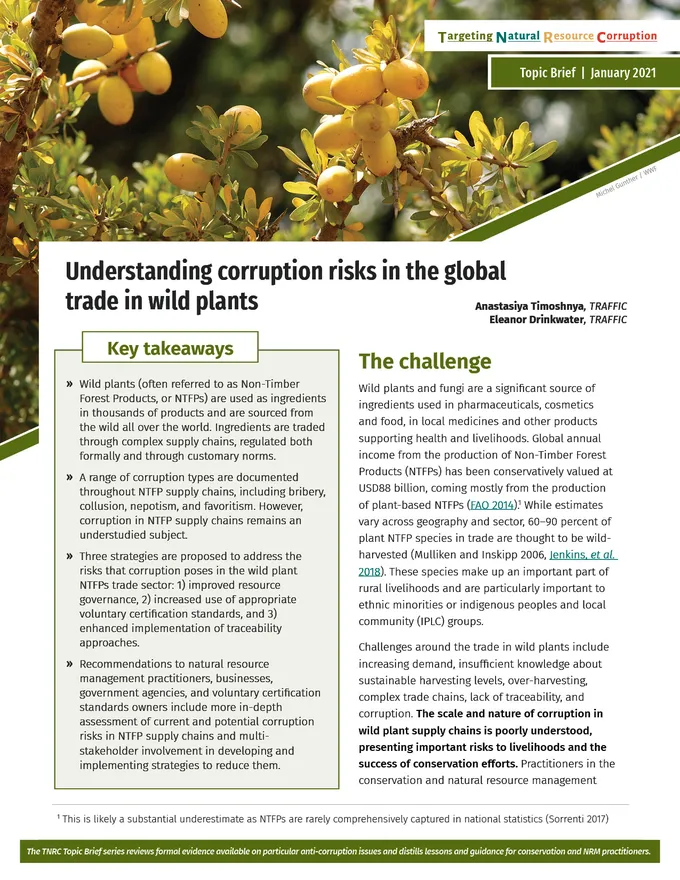
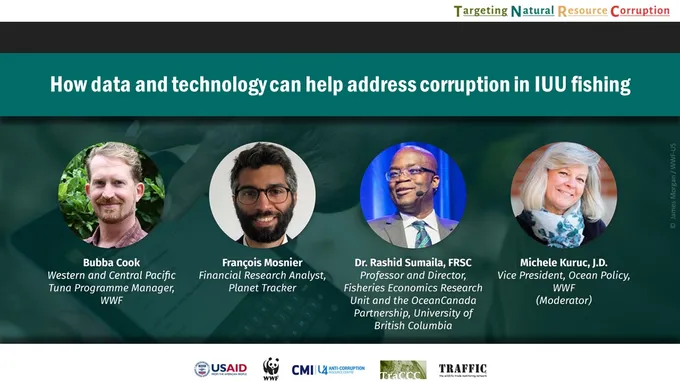
This presentation accompanied a virtual panel hosted by TNRC on December 2, 2020 to discuss the the promise and problems of using data and technology to address corruption in illegal, unreported and unregulated (IUU) fishing.
For more resources from the Targeting Natural Resource Corruption project, visit the TNRC Knowledge Hub.
---
This content is made possible by the generous support of the American people through the United States Agency for International Development (USAID). The contents are the responsibility of World Wildlife Fund (WWF) and do not necessarily reflect the views of USAID, the United States Government, or individual TNRC consortium members.
-
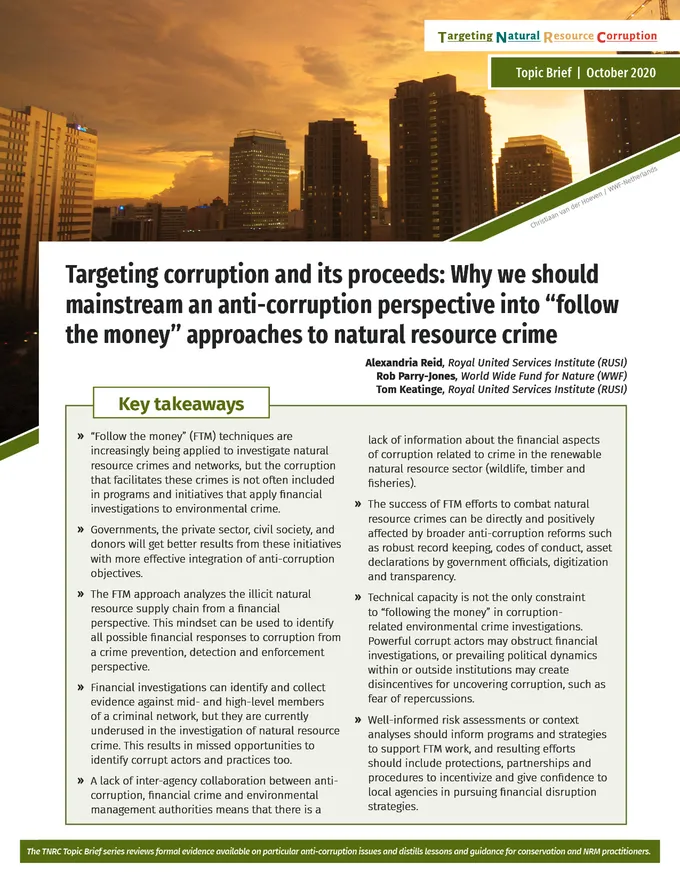
"Follow the money" (FTM) techniques are increasingly being applied to investigate natural resource crimes and networks, but the corruption that facilitates these crimes is not often included in programs and initiatives that apply financial investigations to environmental crime. The FTM approach analyzes the illicit natural resource supply chain from a financial perspective. This mindset can be used to identify all possible financial responses to corruption from a crime prevention, detection and enforcement perspective.
For more resources, visit the Targeting Natural Resource Corruption project Knowledge Hub---
This content is made possible by the generous support of the American people through the United States Agency for International Development (USAID). The contents are the responsibility of World Wildlife Fund (WWF) and do not necessarily reflect the views of USAID, the United States Government, or individual TNRC consortium members.
-
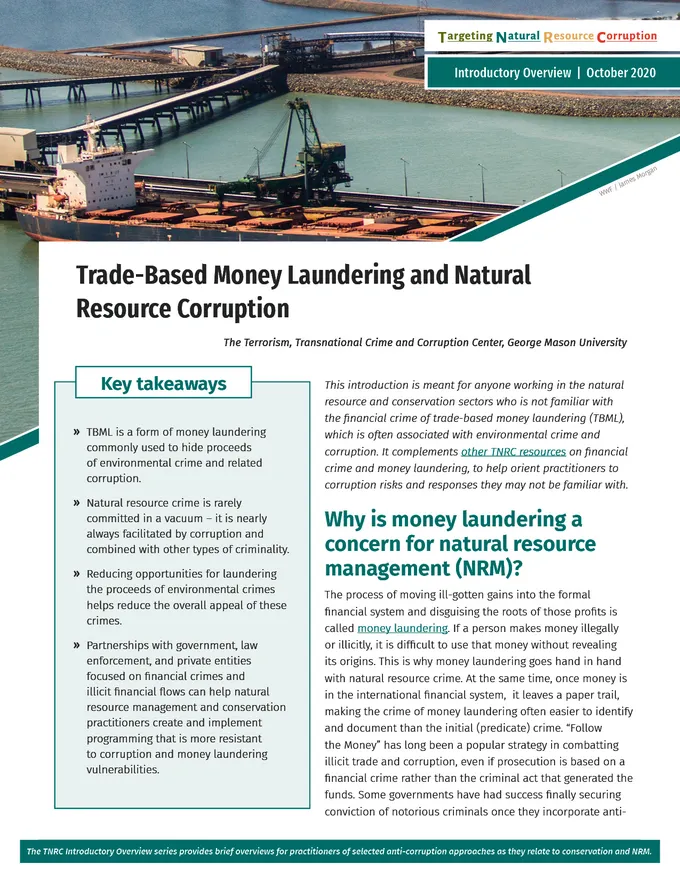
TBML is a form of money laundering commonly used to hide proceeds of environmental crime and related corruption. Natural resource crime is rarely committed in a vacuum — it is nearly always facilitated by corruption and combined with other types of criminality. Reducing opportunities for laundering the proceeds of environmental crimes helps reduce the overall appeal of these crimes.
Read more from the Targeting Natural Resource Corruption project.
---
This content is made possible by the generous support of the American people through the United States Agency for International Development (USAID). The contents are the responsibility of World Wildlife Fund (WWF) and do not necessarily reflect the views of USAID, the United States Government, or individual TNRC consortium members.
-
Legal harvest or trade in wildlife, fisheries and forest products typically involves obtaining access rights and permits. Corruption in these processes undermines regulations that promote sustainability and legality and address disease risk. Revenue is lost which should have been invested in public services and conservation.
Strategies to address abuse of these processes include a range of regulatory and administrative reforms, but implementation is not a simple matter of increasing employee pay or cutting bureaucratic red tape. Recognizing and mapping the political, economic and social power dynamics that shape regulations and enforcement may indicate larger problems in the enabling environment that should inform strategies for addressing corruption risks in wildlife harvest and trade.
---
This content is made possible by the generous support of the American people through the United States Agency for International Development (USAID). The contents are the responsibility of World Wildlife Fund (WWF) and do not necessarily reflect the views of USAID, the United States Government, or individual TNRC consortium members.
-
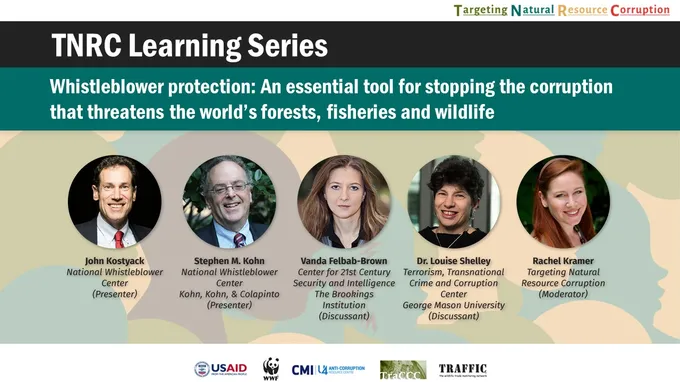
Conservation and management of forests, fisheries, and wildlife are suffering due to the lack of enforcement of resource protection and anti-corruption laws. Agencies charged with enforcement often lack the resources and political backing needed to prosecute fraud and bribery cases and impose meaningful sanctions. Fortunately, recent innovations in whistleblower protection provide abundant lessons that can be used to strengthen global natural resource conservation. This presentation, which was presented as part of TNRC's Learning Series Webinar on September 8, 2020, looked at the range of whistleblower mechanisms in place around the world, with a focus on key United States (U.S.) whistleblower laws.
---
This content is made possible by the generous support of the American people through the United States Agency for International Development (USAID). The contents are the responsibility of World Wildlife Fund (WWF) and do not necessarily reflect the views of USAID, the United States Government, or individual TNRC consortium members.
-
This presentation was delivered by experts in a TNRC virtual panel on 27 August 2020. Discussion focused on learning and approaches that global practitioners can consider to protect marine resources, address governance challenges, and safeguard rights.
---
This content is made possible by the generous support of the American people through the United States Agency for International Development (USAID). The contents are the responsibility of World Wildlife Fund (WWF) and do not necessarily reflect the views of USAID, the United States Government, or individual TNRC consortium members.