What's the difference between buffalo and bison?
Bison and buffalo both belong to the bovidae family, but bison are found in North America and Europe, while buffalo are found in Asia and Africa.
© _
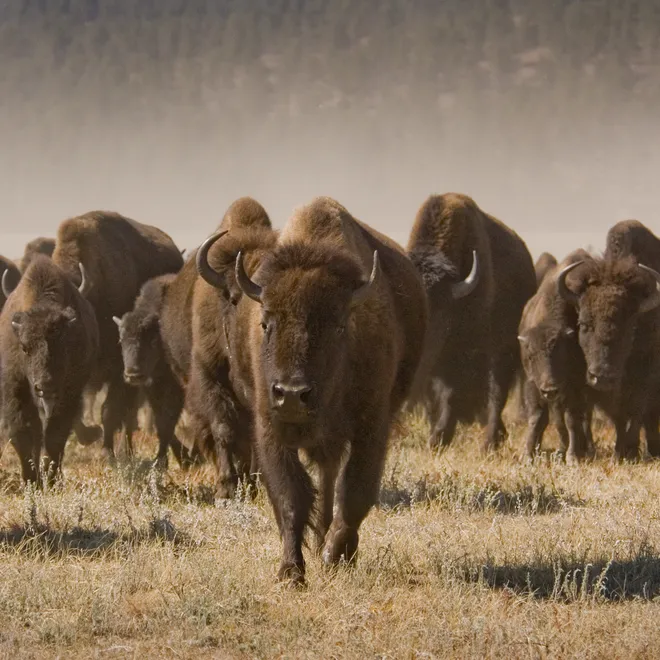
The buffalo is often considered an iconic symbol of the Great Plains and the American West. But did you know there aren’t actually any true buffalo in North America?
This massive land animal—the largest in North America—is actually a bison. Although buffalo and bison both belong to the Bovidae family, they live in different parts of the world. Bison are found in North America and Europe, while buffalo are found in Asia and Africa.
So, why do we call American bison “buffalo”?
American bison are often called “buffalo” because early European settlers saw these shaggy, humped mammals and associated them with Old World buffalo species they already knew. Although bison are not true buffalo, the name became widely adopted and is still used interchangeably across much of North America. Today, many Indigenous communities also use “buffalo” in cultural and everyday contexts, and Native languages have long included their own names and terms for these animals.
How do you tell them apart?
© WWF-US / Steve Morello
© Jonas Lysholdt Ejderskov / WWF-Denmark
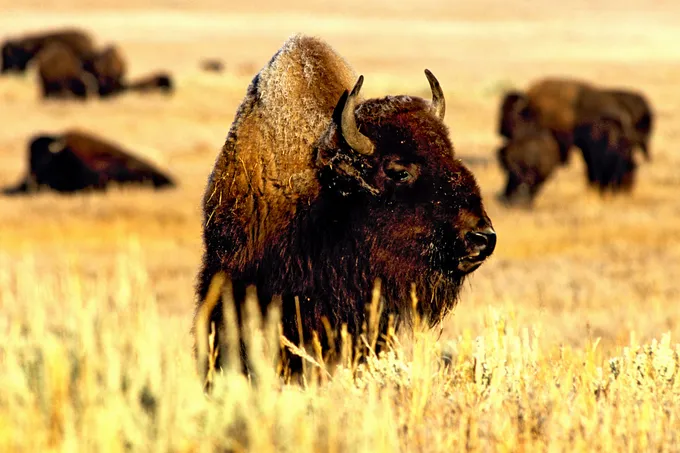
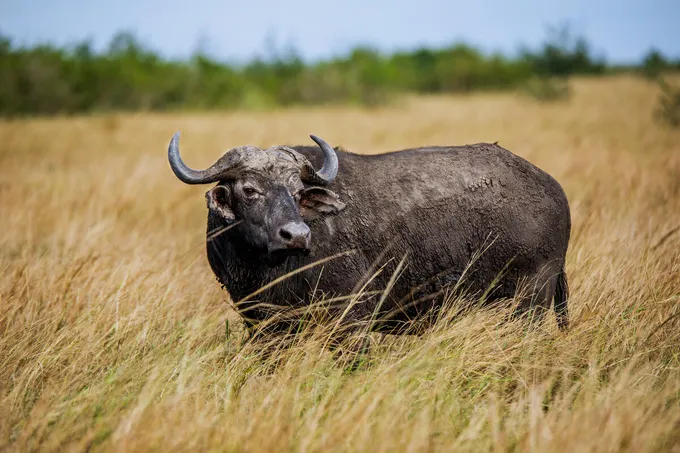
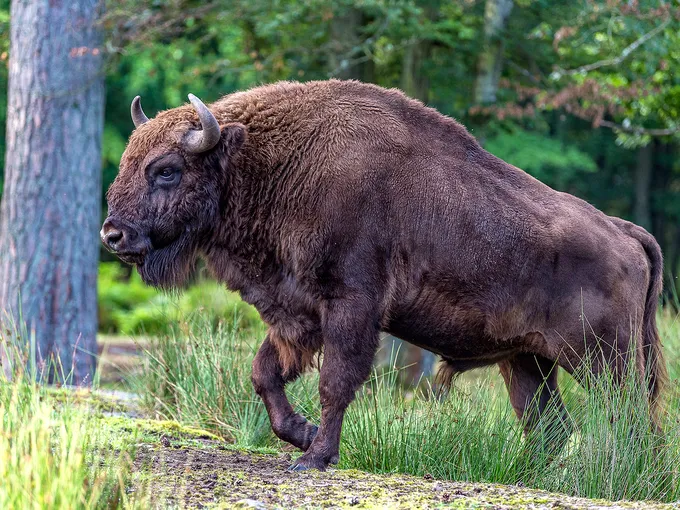
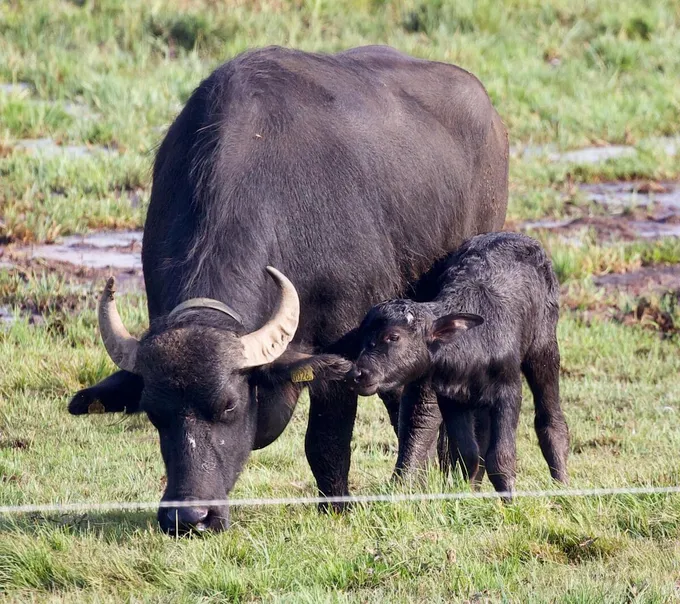
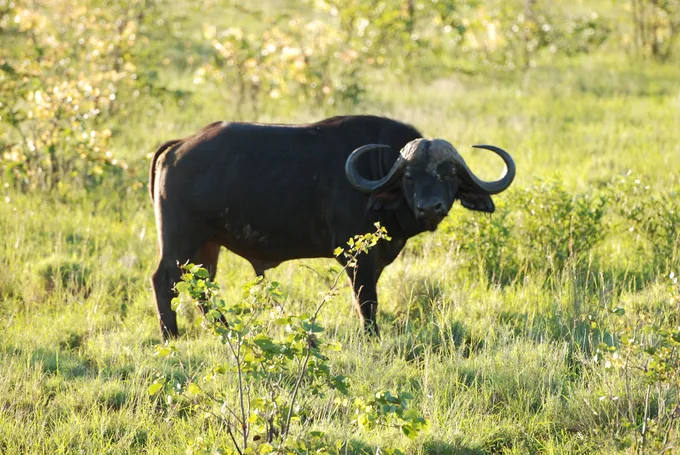
These species have distinct characteristics that make them easy to distinguish. Bison have large, muscular shoulder humps, massive heads, prominent chin beards, thick shoulder hair, and short, sharply curved horns. Buffalo have smoother backs, smaller heads without beards, slicker coats, and long, large horns that can resemble handlebar mustaches. They also live in different climates: bison are adapted to the harsh, freezing winters of North America and Europe, while buffalo natively inhabit warmer, tropical areas in Asia and Africa.
Another key difference is domestication. For centuries, species such as water buffalo have lived alongside people and other livestock and have been used for labor, dairy products, and meat. Although some bison are semi-domesticated for specialized ranching purposes, they behave more like wildlife even when raised in enclosed pastures.
What are the different species of bison?
© WWF-US/Clay Bolt
© OLA JENNERSTEN/WWF-SWEDEN
There are two living species of bison: the American bison (Bison bison) and the European bison (Bison bonasus).
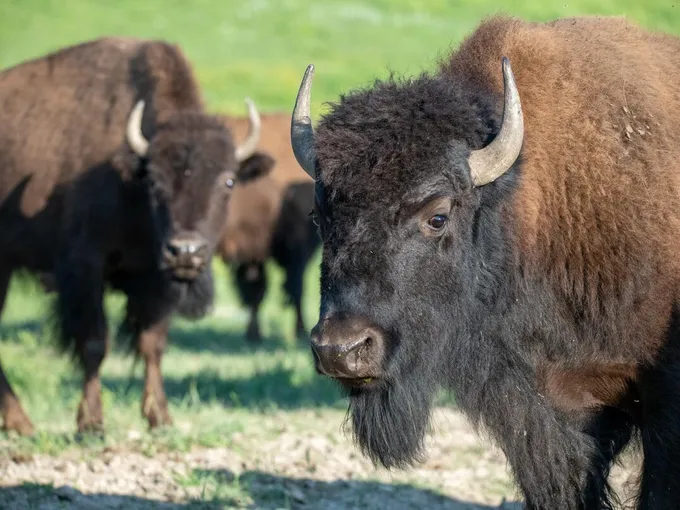
The American bison is found in both the United States and Canada, with two subspecies inhabiting different regions of North America. The Plains bison (Bison bison bison)—what many people refer to as buffalo in the Great Plains—is the most common subspecies found throughout the lower 48 states. The wood bison (Bison bison athabascae) is primarily found in the northern boreal forests and wetlands of Canada and Alaska and is the largest subspecies of American bison. Across the Atlantic, the European bison (Bison bonasus), also known as the wisent, inhabits protected areas and semi-open woodlands in central and eastern Europe.
European bison once lived in places such as the Białowieża Forest, along the modern-day Poland-Belarus border, and the Caucasus Mountains in Russia. By 1927, they had been declared extinct in the wild. Conservationists were able to rebuild the species from a small captive population of just 12 surviving animals, and in 1952, European bison were successfully reintroduced to the wild. Today, thousands roam free across Europe, making their recovery one of the most notable conservation success stories in history.
Although they are closely related and share the same genus (Bison), these species and subspecies developed distinct traits suited to their environments. The North American bison is heavier and shaggier, with a massive head adapted for grazing, while the European bison is taller and more slender and primarily browses in woodland habitats. The two American subspecies also differ: Wood bison are larger and darker, with a taller, squarer hump positioned forward of the front legs. Plains bison are slightly smaller, with a more rounded hump directly over the front shoulders and a thicker, more pendulous beard.
What are the species of buffalo?
© Yvonne Blombäck / WWF Sweden
© Christiaan van der Hoeven / WWF-Netherlands
Like bison, buffalo are separated into two main species. The water buffalo (Bubalus bubalis) is native to Asia and includes both wild and domesticated populations. The African buffalo (Syncerus caffer) is native to sub-Saharan Africa and, unlike the water buffalo, has never been domesticated.
Water buffalo are tall, heavy animals and are among the largest members of the Bovidae family, with adult males weighing up to 2,600 pounds. They have crescent-shaped horns that curve backward and upward, sometimes spanning up to 10 feet. African buffalo are stockier, shorter, and lower to the ground, with a muscular, robust build, and weigh between 900 and 1,900 pounds. Their massive, sweeping horns curve downward and then upward. Mature male African buffalo also have horns that fuse together in the center of the forehead, creating a thick, hard shield called a “boss.” Water buffalo, on the other hand, do not have horns that fuse into a central boss.
Whether you call them buffalo or bison, these remarkable animals have shaped ecosystems and cultures for thousands of years. Recognizing these differences helps us appreciate the unique evolutionary histories of both groups and the importance of conserving each in its native habitat. From the grasslands of North America to the forests of Europe and the wetlands and savannas of Asia and Africa, bison and buffalo each play important roles in their respective habitats, from grazing and nutrient cycling to shaping vegetation and creating opportunities for other wildlife. By learning their distinctions, we can better honor their histories, recognize their ecological value, and support the ongoing efforts to protect them for future generations.
© WWF-US / WWFGifts
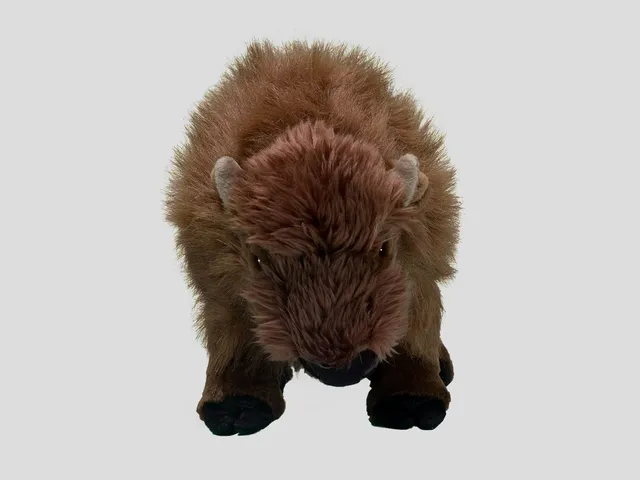
Adopt a bison
Support WWF’s global efforts to protect wild animals and their habitats and choose from kits with plush and more.