© naturepl.com / Doug Perrine / WWF
Flatback turtles
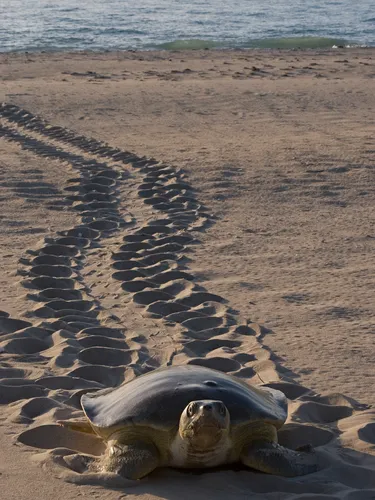
Flatback turtles, also known as Australian flatbacks, are the least-studied sea turtles and the only sea turtle species endemic to Australia. They also have the most restricted geographic range of any sea turtle species, found only within the continental shelf waters of northern Australia and adjacent areas of Papua New Guinea and Indonesia, with nesting occurring almost exclusively along the northern coast of Australia. As their name suggests, flatback turtles are known for their pale olive-green or gray flat-top shells and a cream-yellow underbelly. They eat primarily benthic invertebrates (crabs, other crustaceans, and mollusks) and jellyfish throughout their entire life.
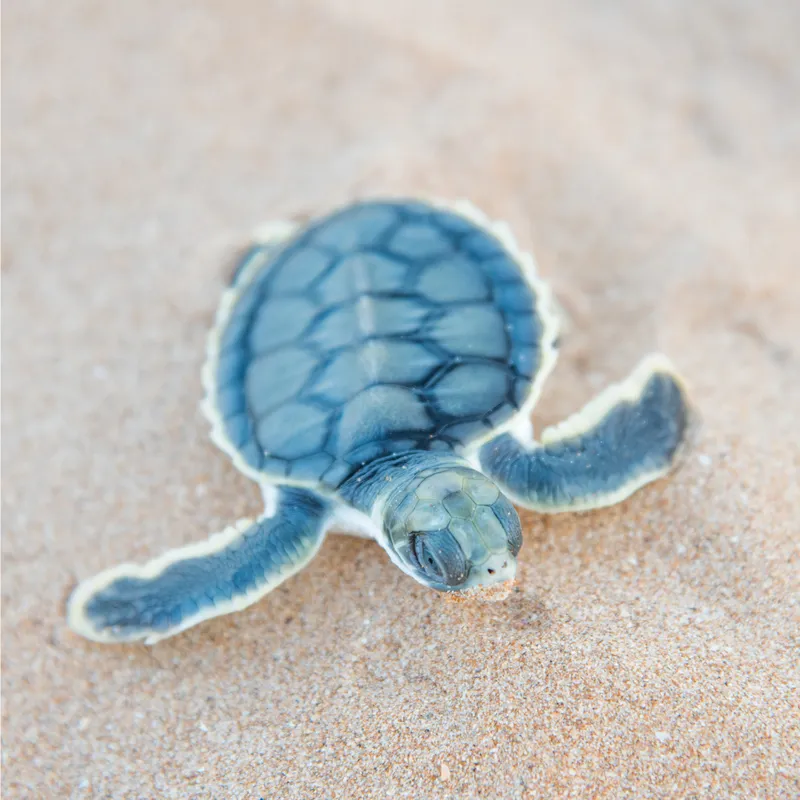
Flatbacks are among the most unique sea turtle species. Once thought to be closely related to green turtles, they are now recognized as a distinct species and the only living member of the genus Natator. They lay the largest eggs and hatchlings relative to their adult body size out of all sea turtles. Flatback turtles can also stay active underwater longer than most species, due to their unique physiology, which includes a high capacity for oxygen transport, low metabolic rates, bradycardia (slowing of heart rate during dives), and oxygen-binding proteins that hold and release oxygen directly to the heart and brain.
Flatback turtle facts
- Status Learn more about endangered status categories and explanation
- Vulnerable
- Scientific name
- Natator depressus
- Weight
- 150–200 lbs.
- Length
- 30–38 in.
Why flatback sea turtles matter
© EA Given/Shutterstock.com
Because flatback turtles are found only in a small region of the world, their survival is closely tied to the health of northern Australia’s coastal and ocean habitats. By feeding on crabs, mollusks, and other seafloor animals, they help keep shallow coastal ecosystems balanced. Beach ecosystems benefit from their nesting activity, which moves nutrients between the ocean and land. Because flatback turtles are the least-studied sea turtle species and data on them remains limited, protecting them is essential—not only to advance research on the species itself, but also to deepen our understanding of sea turtle biology, climate-related threats, and the conservation needs of species with restricted ranges.
Threats to flatback sea turtles
Coastal species such as the flatback turtle are particularly vulnerable to changes in beach environments. Successful nesting and hatchling survival depend on specific environmental conditions, including suitable sand temperatures, adequate shade from coastal vegetation, stable beach elevations, and protection from flooding caused by storm surges and overwash—a process in which waves and high tides carry water and sediment inland across the beach.

© Wim van Passel / WWF
Flatback turtles face numerous threats throughout their nesting range, including plastic and other pollution, artificial lighting, beach development and modification, predators, sea-level rise, and rising ocean and beach temperatures. These threats can affect nesting success in different ways depending on the location. For example, artificial lights from coastal development can disorient hatchlings and draw them away from the ocean, while predators such as feral pigs, dogs, foxes, and monitor lizards may dig up nests and consume eggs. Increasing sand temperatures can also influence hatchling survival and sex ratios, while sea-level rise and stronger storms can flood or erode nesting beaches, reducing the availability of suitable nesting habitat.
Marine debris
Marine debris, like plastic bags, fishing lines, ghost nets, bottles, and other human-made trash, can enter coastal and ocean habitats. Flatback turtles are especially threatened by marine debris because they spend their entire lives in shallow and coastal and continental shelf waters, where their feeding and nesting areas are contaminated by trash. Flatbacks can ingest plastics and become entangled in fishing gear, and beach debris can block nesting females or hatchlings.
Altered onshore and nearshore light conditions
Artificial lighting from coastal buildings, roads, ports, ships, and other industrial sites can disrupt the natural darkness of flatback nesting beaches and nearby waters. Flatback hatchlings rely on natural light cues to move from nest to ocean, but artificial lights can draw them inland or cause them to linger nearshore, increasing the risk of exhaustion and predation. Lighting also discourages adult females from nesting in an otherwise suitable area.
Beach modifications
Human activities such as coastal construction, dredging, beach nourishment, seawalls, vehicle use, and changes to dune vegetation can destroy nesting habitat. Because flatback turtles nest only on Australian beaches, damage or alteration of nesting sites can negatively affect the entire species. Modified beaches can reduce suitable nesting spaces, make nests more vulnerable to flooding or erosion, and create barriers for hatchlings as they make their way to the ocean.
Non-native predators
Animals such as feral pigs, foxes, cats, dogs, and rats are introduced, non-native species that prey on turtle eggs and hatchlings. Flatback nests are especially vulnerable due to non-native predators that dig up eggs on remote nesting beaches, significantly reducing hatchling success. Flatback rookeries (designated, highly concentrated nesting grounds for females and hatchlings) rely on predator control as an important conservation effort.
Sea-level rise
Erosion, flooding, and saltwater overwash are exacerbated by sea-level rise, which severely threatens flatback turtle nesting beaches. Because of their specific nesting area along northern Australia and nearby islands, the protection of suitable nesting beach habitat is crucial for the survival of flatbacks. Low-lying rookeries are especially at risk when beaches cannot naturally shift inland.
Increasing beach and ocean temperatures
Warmer beach temperatures affect flatback eggs because incubation temperature influences hatchling survival and sex ratios. Extremely hot sand can lower hatchling success or produce mostly female hatchlings, which may affect future population balance. Warmer ocean temperatures may also change flatbacks’ shallow-water foraging habitats and the availability of prey such as benthic invertebrates.
How WWF is taking action to protect flatback turtles
Eliminating bycatch
WWF aims to reduce sea turtle bycatch—the accidental capture of non-targeted species in fishing gear—by working with fisheries to switch to more turtle-friendly “circle” hooks and use turtle excluder devices in nets. We also use satellite technology to track turtle movements, helping identify areas where turtles and fisheries may overlap and reducing the risk of future interactions. WWF works directly with fishers to safely release turtles caught in fishing gear.

© naturepl.com / Jordi Chias / WWF
Protecting sea turtle habitat
Because of the flatback turtle’s limited range, protecting sea turtle habitats is crucial for the species to thrive. WWF works worldwide to establish marine protected areas (MPAs), expand Important Marine Turtle Areas (IMTAs), and promote responsible coastal development practices to ensure sea turtles have safe places to nest, feed, and migrate freely. We encourage governments to strengthen legislation and provide funding for sea turtle protection. WWF also supports monitoring and patrolling turtle nests in many parts of the world and equipping local turtle conservationists, which often leads to ecotourism opportunities and offering alternative livelihoods.
Satellite tracking
Satellite telemetry, in which researchers safely attach tracking devices to sea turtles, allows researchers to track sea turtles as they swim from place to place. These satellite tags do not harm the turtles in any way and are designed to eventually fall off. The data will tell us where important feeding areas are, help us understand migration patterns, and anticipate where turtles may encounter fisheries and their gear.
How you can help
© George Walsh
Strengthen the Endangered Species Act
More than 99% of the species listed under the Endangered Species Act have avoided extinction due to the law’s protections. Today, those protections are under threat — at the exact moment wildlife needs them most.