A jaguar in Arizona
By
© James Beissel & Jinyoung Jayson/University Of Arizona Wild Cat Research Center
SOUTHERN ARIZONA :: UNITED STATES
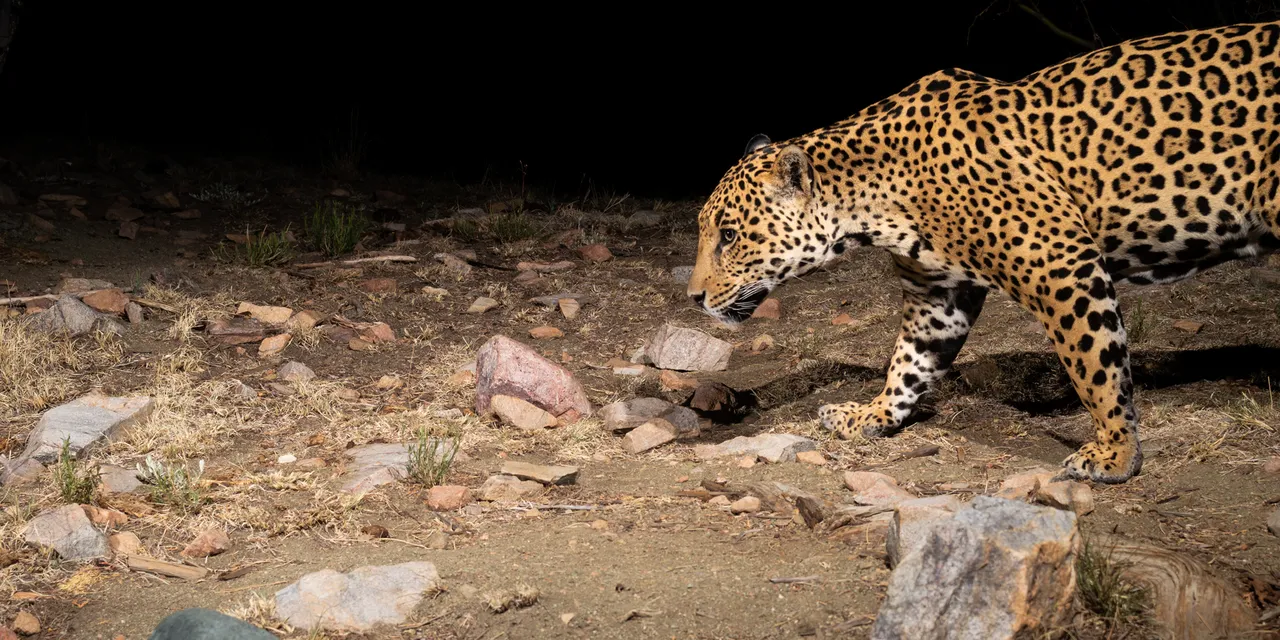
When wildlife photographer James Beissel successfully captured a camera trap photo of a male jaguar in the Chiricahua Mountains of southern Arizona, he was stunned. Jaguars had been largely wiped out from the US in the 1950s.
“Working alongside the University of Arizona Jaguar & Ocelot Project, we deployed high-resolution remote cameras equipped with infrared beam triggers to capture one of the rarest wildlife photographs,” says Beissel.
Historically, the third-largest big cat in the world ranged from parts of the southern US to northern Argentina. Today the species’ stronghold lies primarily in the Amazon basin and parts of Central America. And while jaguars are threatened by shrinking and fragmented habitats, decreasing prey numbers, and killings due to increasing conflict with humans and the illegal wildlife trade, they continue to surprise biologists with their resilience.
“Every new individual detected in the US means that, despite numerous threats, jaguars continue to find their way across the border from Mexico and that the habitat conditions needed to support these animals persist,” says Robin Naidoo, lead scientist for WWF’s wildlife team. “These sightings are a hopeful sign that the Americas’ largest cat still has a home at the northernmost tip of its range.”
© Sara Germain/USFWS
Explore more
Keep reading this issue of World Wildlife magazine