Living landscapes
To tackle threats like climate change and biodiversity loss, WWF is working across whole landscapes to ensure our solutions are as big as the challenges we’re facing.
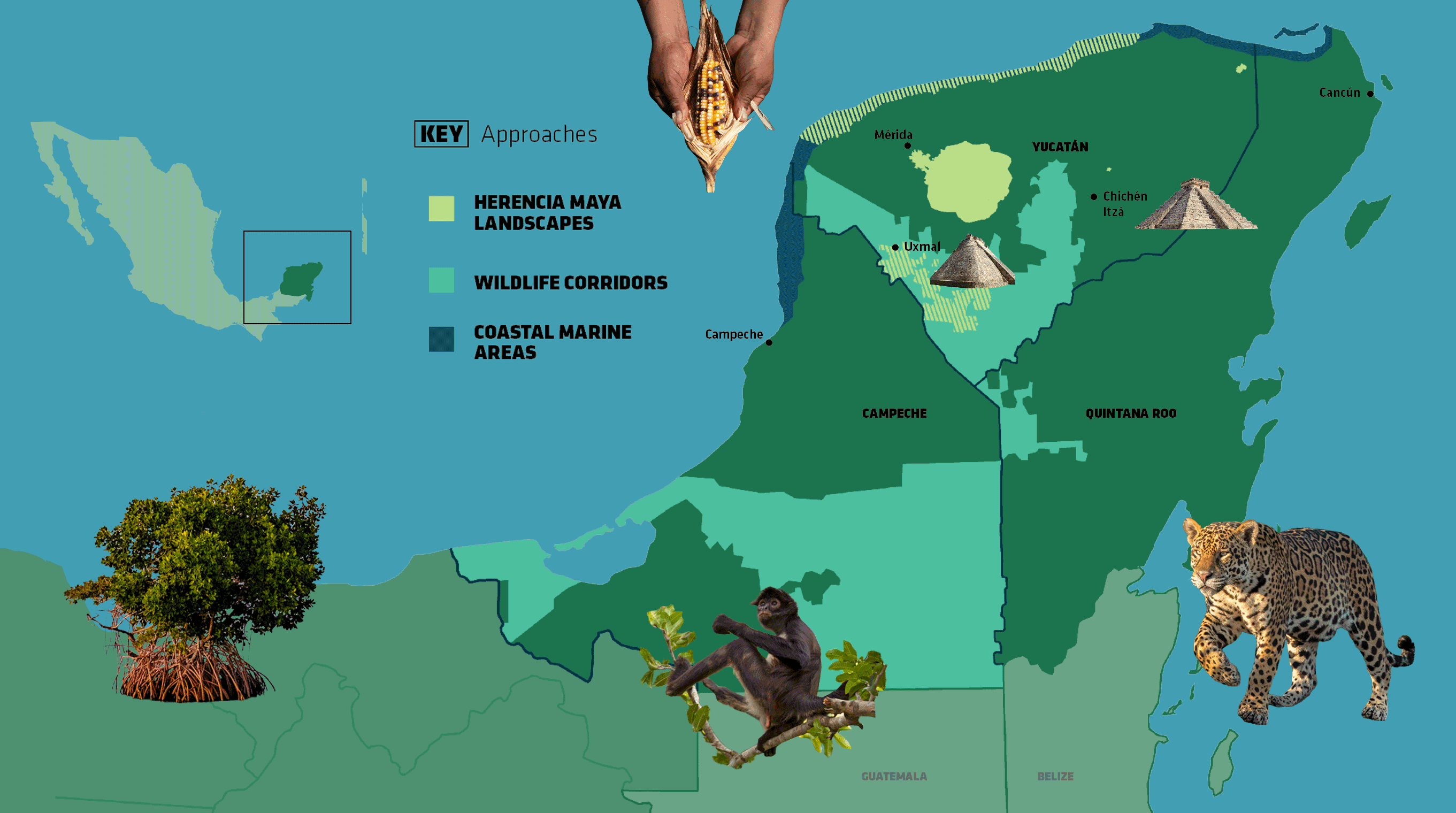
© Corn © WWF-US/Alejandro Prieto; Mangrove tree © Jason Houston/WWF-US; Pyramid of the Magician © SYBZ; Temple of Kukulkan © istock.com/cinoby; Spider monkey © Claudio Contreras/naturepl.com; Jaguar © Bruce D. Taubert
Yucatán facts
- >5% of the population is Indigenous, with a rich history of managing natural resources
- 49,000+ sq. mi. of diverse forest and coastal ecosystems
- Second-largest tropical rainforest in the Americas
- Hundreds of endemic, endangered, and key species
A concerted effort
Across the Yucatán Peninsula two efforts have come together to advance the long-term protection of one vast landscape’s heritage and biodiversity.
The Nature-Based Solutions Origination Platform (NbS-OP) works hand in hand with other WWF initiatives to secure long-term financing for large-scale, high-integrity forest protection, restoration, and responsible management efforts.
Through the NbS-OP, WWF codesigns and implements interventions with Indigenous Peoples, local communities, governments, and companies across key tropical forest regions in Brazil, Madagascar, Mexico, Peru, and Viet Nam.
Over 10 years, the NbS-OP aims to conserve, restore, or sustainably manage nearly 56,000 sq. mi., avoid 24 million metric tons of carbon emissions, and improve the well-being of more than 165,000 households.
Project Finance for Permanence (PFP) initiatives secure the policy changes and funding necessary for conservation success and bind them together in a single agreement.
This can look like creating new protected areas, ensuring community and traditional rights, or establishing longer-term funding sources. Putting everything into one agreement ensures that systems of conservation areas are well managed and sustainably financed, and benefit the communities who depend on them over the long term.
The PFP initiative in Mexico, Herencia Maya, will bring economic and ecological benefits to local communities living within protected areas, ensuring that cultural identity and nature sustain each other.
The power of Herencia Maya
-
1.4 million acres
of state, municipal, and private protected areas
-
1.3 million people
with secured sources of freshwater
-
130,000 acres
of mangroves under improved management
-
170 miles
of Yucatán’s shoreline under improved protections
The power of nature-based solutions
-
Climate: ≥1.7 million tons
of CO2e removed from the atmosphere
-
People: >500,000 people
benefiting from improved ecosystem services
-
Nature: 10 million acres
of forest and coastal ecosystems maintained or improved
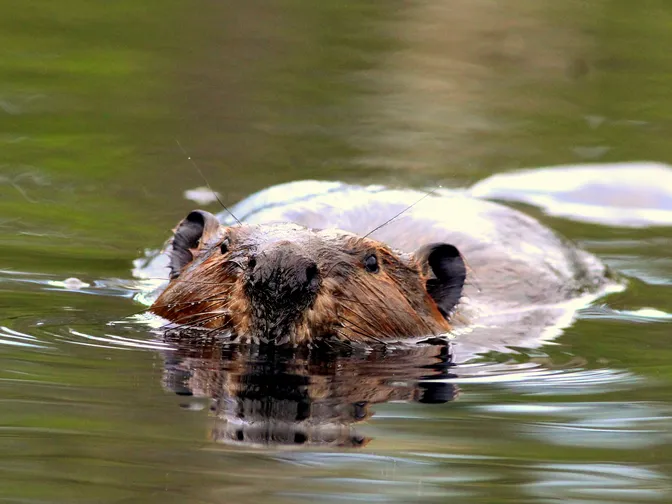
© Sara Germain/USFWS
Explore more
Keep reading this issue of World Wildlife magazine