In Mexico's Yucatan Peninsula, protecting a historic and biodiverse landscape
By
-
Humberto Basilio
Photos by
-
Alejandro Prieto

© WWF-US/Alejandro Prieto
CALAKMUL, MEXICO
Just as he did every morning, as soon as the first rays of sunlight slipped through the trees, Juan Díaz* rose to check on his herd.
But that morning was different. Along the border where his pasture meets the vast Maya Forest, he found two dead sheep. The size and placement of the bite marks quickly revealed the predator: It was the king of the forest, the jaguar.
Yet Díaz never once thought of hunting down the big cat. “The jaguar isn’t to blame,” he says, his calm voice reflecting a deep understanding of the law of the wild and a profound love for everything that lives within it. He understands that the growing encounters between jaguars and humans in Calakmul are the result of shrinking habitat, as the cat’s sources of food and shelter are steadily destroyed. Still, the loss of even one sheep is a heavy economic blow.
Between 2004 and 2017, more than 106 million acres of forest have been lost from 24 “deforestation fronts” across the world—nine in Latin America. Among them is what some call the Great Maya Forest, which stretches through southern Mexico, Belize, and northern Guatemala. There, urban expansion and a variety of agricultural activities are driving deforestation in one of the world’s last important refuges for jaguars. Longer dry seasons and other effects of the climate crisis are also pushing the big cats closer to nearby communities, where they can still find reliable sources of water and food.
“Never harm a jaguar, never kill one,” says Díaz, and he’s proved his commitment. He chose to change all his ranching practices rather than take revenge. Recently, the 83-year-old installed an electric fence to protect his sheep—a barrier that keeps jaguars away without hurting them. Still, he says, he keeps finding pawprints around the fence.

© WWF-US/Alejandro Prieto
Díaz is just one of many farmers in the rainforest who are choosing to improve their ranching, farming, and hunting practices—not only to secure a better life for themselves but also to protect jaguars and the hundreds of other species being driven from their homes. For Díaz, who began building his ranch 55 years ago, saving the forest means more than leaving his children and grandchildren with an economic inheritance. It means preserving the Maya cultural legacy that, for thousands of years, supported all that surrounds him—and everything he loves.

© WWF-US/Alejandro Prieto
Natural heritage
Walking on the same ground as the jaguar is a luxury few people have, says Carlos Coutiño, a conservationist and entrepreneur who owns the eco-village Kinich Ahau. For the ancient Maya, the god Kinich Ahau embodied the sun during the day and became a jaguar at night to journey through the underworld.
In 2016, Coutiño and his family bought nearly 30 acres of rainforest—something like 12 city blocks—to protect it and the jaguars, tapirs, bats, and other wildlife that depend on it. Beyond setting up water troughs for wildlife during the dry months and working with the government and WWF to install camera traps for monitoring, Coutiño and his partners operate 12 small ecotourism cabins where travelers from around the world can appreciate nature.
Paths here are shaded by ramón, cedar, and chicozapote trees that fill the air with a sweet, gumlike scent. Between their trunks lie remnants of ancient Maya structures—stone foundations, stairways, and deep pits once used to store food and weapons. From the canopy above, a symphony of birdsong fills the air.
“It is the forest speaking,” says Fernando Contreras, a biologist and WWF field officer. “Here the sky and the earth are never still.”
Camera traps
Scientific inquiry and wildlife monitoring sit at the core of conservation. Camera trap images, like those seen here, provide vital data to inform WWF’s protection, restoration, and coexistence work.
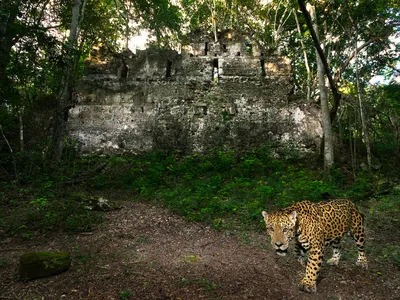
Jaguar (Panthera onca)
© WWF-US/Alejandro Prieto
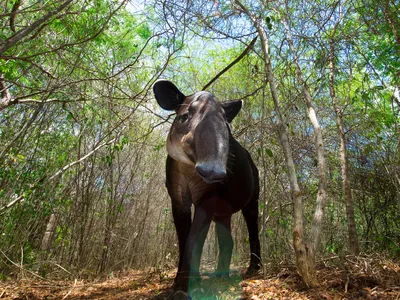
Baird’s Tapir (Tapirus bairdii)
© WWF-US/Alejandro Prieto
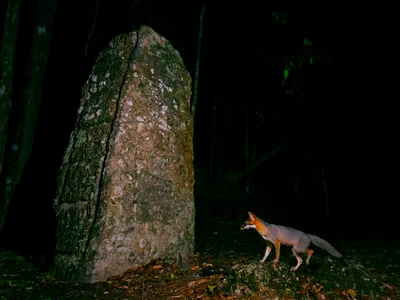
Gray Fox (Urocyon cinereoargenteus)
© WWF-US/Alejandro Prieto
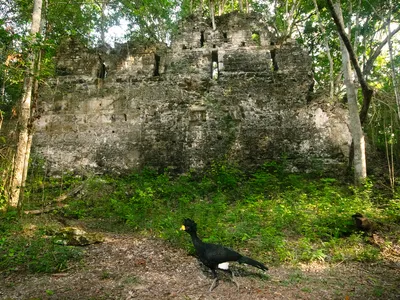
Great Curassow (Crax rubra)
© WWF-US/Alejandro Prieto
The sounds fade for only a few minutes before the last rays of sunlight brush the forest and millions of bats pour out of their caves nearby. The roar of wings spirals like a tornado, and slowly their dark fur blends into the night.
Kinich Ahau is also a gathering place for local youth. Experts like Contreras project camera-trap images of tapirs, jaguars, and pumas on the eco-village restaurant’s walls, and students crowd around in the dim light to get a closer look. The hope, Coutiño says, is to spark awareness in the younger generation and revive a sense of belonging that is slowly slipping away as local youth leave in search of jobs in nearby cities. “If this small effort is repeated in other communities, we can do a lot to protect the forest and recover our culture,” he says.
The eco-village, like Juan Díaz’s ranch, borders the Calakmul Biosphere Reserve, a protected area that spans nearly 2,800 sq. mi. and is home to thousands of different species. Opossums and coatis wander along the forest floor, spider and howler monkeys sway through tree branches, and ocelots and pumas slip silently through the foliage.
Coutiño, who once served as deputy director of the reserve, says that protected areas are the only thing standing between the Maya Forest and the advance of urban expansion and agriculture.
From above, the dark green forest canopy is broken by large brown and pale-green scars where the agricultural and livestock industries have cleared land for soybean farming and to grow animal feed. The small communities that border the reserve also put pressure on it when their grazing, planting, and harvesting practices are not sustainably planned.
The growth of nearby cities is also bringing economic acceleration, rising costs of living, and competition that small producers in southern Mexico struggle to withstand. Close to 350,000 people live in poverty in the region, and landowners often face pressure to sell their property—often at extremely low prices—to agricultural interests or real estate developers.
The key to protecting the forest, Contreras says, is improving people’s living conditions. The more economic stability farmers and ranchers have, the less they will need to expand unsustainable practices or sell their land.
“Small producers,” he says, “only want to live.”
Farming, wildlife, and culture

© WWF-US/Alejandro Prieto
WWF began supporting Díaz and other ranchers in 2012 by installing solar-powered electric fences to protect their livestock. An electric pulse, Contreras points out, “hurts far less than a bullet.”
Along the fences, camera traps record the movements of animals that cross the area, allowing conservationists to gather information about the species that inhabit the region and to design strategies that focus on their protection.
WWF field officers and local partners also teach workshops on pasture rotation—a technique that helps ranchers divide their land into grazing areas so that livestock feed in one section while others recover. The animals then move to a new area with fresh grass, allowing the previous pasture to regrow—and leaving their “natural fertilizer” behind.
In addition, WWF technicians have established plots of nutritious plants that enrich the soil and provide livestock with the nutrients they need.
The result is healthier animals with greater market value. And since the system prevents cows and sheep from grazing outside their designated areas, it also takes pressure off the reserve. Since this effort began, Contreras explains, ranching families like Díaz’s have increased their income by as much as 30%.
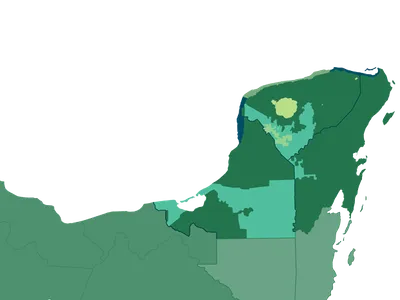
© WWF
The Yucatán Peninsula
Living landscapes
To tackle threats like climate change and biodiversity loss, WWF is working across whole landscapes to ensure our solutions are as big as the challenges we’re facing.
WWF also supports farmers like Melquiades Cox Ojeda, who has practiced an ancestral agricultural system called milpa maya in the Yucatán since he was a child. The approach rotates crops like maize, beans, squash, peppers, and tomatoes between forested and cleared land—and follows the Mayan calendar as its guide. Milpa maya not only produces a nutritionally balanced diet but also promotes biodiversity and the efficient use of natural resources.
As he walks through towering rows of corn, Cox Ojeda says that since he began using the healthy biofertilizers that WWF trained him to produce, he’s been growing more and better squash and corn to feed his family and sell in local markets. “It is for our children and our grandchildren,” Cox Ojeda says. “We have to make sure what we harvest is safe.”
Community members also take more direct roles. In Calakmul, the Mexican government and partners like WWF have trained and equipped nearby residents as park rangers who now regularly walk miles through the reserve to prevent illegal hunting and to collect information from camera traps.
“We need the communities to continue protecting the environment,” says Valeria Martínez, an environmental impact assistant at Mexico’s National Commission of Natural Protected Areas (CONANP). “We trust them and the deep knowledge they have of the place where they grew up.”
CONANP works with 84 local communities and 17 Indigenous groups to manage and protect Calakmul. Activities range from promoting energy-saving practices to encouraging cooperation among communities to protect the environment. Recently, CONANP also began overseeing the creation of a natural corridor that will connect four protected areas in the region, allowing species like the jaguar to move freely through the forest.
Buzzing with tradition

© WWF-US/Alejandro Prieto
A few hours’ drive from Díaz’s ranch live six women known as Las Vecinas (“The Neighbors”); their garden resembles a miniature version of the vast protected area that borders their land. At its heart is a small meliponary where hundreds of bees fly freely into little boxes, provided by nonprofit groups that work with WWF, to build honeycombs and produce medicinal honey. WWF also established a pollinator garden nearby.
Meliponiculture is an ancestral Maya practice focused on conserving the native, stingless bees (which produce honey said to have healing properties) and caring for the surrounding ecosystems, explains Vecinas member Berta Silvia Canul. “If they are well,” she says, “I’m well, too.”
Canul does not know whether it was the increase in industrial pesticides or the heatwave of 2024 that killed nearly a quarter of her hives. Her eyes fill with tears and her voice cracks as she recalls, “We spent the entire day crying. Why do my darlings have to pay for the mistakes of others?”

© WWF-US/Alejandro Prieto
Scientific studies have identified heat stress and pesticide contamination as the main causes of bee deaths worldwide, and stingless bees are especially sensitive to extreme heat. One morning, Canul found hundreds of dead larvae and honey spilling from the boxes where the honeycombs were kept.
“It hurts so much,” she says. “It was three years of work.”
Canul has found resilience in Las Vecinas, who have become her friends, confidants, and support system since they began working together in 2021. They all know that the love they give to their bees also helps pollinate hundreds of flower species in and around their home.
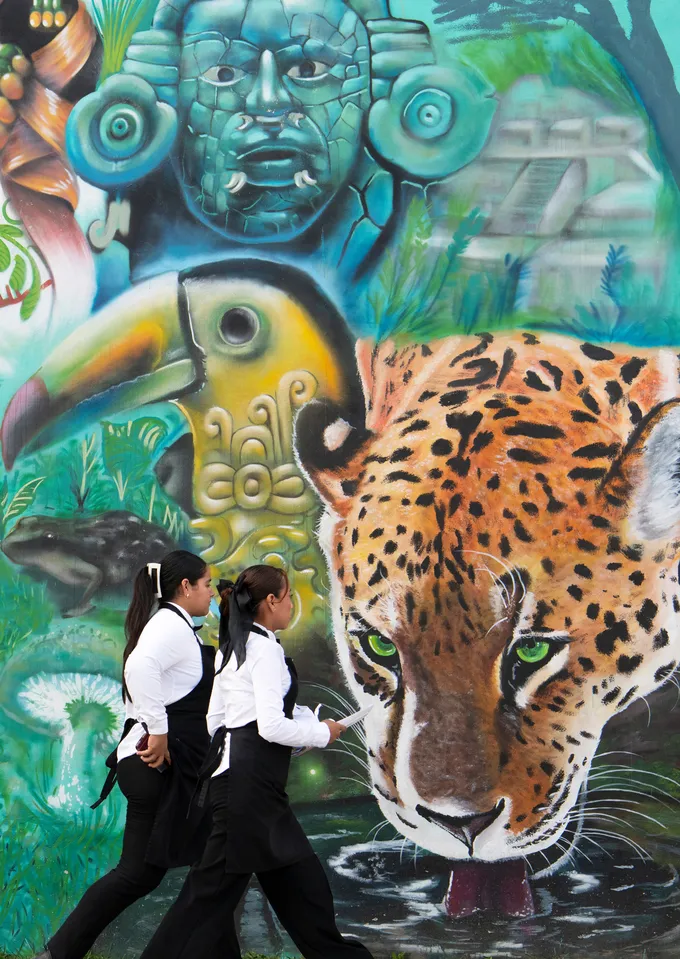
Keeping healthy bees in a healthy forest is “rescuing the heritage of my ancestors,” Canul says, while pointing to the colorful mural of her mother’s face painted on one of the walls. She says her mother passed down patience, sensitivity, and a deep respect for the environment. To her 12-year-old grandson, Jesús Eduardo, Canul wants to leave her “wisdom and knowledge about the bees.”
Durable conservation
All these initiatives take energy, commitment, and time—paired with reliable funding—to sustain.
CONANP, for example, has continued to advance monitoring efforts and the training of new rangers, despite numerous challenges, but the gap between available funds and the true cost of funding conservation remains stark. Now more than ever, the commission relies on partners like nonprofit groups and local communities to keep the forest alive.
“We cannot start these efforts and then abandon them,” says José Roberto Sánchez, deputy director of the Calakmul Biosphere Reserve. Partners like WWF “cover the necessities we can’t cover due to insufficient resources.”
For years, WWF has been developing and expanding approaches to fund long-term, integrated conservation across a group of ecologically important priority landscapes. Increasingly, those solutions are nature-based—actions that protect, restore, and maintain healthy ecosystems in partnership with the communities that live in them. In essence, they make nature itself part of the solution.
Now, two such initiatives have come together in Mexico to secure the conservation of nature, culture, and community across the Yucatán Peninsula. The Nature-Based Solutions Origination Platform (NbS-OP) and Herencia Maya combine national, regional, and local leadership with strategic planning and funding resources to secure durable conservation—at the landscape scale.
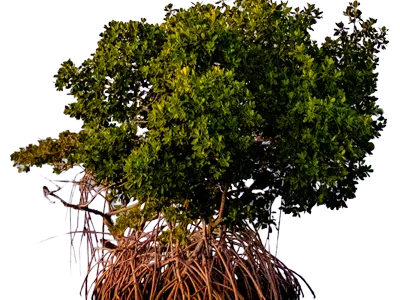
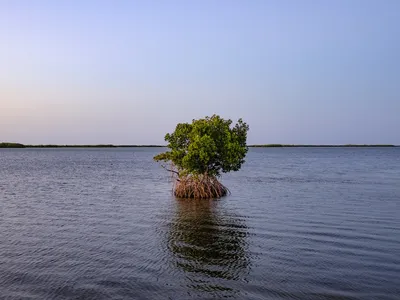
At its core, the NbS-OP approach—which is supported by partners including HP Inc.—is grounded in local realities and community needs. In the Yucatán Peninsula, in addition to promoting sustainable farming, ranching, and beekeeping, the work focuses on sustainable fisheries, mangrove conservation and restoration, improving the management of protected areas, restoring wildlife connectivity corridors, and encouraging more responsible real estate and infrastructure development.
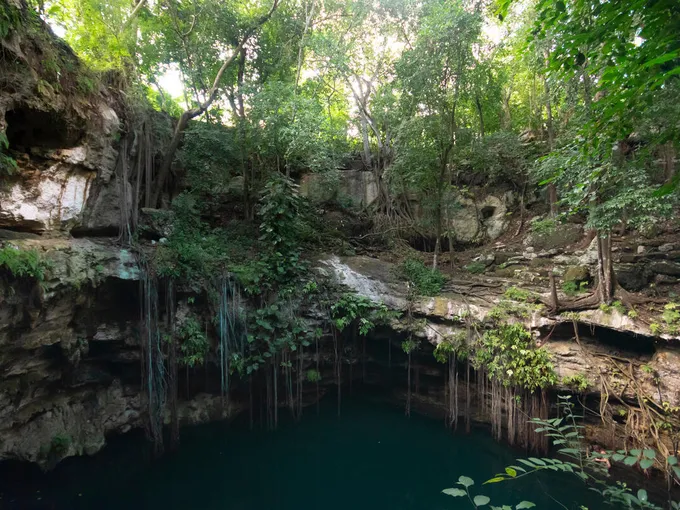
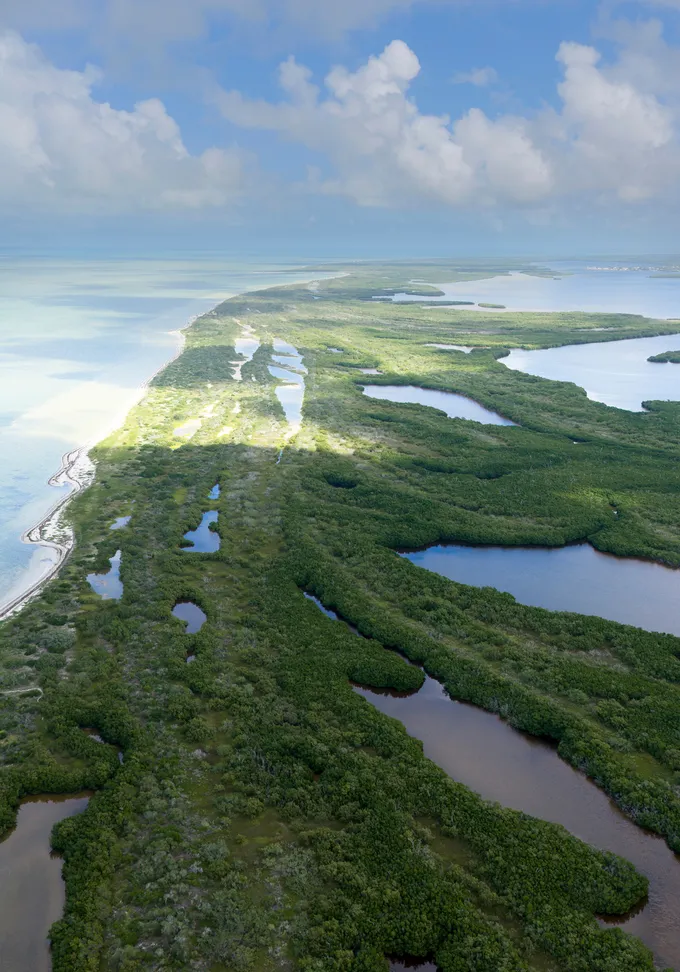
Developed in tandem with the NbS-OP, Herencia Maya supports a five-year initiative to help protect Yucatán state’s extraordinary ecological and cultural value, which includes portions of the Maya Forest, extensive mangrove systems, and abundant cenotes—part of one of the world’s largest networks of underground water-filled caves.
A forest fellowship
The work of conservation takes both literal and metaphorical villages. WWF thanks the many partners who came together to launch Herencia Maya in May 2026 and protect this remarkable place.
- State Government of Yucatán
- Municipality of Mérida
- Natural Spaces and Sustainable Development (Endesu)
————————————
- Anonymous
- Bepensa Corporation
- The Coca-Cola Foundation
- Enduring Earth
- Marshall Field
- Global Environment Facility
- HP Inc.
- Margaret A. Cargill Philanthropies
- Mexican Federal Ministry of Environment and Natural Resources (SERMARNAT)
- National Commission of Natural Protected Areas (CONANP)
- Pronatura Yucatán Peninsula, A.C. (PPY)
- Richard and Anna Marie Rosen
- The Nature Conservancy
- Jeff and Laurie Ubben
Herencia Maya is designed to guarantee long-term funding and a governance structure for the conservation of 11 protected natural areas in the state of Yucatán, and will consolidate and finance roughly 2,000 sq. mi. of state, municipal, and private protected areas. If successful, it will permanently safeguard water sources, strengthen climate resilience, protect endangered species like the jaguar, and support sustainable livelihoods for local communities—and create a path for other Mexican states to follow, says WWF Biodiversity and Climate Finance Coordinator Alejandro Camacho.
At the most basic level, the NbS-OP and Herencia Maya do one vital thing: provide continuity.
This approach to conservation is about a long-term commitment, not temporary projects, Camacho says. “We no longer have the luxury of thinking in the short or medium term; we must make reliable plans for the future.”
A proud legacy
© WWF-US/Alejandro Prieto
© WWF-US/Alejandro Prieto
Like many locals, Juan Díaz believes that heritage and continuity are the most precious gifts he can leave to his family. In 2023, Díaz was diagnosed with lung cancer. Rather than travel far from home for treatment that would be devastating for “a body eight decades old,” he says, he decided to enjoy the rest of his days on his ranch. “Here is life, here is health,” he says, inside the shadowy stable where some of his sheep graze.
His children had to leave the ranch to work and provide for their own families. But one of his grandchildren, Jasieel Díaz León, came to him a few years ago and said he wanted to take care of the ranch and continue the project Juan Díaz dreamed of when he arrived in Calakmul so long ago.
Jasieel is not only a source of great pride for his grandfather but also the only guarantee that Juan Díaz’s love for the forest—the same one he refused to leave for all those years—will be passed down for generations to come.
“This forest is life,” Díaz says, looking toward the trees that begin where his pasture ends. “It would be a disaster if all of this gets lost.”
*Juan Díaz died in November 2025, a few months after sharing his story. WWF is grateful for his time and generosity. We hope this article helps honor his legacy.
More on the Yucatán
© Jason Houston / WWF
Living landscapes
To tackle threats like climate change and biodiversity loss, WWF is working across whole landscapes to ensure our solutions are as big as the challenges we’re facing.
© WWF-US/Alejandro Prieto
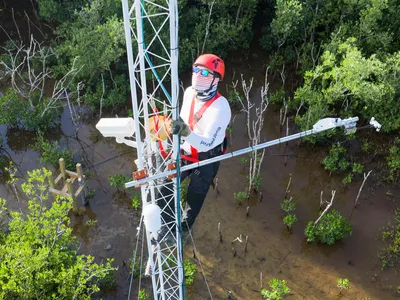
Mapping climate consequences for mangrove forests
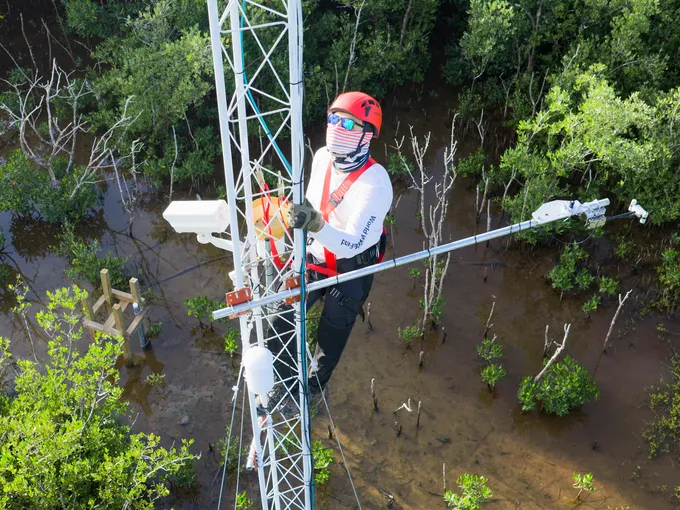
WWF has deployed more than 45 sensors across the Yucatán to monitor air and water temperature, rainfall, changes in carbon dioxide, currents, salinity, biomass, and wildlife.
© Sara Germain/USFWS
Explore more
Keep reading this issue of World Wildlife magazine