How sustainable tuna fishing protect ocean ecosystems and livelihoods
Tuna are integral to the ocean ecosystem. As apex predators, they eat a wide range of fish and other marine life, which keeps species populations healthy and in check. They are also one of the world’s most economically valuable fish, bringing in more than $40 billion annually, and serve as an important protein source for millions of people.

© Brian J. Skerry / National Geographic Stock / WWF
(Don’t) catch me if you can
Tuna fishing fleets mainly rely on purse seine nets, which scoop up entire schools of fish, and longline fishing, which involves setting baited hooks at intervals along a main line. But these techniques can result in overfishing and the accidental capture and killing of vulnerable nontarget marine species.

© Purse seine net © Marine Stewardship Council
-
11 billion+ pounds of tuna
are caught each year, the majority of which is harvested from the Pacific Ocean. The global tuna catch has risen 11-fold over the last 60 years, but thanks to stricter regulations, today most tuna comes from populations at healthy abundance levels.
Big seven
There are 15 species of tuna, but just seven make up the bulk of the global commercial catch.
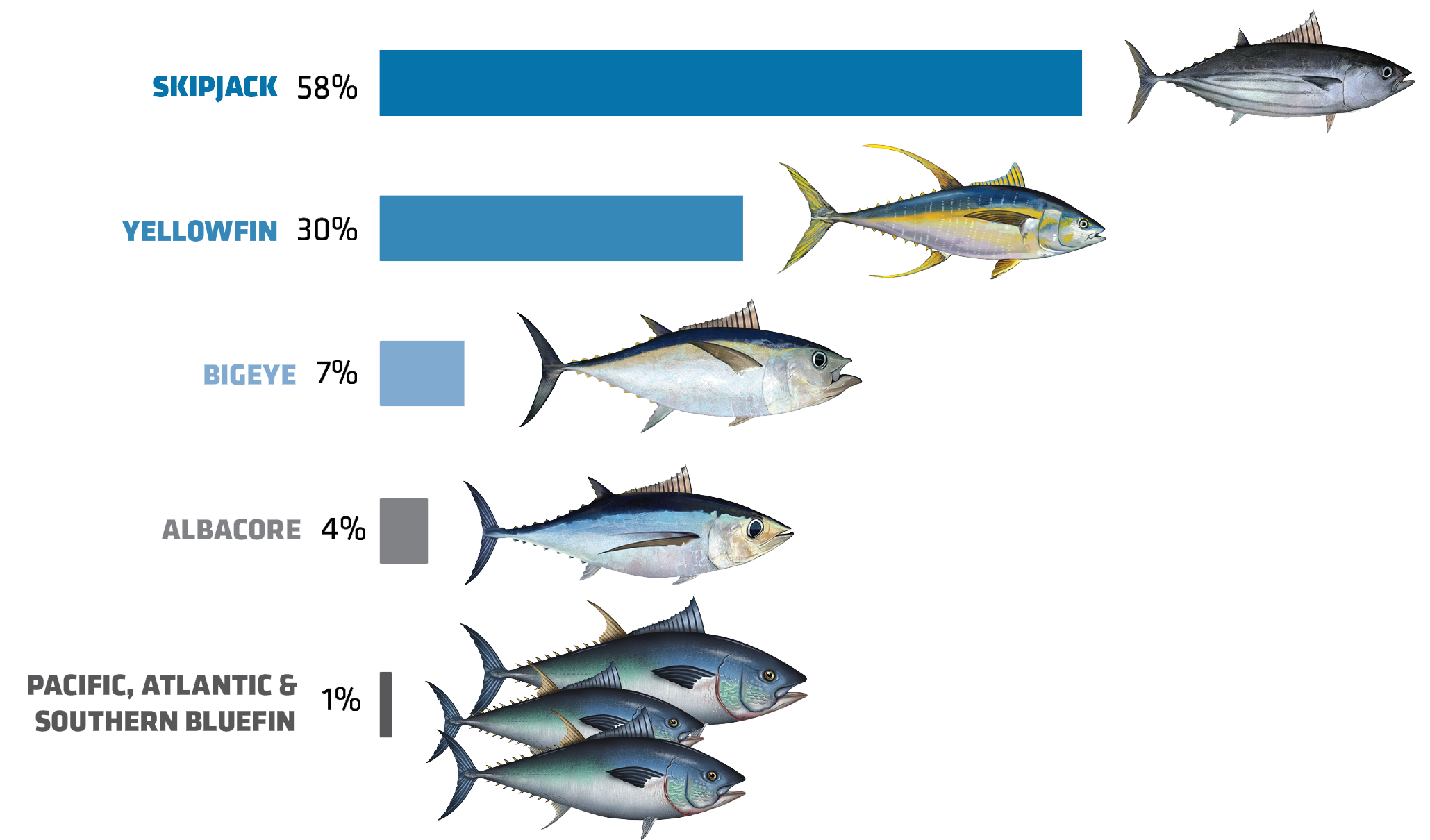
© Tuna illustrations courtesy of NOAA Fisheries
Market price
In January 2026, a single bluefin tuna weighing 535 pounds sold for the equivalent of $3.2 million at auction in Tokyo.

Sea change
Because tuna travel vast stretches of ocean, fishing fleets operate far from oversight—often spending years at sea—which creates conditions ripe for exploitative fishing and labor practices. With support from WWF, various regional fisheries management organizations are now strengthening protections for tuna and fishers by conducting scientific assessments, advancing electronic monitoring systems, and working to improve crew safety and welfare.
Industry leadership
In Ecuador, more than 250,000 people rely on the tuna industry. So when overfishing began to threaten the nation’s fish stocks and economy, WWF joined forces with its biggest tuna companies to form TUNACONS. Since 2016, the group has made major strides to reduce bycatch and improve sustainability—positioning Ecuador as a leader in responsible fisheries management.
© Sara Germain/USFWS
Explore more
Keep reading this issue of World Wildlife magazine