A new initiative tackles plastic waste globally

© Ocean Cleanup Group on Unsplash
From bottles in the surf to bags clogging city drains, single-use plastics can persist for decades, breaking down into fragments that contaminate water, soil, and seafood. Each year, 130 million metric tons of plastic enter our environment, with packaging—including food and beverage—accounting for 40% of plastic waste. Because cleanup alone is not enough, the $108 million Plastic Reboot initiative—co-led by the UN Environment Programme and WWF and funded by the Global Environment Facility—works across 15 countries to cut plastic at its source, expand reuse, and reshape how packaging is designed, produced, and used. Here are some of the initiative’s locally led solutions.
Packaging, including food and beverage, accounts for 40% of plastic waste.
Plastic reboot
Tackling plastic pollution requires both global coordination and local action. Plastic Reboot provides shared tools and technical guidance to the 15 participating countries. Participants can develop solutions suited to local contexts while sharing data and lessons across the platform. The goal: accelerate and replicate solutions and expand smarter, more sustainable plastics use.
1. BRAZIL
Exploring reusable food containers

© iStock.Com/Aline Alcantara
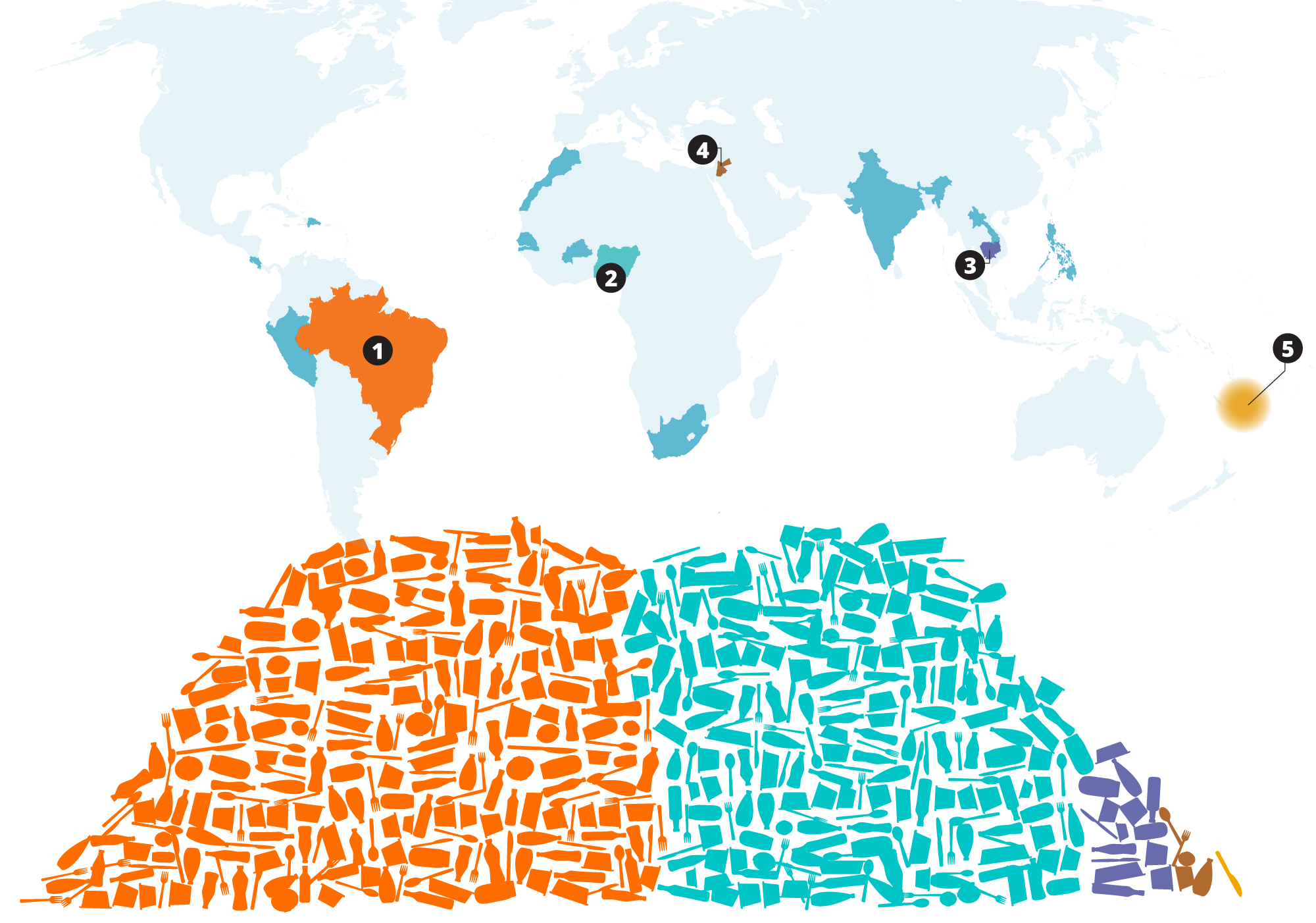
In coastal cities like Rio de Janeiro and São Paulo, booming food delivery services are driving a surge in single-use plastic waste, with discarded bottles and wrappers littering city streets. Brazil is working with 100 establishments and a major delivery platform to test reusable containers, aiming to reduce plastic use by 20%.
Anticipated avoided plastic waste over project lifetime

380,000 metric tons
2. NIGERIA
Expanding waste collection

© iStock.Com/Adeboye Adeyemo
More than 32,000 producers supply safe drinking water in single-use plastic sachets that often end up discarded in streets and choke city sewer drains. The country is strengthening a national system that requires producers to help fund plastic waste collection and recycling, while piloting water refill stations.
Anticipated avoided plastic waste over project lifetime

350,078 metric tons
3. CAMBODIA
Engaging with tourism

© Stuart Black/Alamy Stock Photo
Tourism along the Mekong River and at the ancient temples of Angkor Wat generates growing volumes of single-use bottles and food containers that clog waterways and mar the landscape. Cambodia’s plastic-free tourism strategy is helping 80 hospitality businesses and 30 public institutions switch to reusable options.
Anticipated avoided plastic waste over project lifetime

19,120 metric tons
4. JORDAN
Creating a national strategy

© iStock.Com/Sahadat Hossain
In this water-scarce nation, discarded plastic packaging accumulates in dry riverbeds and along roadsides, where it is often burned or improperly managed, releasing toxic chemicals and microplastics into the environment. To combat this, the project is introducing targeted bans and national standards for recycled content.
Anticipated avoided plastic waste over project lifetime

5,000 metric tons
5. COOK ISLANDS
Taking holistic action

© iStock.Com/Chameleonseye
Heavily packaged imports contribute to plastic debris washing ashore, polluting coastal ecosystems that communities rely on for tourism and fishing. The country is supporting local plastic producers, restricting plastic imports, and expanding reuse systems.
Anticipated avoided plastic waste over project lifetime

57 metric tons

© Juozas Cernius / WWF-UK
Explore more
Keep reading this issue of World Wildlife magazine