Carnivores in KAZA
In Southern Africa, five countries unite around a shared vision: A connected landscape where communities and free-roaming wildlife can thrive
By
-
Erin Waite
Photography by
-
Gareth Bentley

© WWF-US/Gareth Bentley
Across Africa, large carnivores evolved to roam vast, interconnected landscapes that enable them to hunt prey, find mates, and maintain large territories. But today, those movements have become constrained as human settlements, agriculture, and infrastructure have spliced habitats into ever-smaller fragments. Increasingly isolated and funneled toward spaces inhabited by people, many of the continent’s iconic predators face mounting pressures from habitat loss and human-wildlife conflict, which have fueled alarming declines across populations.
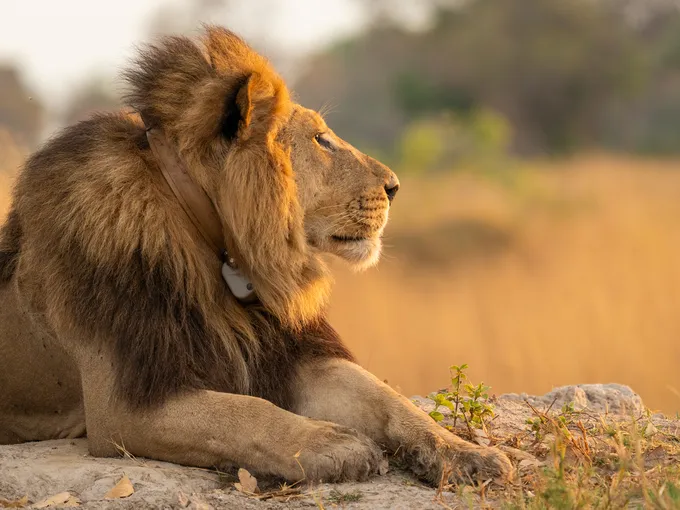
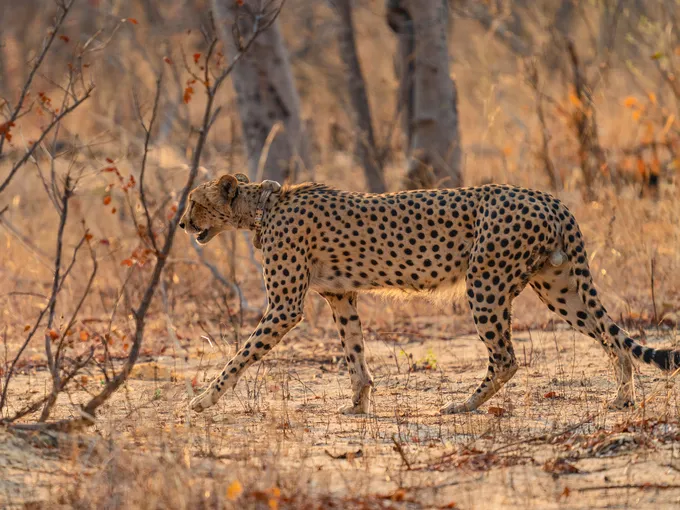
One of the greatest opportunities to reverse this trend lies in the Kavango-Zambezi Transfrontier Conservation Area (KAZA). Spanning 200,000 square miles across parts of Angola, Botswana, Namibia, Zambia, and Zimbabwe, KAZA is the world’s largest terrestrial transboundary conservation area. Here, significant numbers of lions, African wild dogs, leopards, cheetahs, and spotted hyenas still move freely across connected wetlands, savannas, grasslands, and forests—as well as through villages and community lands—helping to keep these important ecosystems in balance.
By the Numbers
30% of Africa’s carnivores live in KAZA
-
25% of wild dogs in Africa
-
20% of lions in Africa
-
15% of cheetahs in the world
KAZA spans 200K square miles across five countries
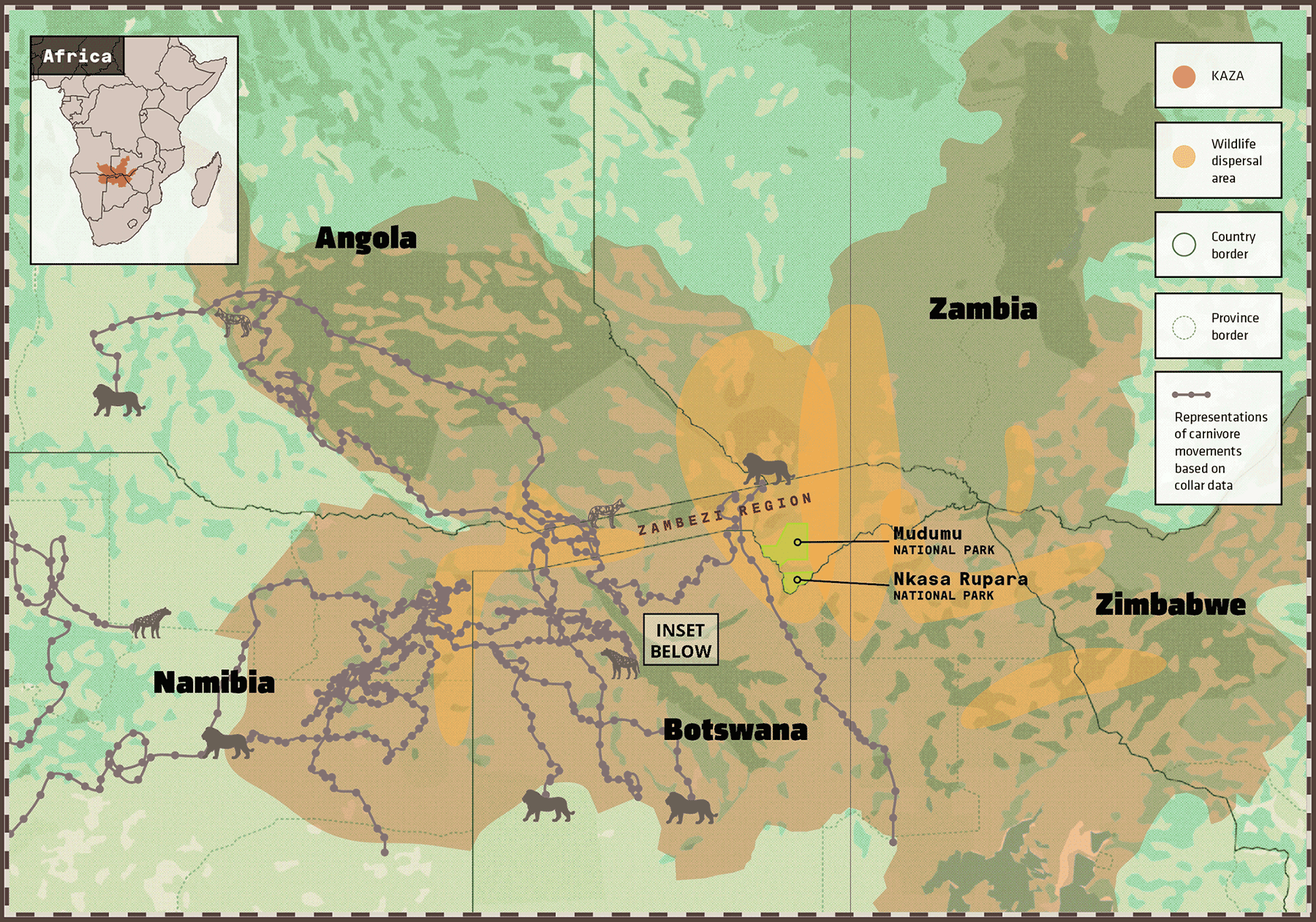
Communities in the northeastern panhandle of Botswana’s Okavango Delta where WWF partner Communities Living Among Wildlife Sustainably is working to manage human-lion conflict.
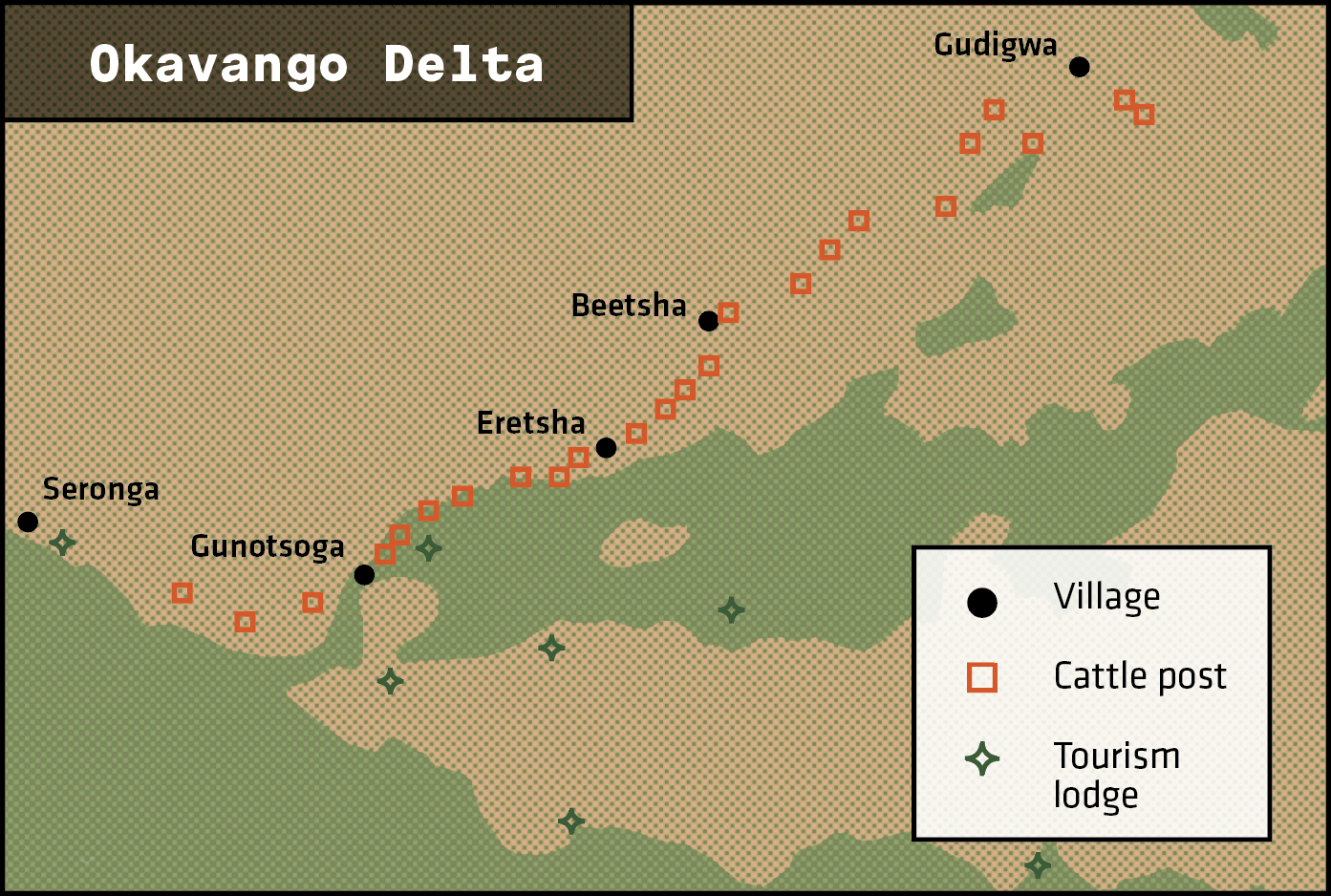
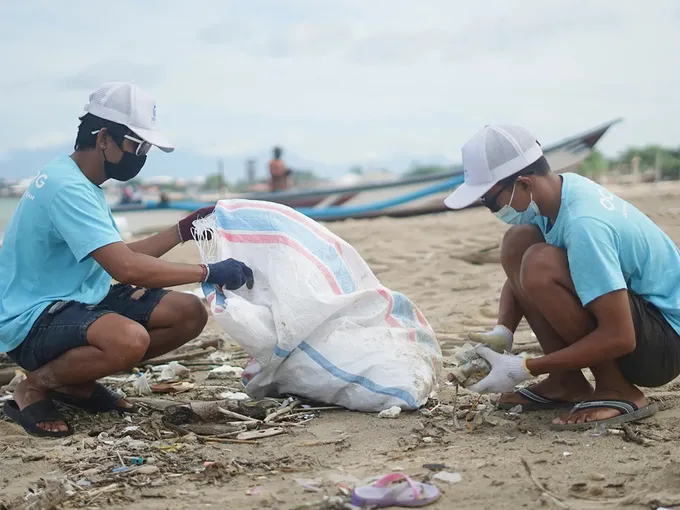
From Botswana’s life-giving Okavango Delta to Namibia’s far eastern Zambezi region and beyond, WWF is working with governments, communities, and conservation partners to preserve this vital connectivity while defusing tensions between people and wildlife. The result is a blueprint for large carnivore conservation at the landscape scale—one built on an understanding that lasting results are achieved by ensuring communities that live with wildlife also benefit from its protection.
In depth
Carnivores in KAZA
More from this issue of World Wildlife

© Juozas Cernius / WWF-UK
Explore more
Keep reading this issue of World Wildlife magazine