Visiting a gray whale nursery in Mexico’s Baja Peninsula
By
-
Amanda Miller

© WWF-US/Amanda Miller
Landing in Loreto, Mexico, the desert heat immediately replaced the sharp bite of winter in Ohio, and sapphire waters provided a warm welcome. The next morning, our group set out for the Pacific Coast of the Baja California peninsula, traversing the Sierra de la Giganta mountains along a winding road replete with cinematic vistas. Towering cardón cacti, some reaching 60 feet tall, rose from rocky slopes at every turn.
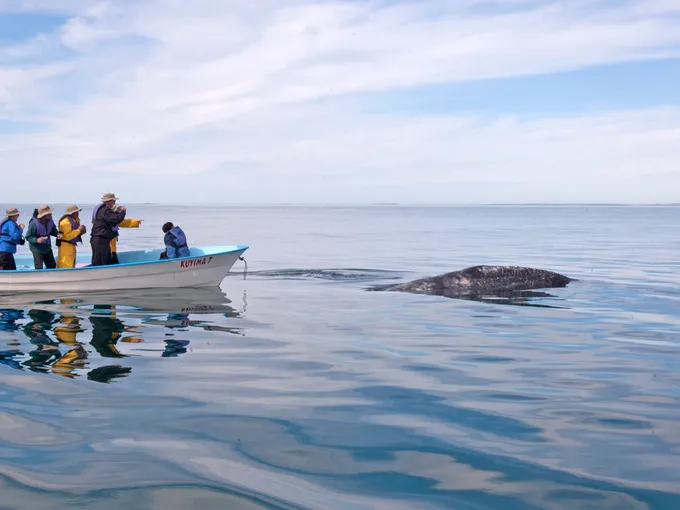
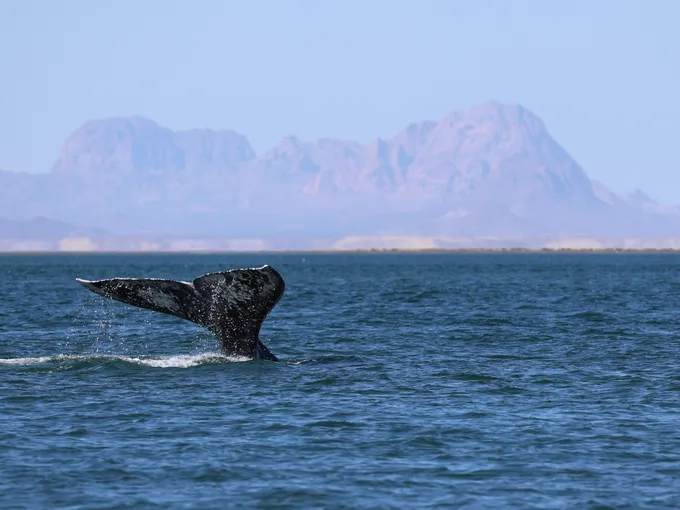
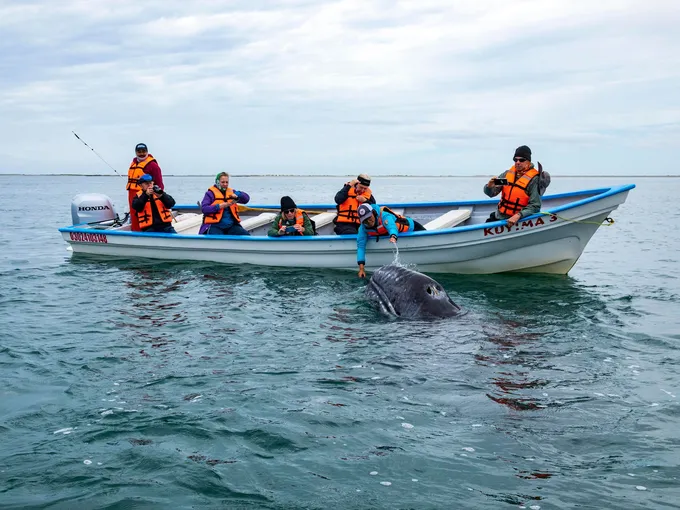
Once settled at our camp, we boarded small, open skiffs and glided into the calm, warm waters of San Ignacio Lagoon, a vast breeding and calving site for North Pacific gray whales. Each year, these majestic creatures complete an epic 12,000-mile round-trip migration between their Arctic feeding grounds and these shallow waters, where they mate, give birth, and nurse their young.
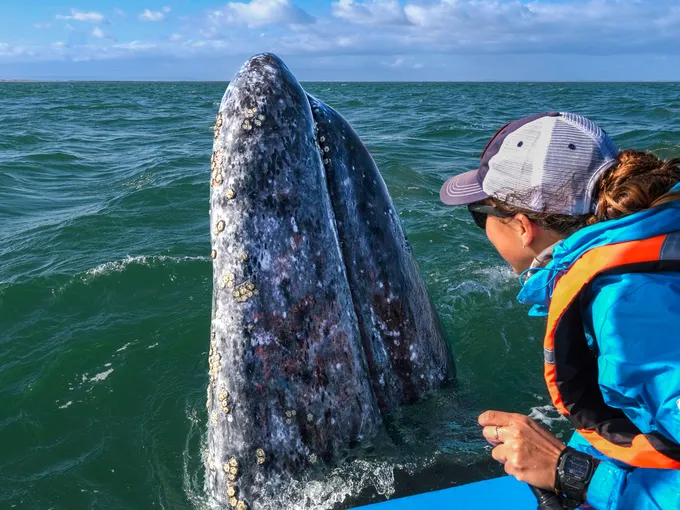
Over the next three days, the whales demonstrated remarkable playfulness and curiosity. Some slapped the water with their tail flukes or showered us with heart-shaped sprays of mist from their blowholes. Others raised themselves above the water’s surface to surveil their surroundings, a behavior known as “spy-hopping,” we learned. When a 50-foot, 40-ton behemoth surfaced mere feet from our boat, the sheer scale of the animal and its immense power was breathtaking.
© M. Bruscia/Natural Habitat Adventures
© S. Merino/Natural Habitat Adventures
© L. Hacker/Natural Habitat Adventures
© C. Searle/Natural Habitat Adventures

© S. Kittrell/Natural Habitat Adventures
Among countless unforgettable moments, the highlight came when a mother whale nudged her enormous body alongside our boat, offering a glimpse of the newborn calf on her back. The moment reaffirmed why places like San Ignacio Lagoon matter: These protected waters provide a safe beginning for the next generation of gray whales, ensuring these awe-inspiring giants endure for generations to come.

© Juozas Cernius / WWF-UK
Explore more
Keep reading this issue of World Wildlife magazine