Publications
-
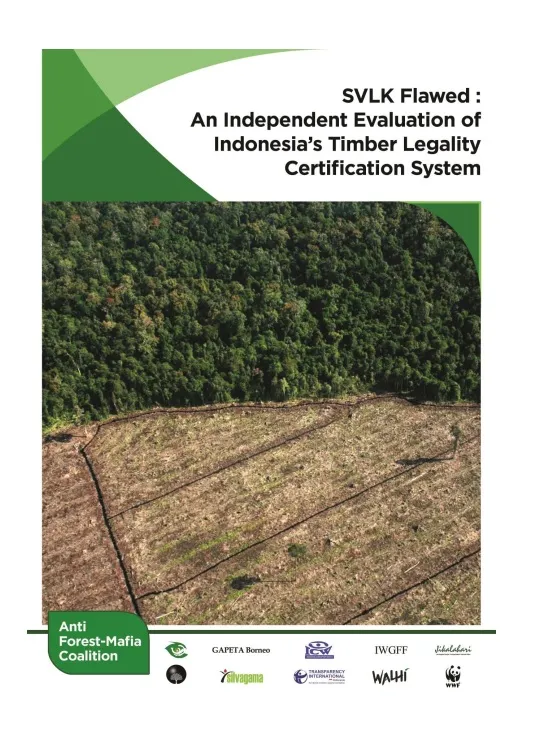
Indonesia is one of the major exporters of timber products in the world. It is also one of the key countries with serious illegal logging and deforestation issues. Indonesia developed a timber legality certification system to address this problem. This 2014 report includes an assessment of that system and all of the certificates that had been issued under it at the time of the study.
-
The Learning Project report examines the lessons learned, results and outcomes of the U.S. Coral Triangle Initiative Support Program (CTSP). It emphasizes the contributions of each implementing partner from the U.S. Coral Triangle Initiative, the symmetry and linkages between mechanisms, and the lessons learned from this ambitious initiative supporting regional ocean governance. With funding from USAID to support the six coral triangle governments, CTSP focuses on policy, fisheries management, marine protected areas and climate change adaptation
-
Cities in Illinois have harnessed a little-known local energy model called Community Choice Aggregation (CCA) to switch to clean power and save their ratepayers millions of dollars. Since 2013 more than 90 Illinois towns, representing 1.7 million people, transitioned to 100% renewable electricity by using Renewable Energy Credits.
Their freedom of choice increased demand for energy sources like wind and solar by over 6 terawatt hours—reducing pollution levels equivalent to taking more than 1 million cars off the road or 250,000 homes off the grid.
-
The National Strategy for Combating Wildlife Trafficking establishes guiding principles and strategic priorities for US efforts to stem illegal trade in wildlife. This Strategy positions the US to exercise leadership in addressing a serious and urgent conservation and global security threat. It calls for strengthening the enforcement of laws and international agreements that protect wildlife while reducing demand for illegal wildlife and wildlife products.
It affirms our nation's resolve to work in partnership with governments, local communities, nongovernmental organizations, the private sector, and others to strengthen the commitment to combating wildlife trafficking.
-
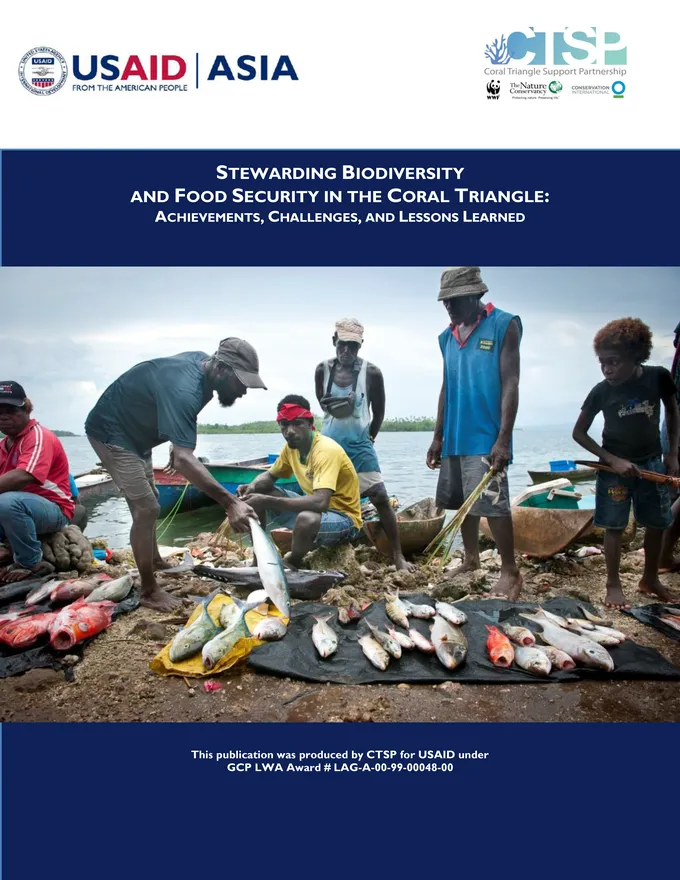
A summary of the achievements, challenges, and lessons learned from investment in the Coral Triangle Support Partnership (CTSP), part of a broader USAID-funded effort to support the Coral Triangle Initiative on Coral Reefs, Fisheries, and Food Security. Notable progress was made toward increasing stewardship of biodiversity and improving food security in the Coral Triangle.
-
Among Trans-Pacific Partnership (TPP) countries, renewable resources and wildlife are highly traded. Where resources are poorly managed, demand in TPP markets drives depletion and illegal activities. In these cases, the economic benefits of trade are loast and cheaper products undermine profits and threaten jobs in countries where resources are legitimately harvested and well-managed.
Conservation provisions are needed in the TPP to protect the world's natural resources, including the seafood and wood products needed for global businesses and consumers for generations to come.
-
Often called the Asian unicorn, little is known about the enigmatic saola in the two decades since its discovery. This report highlights the challenges the species faces and what is being done to save this elusive animal.
-
The Russell E. Train Education for Nature Program (EFN) was established in
1994 in honor of the late Russell E. Train, founder, past president, and chairman
emeritus of WWF. EFN supports proven and potential conservation leaders in
Africa, Asia, and Latin America. EFN enables these future leaders to enhance
their capacity to tackle environmental challenges in their home countries. To
date, EFN has invested more than US$14 million in these rising leaders to pursue
graduate studies, attend short-term training courses, and train communities and
conservation stakeholders around the world.
-
Marine protected areas (MPAs) are often implemented to conserve or restore species, fisheries, habitats, ecosystems, and ecological functions and services; buffer against the ecological effects of climate change; and alleviate poverty in coastal communities. Scientific research provides valuable insights into the social and ecological impacts of MPAs, as well as the factors that shape these impacts, providing useful guidance or “rules of thumb” for science-based MPA policy.
-
WWF is initiating this RFI to collect applications from individuals or firms interested in providing technical support for environmental and social impact assessments (ESIA)