How much food is wasted in schools, and what can we do about it?
Approximately 530,000 tons of solid food is wasted in schools each year. But students and teachers are leading the way to rescue food and reduce this loss.
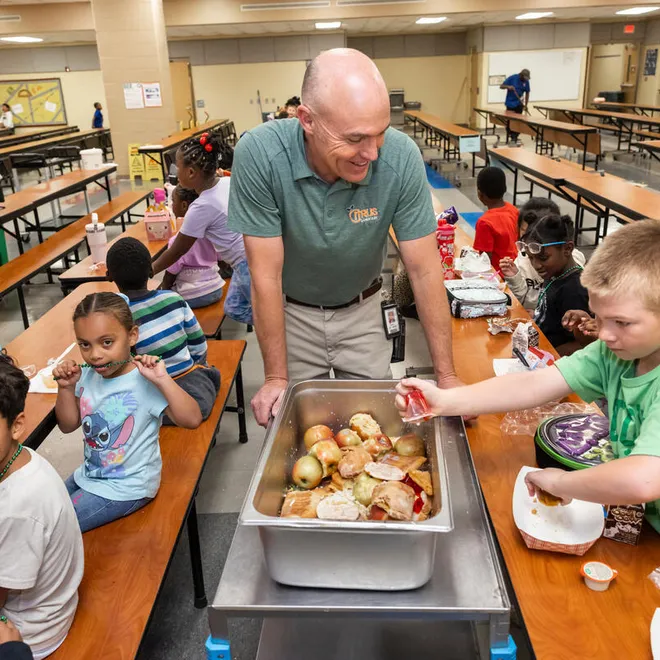
© WWF-US/Rebecca Drobis
Key takeaways
- School food waste costs the US an estimated $1.7 billion each year and has significant environmental impacts.
- Simple, cost-effective solutions like food audits, share tables, and composting can help schools reduce waste by up to 70%.
Each year, schools in the US serve 7.5 billion meals—more than any of America’s fast-food chains. However, each day hundreds of tons of food are tossed into cafeteria trash cans. Schools throw away about 530,000 tons of solid food, and up to 45 million gallons of milk each year, according to a WWF study. This staggering waste of resources comes with a high cost. The good news is that schools across the country are taking action to educate students about the impact of food production and reduce food waste in cafeterias.
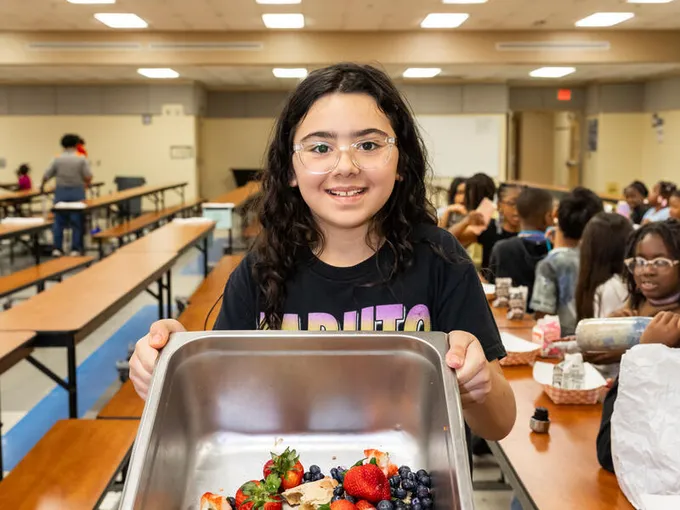
© WWF-US/Rebecca Drobis

© WWF-US/Rebecca Drobis
What is the impact of school food waste on the economy and environment?
Food waste in school cafeterias represents $1.7 billion in lost value annually. A number this large is hard to imagine; if you were to spend $10,000 a day, it would take 465 years to use it all. School food waste also takes a major toll on the environment. Researchers estimate that annual food waste in schools results in CO2 emissions equal to that of more than 400,000 cars driven for a year. Producing that food requires vast amounts of water—an estimated 20.9 billion gallons—which also goes to waste. Finally, there’s land. Growing food requires significant land resources that could otherwise support natural habitats and ecosystems, placing additional pressure on wildlife. But these aren’t the only impacts of wasted food; others hit much closer to home.

© WWF-US/Rebecca Drobis
What are the impacts of school food waste on people?

© WWF-US/Rebecca Drobis
More than 41 million Americans face hunger, including nearly 13 million children. When we waste food, we let a potential solution slip through our fingers. Schools are uniquely positioned to help students understand the value of food and its connection to the environment. For the nearly 30 million students who pass through US school cafeterias each day, food waste reduction efforts can reinforce important lessons about food and sustainability, preparing young people to make informed choices both in and out of the cafeteria.
What can we do to reduce food waste in schools?
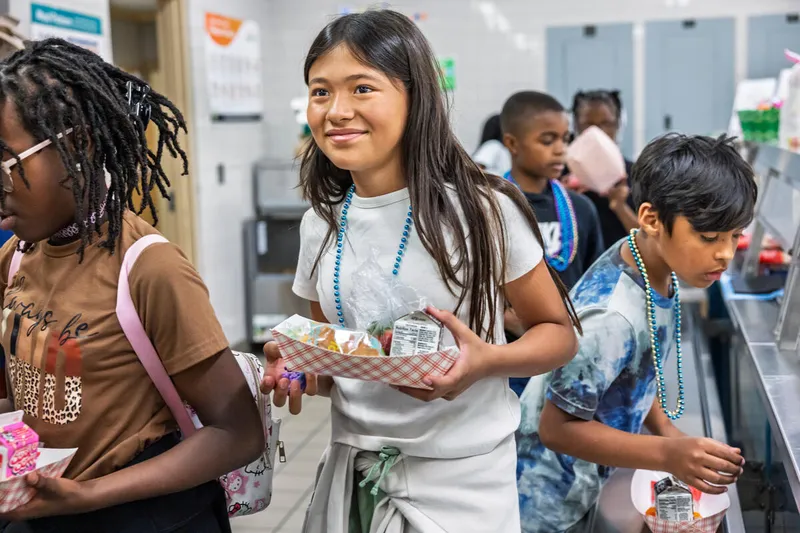
© WWF-US/Rebecca Drobis
Opportunities to reduce food waste exist in all 129,000 K-12 schools in the US. The logical place to start, of course, is with education. WWF’s Food Waste Warriors program does this by providing free, online educational resources to schools. These lesson plans connect students to the impact of food production, helping them see the effects of their decisions. After learning about food waste in the classroom, many students and teachers are motivated to act. Food Waste Warriors offers online tools to help schools conduct simple food audits—measuring how much food is wasted—which provide eye-opening results. From there, schools have several proven options to reduce waste. Two of the most common are share tables—allowing students to return unopened food items—and composting programs. These solutions are cheap, easy to implement, and widely effective, with some schools experiencing a 70% decrease in wasted food.

© Shutterstock
Pledge to cut down on food waste
Sign the pledge and take just one simple step to a more sustainable kitchen.