A story of giants: the connection between elephants and baobab trees
In Southern Africa, a locally led effort helps nature and people
By
-
Danielle Brigida

© WWF-US / Jason Houston
Key takeaways:
- In sub-Saharan Namibia, people, elephants, and baobabs have coexisted for thousands of years, but drought, climate change, and confined elephant movement put added pressure on all of them.
- This is not a story of elephants versus trees. It’s about healthy, connected landscapes, essential for nature and for people.
- Locally led solutions make the difference, including Indigenous San women-led efforts to survey and protect culturally important baobab trees.
Baobab trees are massive: Their trunks stretch wide, with branches that stretch like meandering roots toward the sky. Their nicknames “tree of life” and “upside-down tree” are perfect fits. They can live more than a thousand years and are some of Southern Africa’s toughest survivors—and greatest providers.
In Namibia’s Nyae Nyae Conservancy, these trees are also deeply connected to the lives and traditions of the Indigenous San people, who have lived alongside them since time immemorial.

© WWF-US / Gareth Bentley
Protecting baobab trees in Namibia
© WWF-US
What is the relationship between elephants and baobab trees?
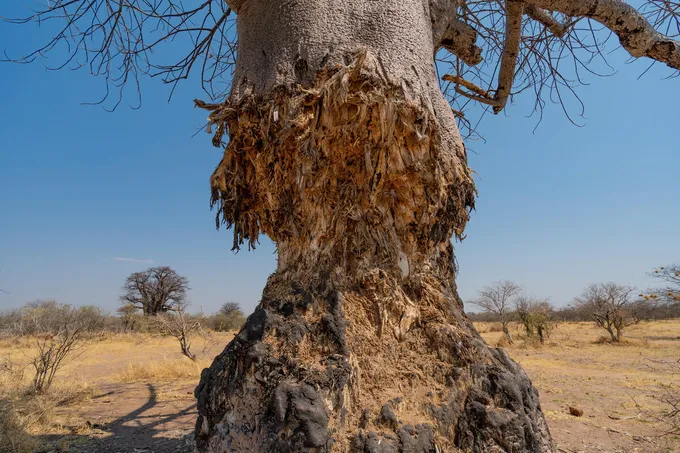
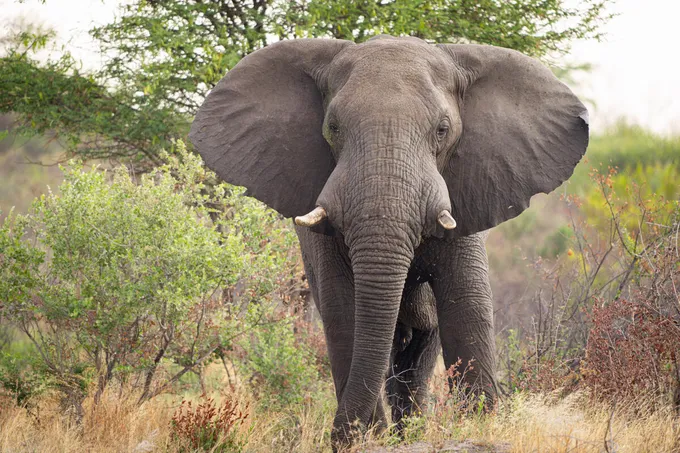
Elephants and baobabs have also shared Africa’s landscapes for thousands of years. But it isn't always a gentle relationship. Elephants strip baobab bark, break branches, and gouge into their trunks to feed on the soft spongy pulp inside the trees, especially when drought makes the elephants desperate. But baobabs are remarkably resilient and can survive significant damage.
For a very long time, this relationship has been part of the landscape’s natural rhythm. But severe drought, changing land use, and barriers that restrict elephant movement have changed those dynamics.
During the severe droughts of 2023 and 2024, food and water became increasingly difficult for wildlife to find in Nyae Nyae. Elephants relied more heavily on baobabs, putting greater pressure on trees already coping with extremely dry conditions. Some trees were severely damaged, and some did not survive. The communities took notice of increased destruction.
© WWF-US / Gareth Bentley
© WWF-US / Danielle Brigida
How San women are taking the lead toward coexistence
To understand what was happening, WWF Namibia and Namibia’s Ministry of Environment, Forestry and Tourism first surveyed the landscape from above, mapping hundreds of baobab trees to mark the extent of the dead, damaged, and undamaged trees. But they needed more information.
Luckily, Hulda Kagece knows these trees well and was willing to help.
A mother and a member of the San people, Hulda became the Baobab Survey Team Lead and Trainer in Nyae Nyae, helping the effort to document—and protect—these ancient giants. Hulda and a team of local women helped survey trees on the ground and collect vital data. They used GPS-enabled technology and the EarthRanger Mobile app, and went from tree to tree, measuring trunks, documenting elephant damage, and identifying fruit-bearing trees that would be particularly important to protect. The San women surveyed and mapped 912 culturally significant baobabs, with 40 priority trees identified for additional protection.
As a result, some trees are now surrounded by wide rings of locally sourced stones, creating a barrier that discourages elephants from reaching the trunks (elephants don’t like stepping on the rocks.) Other trees are protected with wire mesh. Though seemingly simple, these interventions, give the trees a chance to recover and continue providing food, resources, and cultural value for years to come.

© WWF-US / Gareth Bentley
Why elephants need room to move
Protecting individual baobabs is one part of the solution, especially as we see climate change adding to the stress on this landscape. Another is understanding what is happening across the much larger region.
The San people live within Kavango–Zambezi Transfrontier Conservation Area (KAZA), which spans five African countries. It’s the largest land-based transboundary conservation area in the world—and its borders were determined by elephant movements. Elephants depend on a connected landscape and don’t see national borders. especially in dry landscapes, their movement allows them to respond to changing conditions and travel between areas to find water, food, and suitable habitat. When movement is restricted, elephants can spend more time in the same places, increasing pressure on vegetation, including baobabs.
That’s why WWF works to better understand elephant movement and support connectivity across the broader landscape. Keeping pathways open can help elephants reach the resources they need while spreading their impact across a much larger area, taking pressure off the landscape. In other words, protecting baobabs isn’t only about protecting trees from elephants. It can also mean giving elephants the space they need to move.

© WWF-US / Gareth Bentley
What WWF is doing
In Nyae Nyae, WWF supports the community-led response to the increasing loss of these important baobab trees, which is now moving beyond just protecting the trees. A new baobab nursery helps ensure new trees survive, and creates economic opportunities for communities who steward baobab trees for the long-term. Additionally, baobab pods are now turned into products including powder, oil, and coffee—creating new livelihood opportunities while keeping these iconic and essential trees standing.
In a landscape shaped by giants, the future of baobabs and elephants is deeply connected. Protecting both means keeping landscapes connected, supporting the people who know them best, and making room for nature to adapt as conditions change.

© WWF-US / Gareth Bentley
How you can help
© WWF-US / WWFGifts
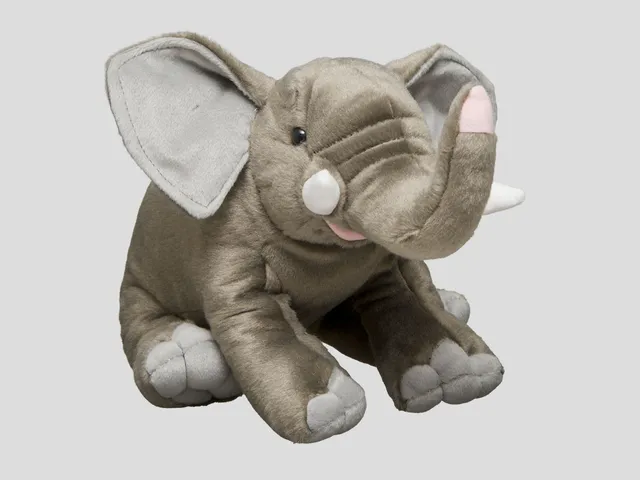
Adopt an African elephant
Support WWF’s global efforts to protect wild animals and their habitats and choose from kits with plush and more.