Publications
-
A key area of opportunity in the plastic pollution treaty is the promotion of reuse, and particularly a transition from single-use to reusable products. Reuse has the potential to reduce material use (as one item can substitute for multiple single-use items) and the leakage of material into the environment (both by placing fewer longer-life items into circulation, and directly incentivizing the responsible return of those items into reuse systems). It also offers additional environmental co-benefits, most notably in terms of potential emissions savings. Identifying the most promising reuse applications and the ways in which a global treaty can facilitate positive systemic change is the purpose of this report
-
This collection of advice is derived from the experience of WWF Ecuador in assessing corruption risks in the mahi-mahi production chain. WWF Ecuador, with support from USAID within the framework of the Strengthen Natural Resources Governance in Ecuador program, adapted the international standard ISO31000 risk assessment methodology and produced an internal guide to identify and assess risks. The Ecuador guide is similar to the "Methodological Guide for Corruption Risk Diagnostics in Fisheries Value Chains" developed by WWF Peru with support from the Targeting Natural Resource Corruption (TNRC) project. TNRC summarized and adapted the Peru guide for general use.
This resource complements the Peru guide, focusing on practical advice corresponding to each phase of the risk diagnosis process. With both resources, users can adapt and apply the ISO31000 methodology to their own needs, in other fisheries value chains or even other natural resource sectors.
---
This content is made possible by the generous support of the American people through the United States Agency for International Development (USAID). The contents are the responsibility of World Wildlife Fund (WWF) and do not necessarily reflect the views of USAID, the United States Government, or individual TNRC consortium members.
-
-
-
-
These four topic-specific TNRC Model Results Chains serve as a starting point to guide conservation and natural resource management practitioners through potential anti-corruption approaches that can be adapted to different contexts or activities.
Integrating anti-corruption into law enforcement approaches illustrates how conservation and natural resource management practitioners could incorporate anti-corruption elements into a law enforcement activity. The chain focuses on the illegal wildlife trade, meaning here any unlawful activity related to profiting from fish, forests, and wild fauna. However, most of the information will be relevant to broader law enforcement against any crimes affecting the environment. This model results chain serves as a starting point and must be adapted to the specific context and objective of an activity.
Transparency and accountability for market-based incentives illustrates how conservation and natural resource management practitioners could integrate transparency, accountability, and other open governance initiatives into a standard market-based incentive program. However, like any model, it is only a starting point, and it must be adapted to the specific context and objectives of a given activity. Not all of these factors will be applicable or feasible for all market-based initiatives, and all require careful adaptation and integration.
Social norms and behavior change for anti-corruption illustrates how conservation and natural resource management practitioners could leverage social norms and behavior change (SNBC) for anti-corruption. Like any model, however, it is only a starting point. The factors in this chain can be adapted and integrated into a conservation activity, or they could be used as one strategy targeting a corruption norm that threatens a targeted conservation outcome.
Integrating anti-corruption into traceability initiatives illustrates how conservation and natural resource management practitioners could integrate anti-corruption into their traceability or other supply chain initiatives. However, like any model, it is only a starting point, and it should not be used “as is.” Not every factor will be applicable or feasible for all traceability initiatives, and all require careful adaptation and integration into the specific strategy or activity that is being designed.
---
This content is made possible by the generous support of the American people through the United States Agency for International Development (USAID). The contents are the responsibility of World Wildlife Fund (WWF) and do not necessarily reflect the views of USAID, the United States Government, or individual TNRC consortium members.
-
This Fact Sheet provides an overview of the Targeting Natural Resource Corruption (TNRC) project, highlighting its structure and impact. Supported by USAID and led by the World Wildlife Fund (WWF) with a consortium of leading conservation and anti-corruption organizations, the TNRC project focused on improving biodiversity outcomes by equipping practitioners with knowledge and tools to address the threats posed by corruption to wildlife, fisheries, and forests.
---
This content is made possible by the generous support of the American people through the United States Agency for International Development (USAID). The contents are the responsibility of World Wildlife Fund (WWF) and do not necessarily reflect the views of USAID, the United States Government, or individual TNRC consortium members.
-
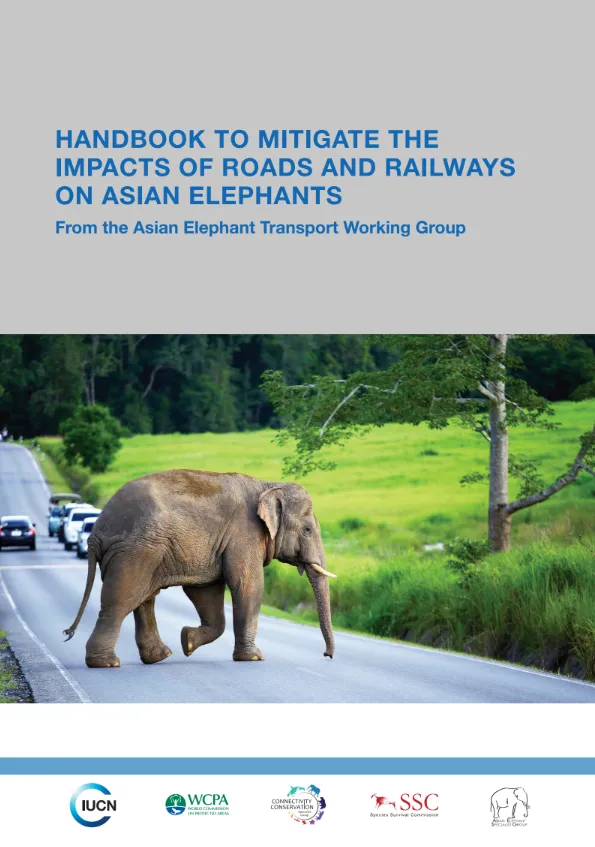
One of the greatest threats to Asian elephants is habitat loss and fragmentation, particularly resulting from human activities. With the profusion of current and planned linear infrastructure like roads and railways breaking up wildlife habitats across the continent, collisions with cars and trains are becoming more of a threat to Asian elephants. Elephants also have large ranges through which they travel, and this fragmentation is increasingly disrupting their movement.
The first elephant-specific handbook to help countries reduce collisions and provide safe passage for elephants has just been published, coauthored by experts on elephants and transport ecology from the Asian Elephant Transport Working Group‚ – a collaborative effort between the International Union for Conservation of Nature Asian Elephant Specialist Group and the Connectivity Conservation Specialist Group. The "Handbook to Mitigate the Impacts of Roads and Railways on Asian Elephants" aims to provide workable solutions for transportation planners and engineers to protect Asian elephants from the negative impacts of roads and railways. WWF and partners, including the United States Agency for International Development and the Center for Large Landscape Conservation, supported the development of the handbook.
-
-