How is deforestation related to malaria?
Studies show forest loss is connected to malaria outbreaks
© WWF-US/Clay Bolt
Key takeaways
- Deforestation can increase malaria risk. It creates better conditions for mosquito breeding and increases human exposure to disease-carrying mosquitoes.
- WWF's forest and health approach combines forest conservation with public health efforts to reduce the risk of future disease outbreaks.
What do we know about the link between forest loss and the spread of malaria? Malaria is one of the infectious diseases with the most research on its relationship to deforestation, so it may offer scientists insights into other mosquito-borne diseases as well as zoonoses, diseases transmitted between humans and other animals.
What is malaria?
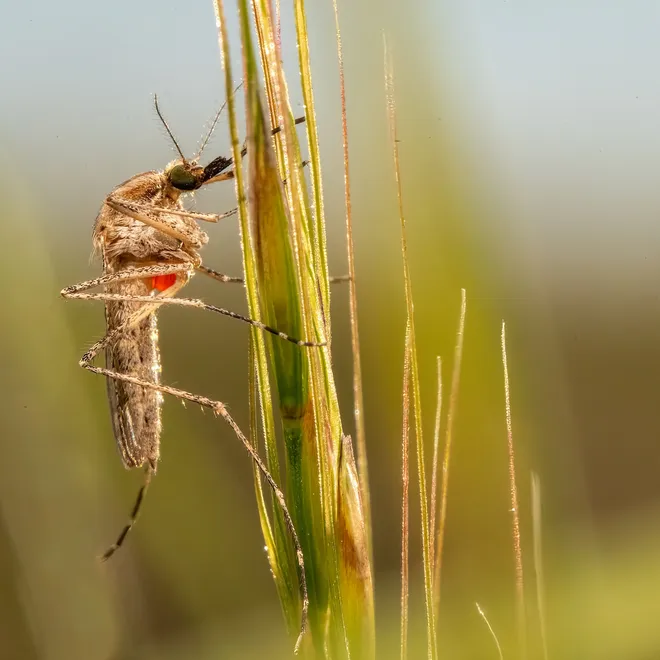
Malaria is spread to humans by certain types of mosquitoes and is caused by a parasite carried by these mosquitoes. Malaria’s symptoms range from mild to severe, including fever, chills, seizures, fatigue, and difficulty breathing. Malaria can impact a person’s health in the short term and have long-term or continuous effects. In 2024, the world experienced about 282 million malaria cases and 610,000 malaria deaths across 80 countries, according to data from the World Health Organization.1
The consequences go beyond health impacts. Malaria outbreaks can affect a person’s ability to work, increase household medical expenses, and put additional pressure on already limited health systems. Because of this, malaria outbreaks can slow economic activity in communities facing existing structural barriers. Recurring outbreaks make malaria control more costly and weaken the economic stability needed to maintain elimination efforts.
How is malaria linked to deforestation?
Studies indicate that deforestation is connected to malaria outbreaks. Moreover, deforestation can rapidly change a forest habitat’s disease ecology, or the complex way pathogens emerge, spread, and persist in an environment.
Deforestation can heighten the spread of malaria through several factors, including:
- Increases in sunlight and standing water, creating favorable breeding sites for some mosquito species.
- Loss of biodiversity, reducing the number of natural predators and food sources for mosquitoes, leaving more of them to bite more people rather than other animals.
- More human exposure to mosquitoes as more people enter areas that are recently, or in the process of being, deforested.
Indigenous and remote forest communities—often on the frontlines of deforestation—face disproportionate risk.
Where do we see this relationship?
In Latin America, malaria elimination once seemed within reach. Today, however, progress has stalled and, in some areas like the Amazon, even reversed. Deforestation is among the strongest predictors of malaria spikes in the Amazon. In parts of the region, a 1% increase in deforestation is associated with a roughly 6% increase in malaria incidence, typically with a lag of about one month.2
In Africa, three of the four mosquitoes most likely to carry malaria are mainly nonforest species.3 The loss of forests provides conditions that help these mosquitoes thrive, whereas the presence of forests helps limit these malaria-carrying species.
In Southeast Asia, studies show that the relationship between deforestation and malaria is inconsistent due to a higher concentration of mosquito species. Sabah, Malaysia, is a particular area of concern. There, rapid forest loss is causing more people to live or work near denser macaque monkey populations. As a result, mosquitoes are transmitting a different kind of malaria, known as zoonotic malaria, between macaques and humans. This is unique—and concerning—because most malaria is transmitted by mosquitoes between people, so local public health approaches have to adapt.
The relationship between forest loss and malaria in these regions suggests the importance of incorporating strategies to mitigate environmental degradation into malaria prevention efforts.
What is WWF doing?
Malaria outbreaks typically happen at the edges of forest ecosystems and Indigenous territories due to threats, including illegal logging, illegal mining, and roads developed without nature in mind.
WWF is at the forefront of efforts to protect forests and support communities. We engage local partners and governments to identify solutions that bridge the need for sustainable livelihoods and effective conservation.
In 2019, WWF’s Forest team launched the Forests and Health initiative to better document how deforestation can undermine human health and economies and how we can improve efforts to curb future disease outbreaks. Through a combination of on-the-ground activities and growing recognition of the connections between forests and human health, we are addressing gaps that have hindered the successful integration of nature and human health across policies and land-use planning. In partnership with governments, local communities, and other experts, we aim to integrate conservation into the “One Health” paradigm—a holistic approach to environmental, animal, and human health—to sustain nature and keep communities healthy and resilient for the long term.
As part of this initiative, WWF and partners are collaborating to improve understanding of conservation’s role in how climate and environmental risks shape malaria outcomes, strengthen cross-sector cooperation, and chart actionable pathways to accelerate progress toward malaria elimination in the face of the climate and environmental crises.
By accounting for conservation’s role in prevention—integrating forest protection with surveillance and monitoring, community care, and resilience building—we can work together to protect the entwined health of forests and people.

© Aaron Gekoski / WWF-US
Sources
- World Health Organization. “Malaria.” World Health Organization. Accessed August 25, 2026. https://www.who.int/news-room/fact-sheets/detail/malaria.
- Terrana, Annika. “Malaria, Forest Loss, and Sociopolitical Stability in the Amazon.” Georgetown Journal of International Affairs, 15 Sept. 2026. https://gjia.georgetown.edu/human-rights-development/malaria-forest-loss-and-sociopolitical-stability-in-the-amazon/.
- Beatty, C.R., Stevenson, M., Pacheco, P., Terrana, A., Folse, M., and Cody, A. 2022. The Vitality of Forests: Illustrating the Evidence Connecting Forests and Human Health. World Wildlife Fund, Washington, DC, United States.