Publications
-
Nature-Positive Infrastructure: Mainstreaming Biodiversity to Safeguard People and the Planet full program
-
Asia is experiencing the highest infrastructure investment rates globally, led by transportation and energy sector expansion. Yet much of this planned infrastructure will bisect some of the world‚'s most biodiverse areas and potentially decrease human and ecological resilience to climate change and degrade vital natural resources that people depend upon for their livelihoods.
The United States Agency for International Development (USAID) is providing funding over four years to increase implementation of effective safeguards for linear infrastructure in Asia ‚ – including roads, railroads, power lines, fences, and canals. The ALIGN Project will help enhance the capacity of countries to avoid, lessen or mitigate adverse impacts from linear infrastructure development through strengthened policies and practices, shared knowledge, and increased capacity.
The ALIGN Project will be implemented by WWF, the global conservation organization, in partnership with the Center for Large Landscape Conservation, a nonprofit with expertise in reducing the impacts of linear infrastructure on biodiversity. The project will support efforts in three focal countries ‚ – India, Mongolia, and Nepal ‚ – and share lessons learned, guidance, and training materials on best practices across Asia.
-
The Basel Institute on Governance undertook targeted sector-level political economy analyses (PEAs) in three countries to understand why corruption risks may emerge in investigations and prosecutions of illegal wildlife trade (IWT) cases. The experience showed that PEAs can help practitioners better understand corruption risks in a specific context, complementing data from other analyses like corruption risk assessments (CRAs). Using these two analytic approaches together helps design and implement mitigation measures that take prevailing political and power dynamics into account, identifying windows of opportunity for addressing corruption risks and highlighting strategically important stakeholders that may support or oppose the intervention.
For more resources and tools, visit TNRCproject.org.
---This content is made possible by the generous support of the American people through the United States Agency for International Development (USAID). The contents are the responsibility of World Wildlife Fund (WWF) and do not necessarily reflect the views of USAID, the United States Government, or individual TNRC consortium members.
-
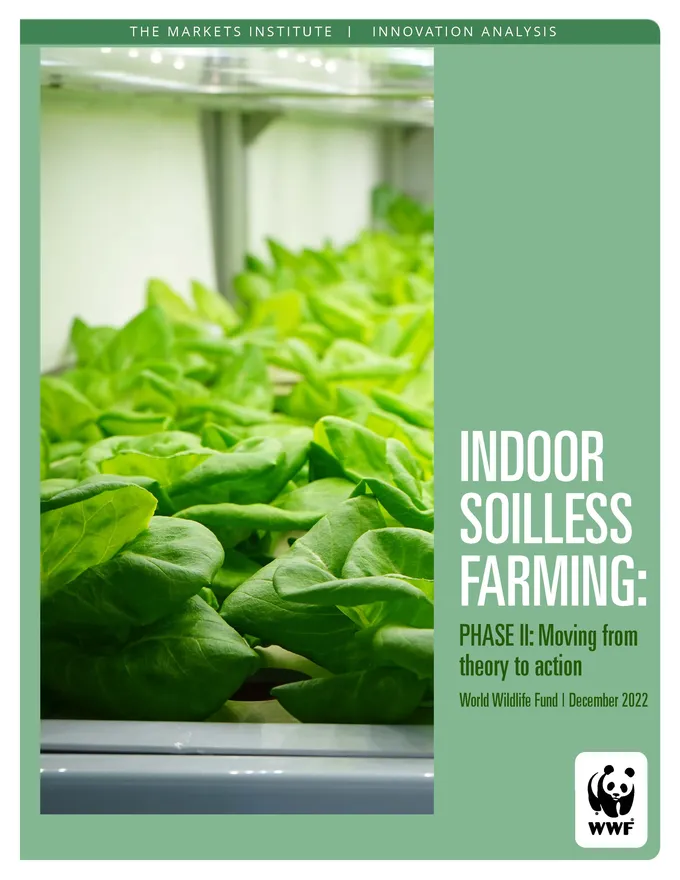
Indoor soilless farming aims to reduce many of the more harmful effects of conventional field farming, including decreasing pressures on land, biodiversity, natural habitat, and climate. However, these indoor farms often have large energy footprints, are still figuring out the best way to support local communities and need support to share experiences and move the industry forward.
In the Phase I Innovation Analysis, WWF looked at how we might address some of these challenges and help bring these systems to scale.
In Phase II, WWF has used that research as a springboard for action. This report describes Phase II activities, including:
- forming the St. Louis Controlled Environment Agriculture (STLCEA) Coalition;
- analyzing innovative energy systems utilizing various stranded assets;
- exploring potential partnerships;
- soliciting and evaluating proposals from indoor farms interested in building and running a pilot indoor farm;
- choosing an indoor farm partner to bring an integrated system to the St. Louis region;
- exploring the feasibility of a Center of Excellence (CoE) on indoor farming in the St. Louis region; and
- kicking off the CoE‚'s initial projects and developing a long-term vision.
-
On International Anti-Corruption Day 2022, we recognize the determination of women who are taking remarkable steps to address corruption through conservation programming. Their challenges and contexts are all different, but their stories reinforce a common understanding--only by addressing corruption behind environmental crimes, supply chain threats, and natural resource governance challenges, can we safeguard a future for communities, wildlife, fisheries and forests. Their stories inspire us to think and program differently for strengthened results.
Renata Cao's work focuses on supporting World Wildlife Fund (WWF) offices in the Latin America region to advance their counter wildlife trafficking agendas and to facilitate coordinated responses, build regional technical capacities, and forge strategic partnerships.
Daniela Gomel is a public policy and governance specialist at Fundacion Vida Silvestre, a WWF partner organization in Argentina. She manages the policy and governance dimensions of several projects related to forests, protected areas, plastics and climate change. Daniela also coordinates a Targeting Natural Resource Corruption (TNRC) pilot project that focuses on promoting transparency and sharing learning to address corruption that undermines effective governance in the fisheries sector, particularly at the capture stage.
Nicola Okes represents TRAFFIC International, based in Southern Africa. She currently works across the global TRAFFIC network to coordinate engagement on issues relating to the illegal wildlife trade, with a focus on rhinos and elephants. She has previously worked on marine conservation and trade, analyzing both legal and illegal trade with the purpose of providing sustainable solutions to environmental concerns.
Shambhavi Poudel leads the Campaigns and Education Unit at WWF Nepal. She works closely with children and young people, placing them at the core of conservation interventions. She recently helped to design a new pilot activity under the TNRC project that focuses on mobilizing youth to promote good community forest governance.
For more resources and tools, visit TNRCproject.org.---
This content is made possible by the generous support of the American people through the United States Agency for International Development (USAID). The contents are the responsibility of World Wildlife Fund (WWF) and do not necessarily reflect the views of USAID, the United States Government, or individual TNRC consortium members.
-
Infrastructure in the Global Biodiversity Framework
-
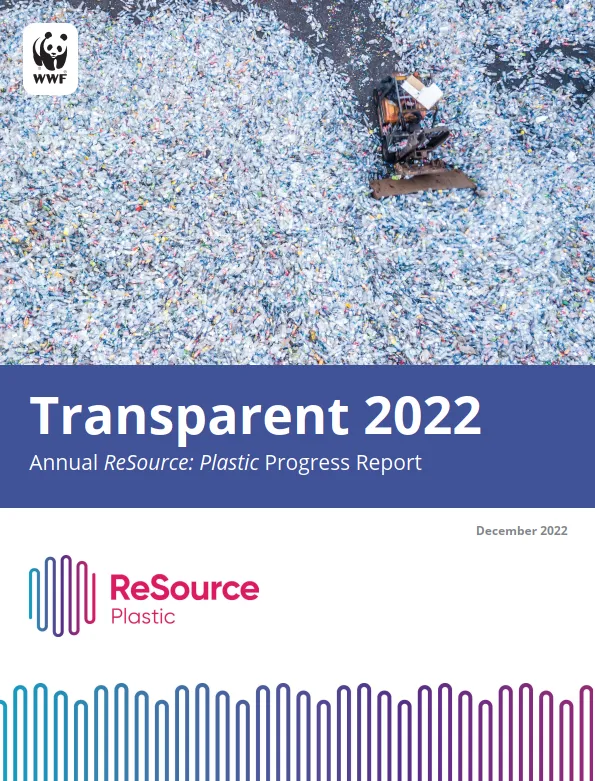
Transparent 2022 is the third annual report from ReSource: Plastic, providing an update on how Member companies are addressing plastic pollution and identifying new opportunities to maximize impact.
-
WWF is one of 100 diverse organizations urging President Biden and House and Senate Leaders to ensure strong funding for foreign assistance programs in a final agreement on FY23 spending levels for the US government, and specifically to include the highest possible investments for international climate finance programs. These programs support developing country efforts to mitigate climate change and build resilience to its impacts, including through the protection of tropical forests and other critical, carbon-rich ecosystems. The ask was communicated in a letter sent by 100 signatory organizations representing environment and conservation, development, faith, health, science, foreign policy, and business communities and their millions of members and supporters.
Achieving significant increases in US government climate finance programs is essential to meeting US international commitments, including President Biden‚'s pledge to provide $11.4 billion in such finance by 2024, and to unlocking the global ambition needed to halt runaway climate change and protect the future of both people and nature. It is also very much in America‚'s own interest. As stated in the letters:
"Financing for international climate programs serves vital US interests by promoting global stability and security, creating economic opportunities for US businesses and workers, alleviating global poverty and food insecurity, protecting investments in international development, complementing global health efforts, and ensuring significant cost savings by promoting resilience and disaster preparedness."
-
One of the most commonly wasted items in school lunches is also one of the most iconic: milk. WWF projects that up to 45 million gallons of milk are wasted annually in schools. This not only represents a loss of nutrition, but also the environmental and financial resources that go into producing, transporting, cooling, and storing milk.
In partnership with Triangle Associates, WWF explores the experience of K-12 schools across the United States that have transitioned from traditional milk cartons to bulk milk dispensers. The study finds that switching to bulk milk dispensers can 1) reduce packaging and milk waste, 2) lower school costs, and 3) strengthen nutrition by increasing overall milk consumption. The goal is to help K-12 schools assess the feasibility of installing bulk milk dispensers by providing data, examples, and a Cost Savings Estimate Calculator.
-
Setting Science-Based Targets in the Seafood Sector